
One huge issue with RFK Jr's new food pyramid you hadn't even realised

Robert F Kennedy Jr's newly revamped food pyramid has drawn sharp criticism, with one expert calling it an ‘outdated symbol’ that looks like it was lifted from a 1950s health pamphlet.
For the last week, health officials have been weighing in on the new 10-page Dietary Guidelines for Americans.
The document, spearheaded by the Human Services Secretary, details exactly what food Americans should include in their diet.
United States citizens are urged to ditch ‘added sugar’ drinks, and alcohol consumption guardrails have been removed.
Advert
Moreover, there’s advice to ‘dramatically reduce’ the consumption of ‘highly processed foods’, among other stipulations.
What is the new food pyramid?
On 7 January, the United States resurrected the food pyramid, with the visual aid officially replacing the 2011-introduced MyPlate model.
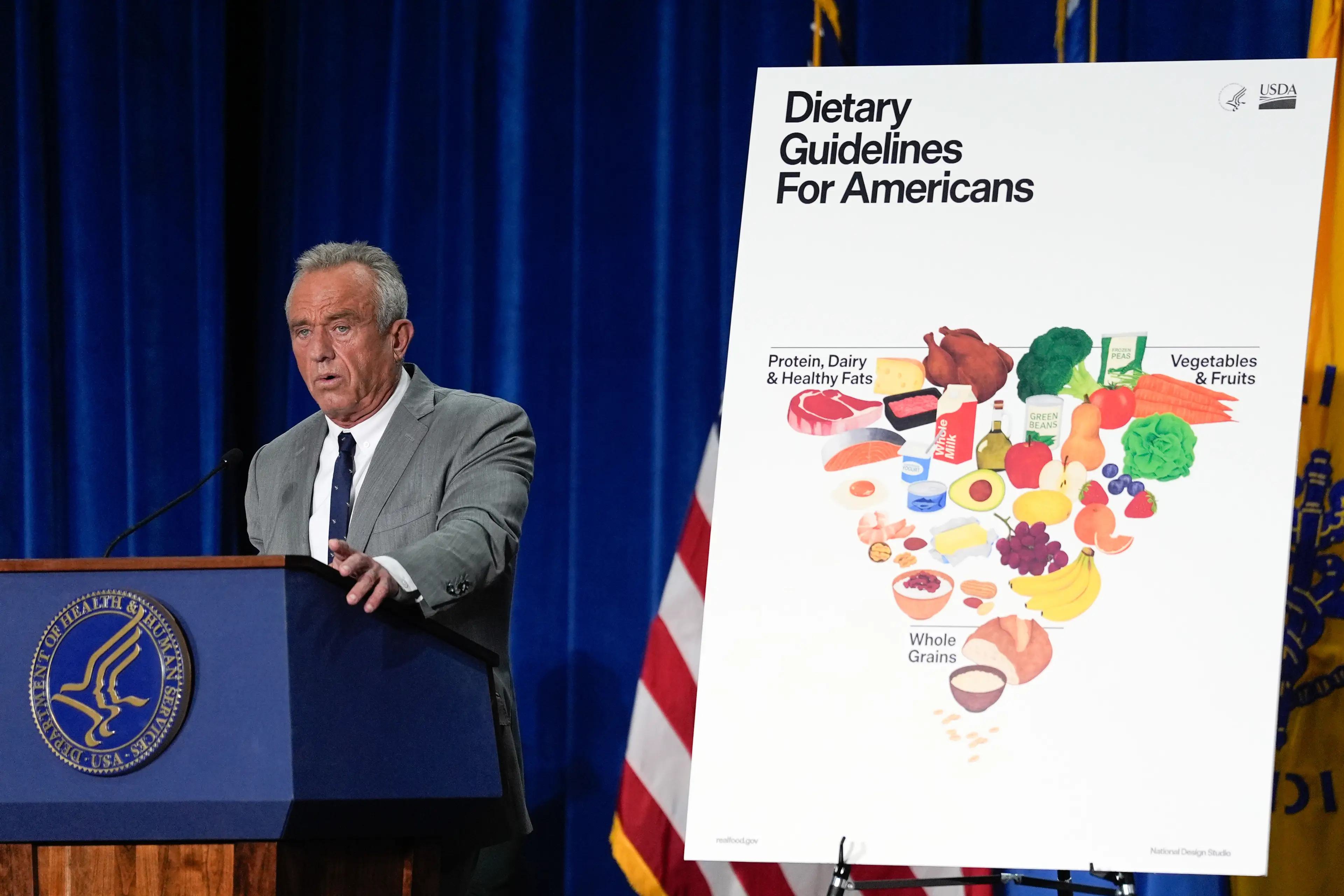
Unlike other iterations, the 2025-2030 version flips the tetrahedron upside down, with the base at the top, and the point at the bottom.
This inverted pyramid urges Americans to prioritise protein sources, such as red meat and chicken, as well as full-fat dairy products like whole milk and yoghurt.
It also advises that vegetables, such as leafy greens, carrots, and broccoli should be consumed on a regular basis, alongside fruits, and saturated fats, like butter.
At the bottom of the pyramid you will find whole grains.
This is where starchy foods and refined carbohydrates live, with new dietary restrictions suggesting you limit consumption of these items.
“We are reclaiming the food pyramid and returning it to its true purpose of educating and nourishing all Americans," reasoned US Department of Agriculture Secretary Brooke L Rollins.
Expert takes issue with new food pyramid
According to Debbie Millman, chair of the masters in branding program at the School of Visual Arts and the host of the podcast Design Matters, the revamped food pyramid is an ‘outdated symbol and way of thinking about visual communication’.
Writing for Stat News, the design expert claimed its emoji-inspired illustrations could’ve been lifted from a 1950s health pamphlet.
She reasoned that it ‘offers little guidance about quantity, balance’ or how its dietary recommendations should translate into meals.
The expert continued, calling the graphic ‘confusing’. She remarked on how it ‘demands interpretation’, asking viewers to understand it without offering adequate explanation.
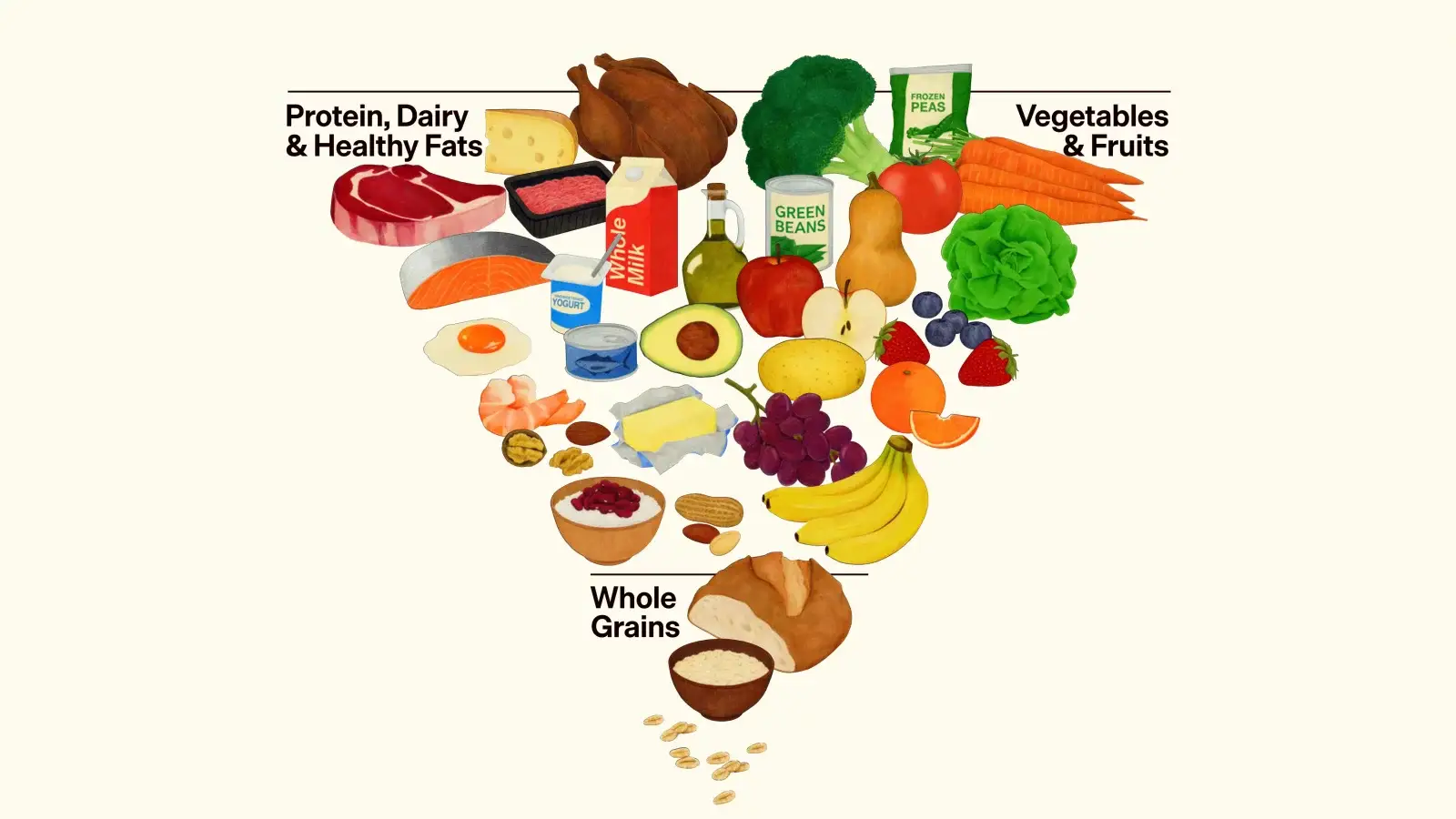
Millman also claimed that so many illustrated food examples manages to ‘muddy the message’, suggesting that the ‘Eat Real Food’ slogan is up for interpretation.
“’Eat Real Food,’ is neither defined nor portrayed by any real food. The design leaves viewers to project their own assumptions onto the notion of ‘real’,” she typed.
What do other experts say about the food pyramid?
Nutritionist and women’s health coach Jessica Corwin has said that reintroducing the food pyramid ‘raises questions’.
“The original pyramid faced years of criticism because it was abstract and difficult to apply to real meals, which is why MyPlate was developed,” she told Good Housekeeping.
“While the intent of the new visual may be sound, I’m not convinced it’s more actionable for real people navigating busy lives, changing physiology, and limited time.”
Meanwhile Lindsey Schoenfeld, a professional chef, praised the pyramid for centralising ‘real, whole foods’.
“Americans are eating too many highly processed foods, added sugars, and refined carbohydrates,” she reasoned.
“I agree that we need to limit these, and I'm glad to see it outlined in the recommendations.”

Marion Nestle, a professor emerita of nutrition, food studies, and public health at New York University, has taken aim at the mixed messages the pyramid delivers regarding fruit and vegetables.
In conversation with Science Today, she remarked that the recommendation to prioritise these fresh foods is ‘contradicted by the numbers that they’ve given’.
As per the new guidelines, people should eat three portions of veggies, and just two fruits.
“That’s about half of the fruits and vegetables recommended in the previous dietary guidelines,” she claimed.
Regarding the pyramid, a letter from Rollins and US Department of Health and RFK Jr. says that the pyramid is ultimately designed to ‘return to the basics’.
“American households must prioritise diets built on whole, nutrient-dense foods — protein, dairy, vegetables, fruits, healthy fats and whole grains,” a letter reads.
“Paired with a dramatic reduction in highly processed foods laden with refined carbohydrates, added sugars, excess sodium, unhealthy fats, and chemical additives, this approach can change the health trajectory for so many Americans.”
 Ella Scott