
Robert F Kennedy Jr launches new dietary guidelines and 'food pyramid'

United States residents now have a litany of new ‘rules’ to follow when it comes to their diets, with protein and full-fat products being in favour with among American officials.
Robert F Kennedy Jr spoke at length before the new dietary guidelines were released to the public, remarking how the report would ‘really revolutionise the food system in the country’.
“We’re going to publish dietary guidelines that are going to stress the importance of protein and saturated fats,” the 71-year-old vowed in November 2025.
Meanwhile Kyle Diamantas, the deputy commissioner for human foods at the FDA, warned the document would ‘be small’ and ‘streamlined’ when compared to past versions.
Advert
On Wednesday 7 January, the 2026 revision of the document was published, and FOODbible has highlighted important changes to dietary advice.
We have also documented what RFK Jr has said on the legislation, and whether his bid to ‘end the war on saturated fats’ has come to fruition.

New dietary guidelines
Every five years, the US Department of Agriculture (USDA) and the US Department of Health and Human Services collaborate to update The Dietary Guidelines for Americans.
The 10-page document covers dietary advice for American adults, children, and includes information for vegans, individuals with chronic diseases, and people who are lactating.
The 2026 update was released this week and is self-described as the ‘most significant reset of federal nutrition policy’ in American history.
The new dietary guidelines will be in place for the next five years, with another update expected in 2030.
What’s changed
Prior to the new dietary guidelines being published, the New York Times wrote that the legislation hadn't changed much in substance since they were first published in 1980.
However, the 2026 version has broken precedent, with the Trump administration welcoming in a plethora of updated information.
Limiting highly-processed foods
One of the updates is that there’s a new recommended limit on highly-processed foods.
For the first time, US health officials want citizens to avoid ‘highly processed packaged, prepared, ready-to-eat, or other foods that are salty or sweet’.
Sweetened beverages, such as soda, fruit drinks, and energy drinks, should also be consumed in low doses, if at all.
No added sugars
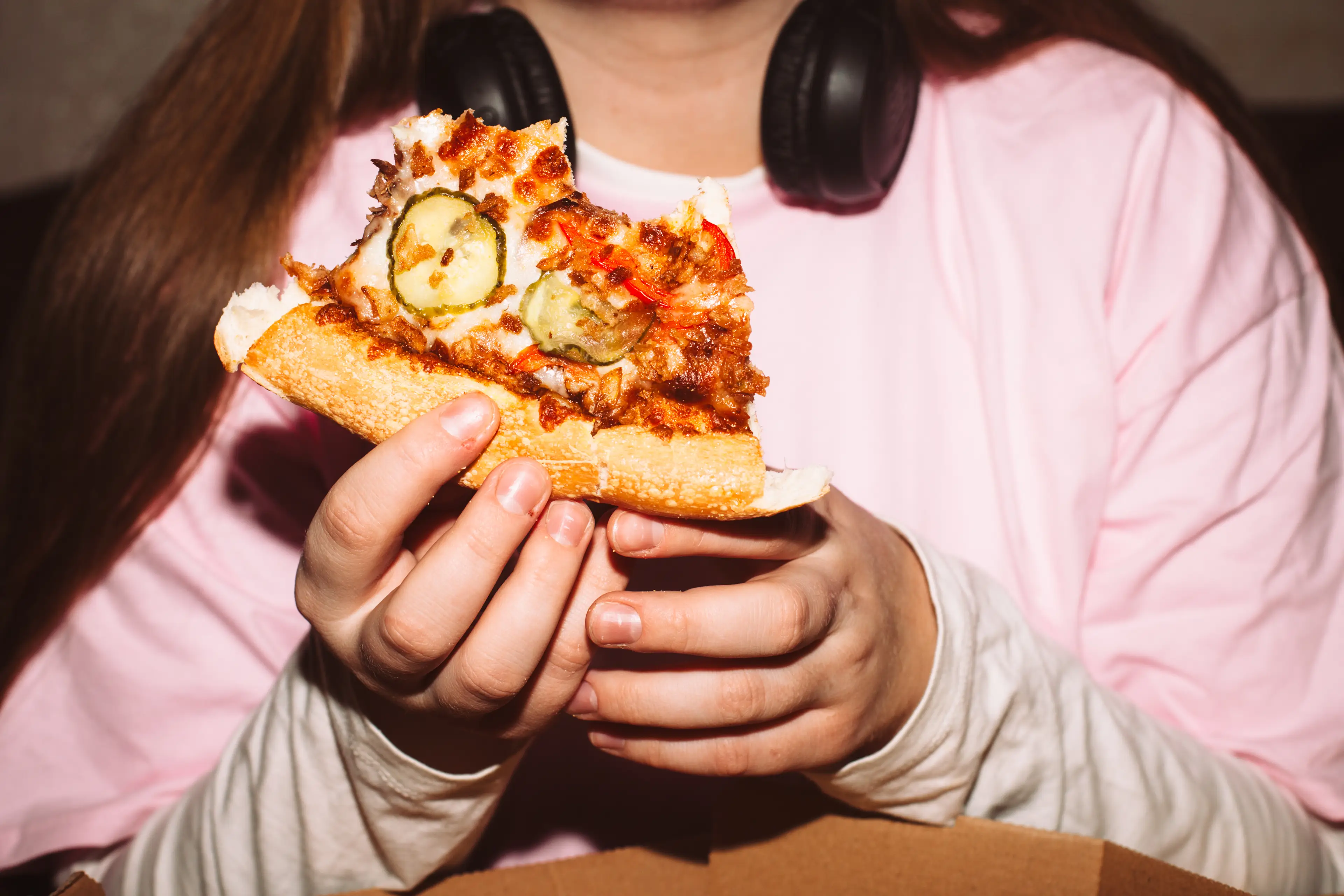
Speaking of sugar, the dietary documents advise that ‘no amount of added sugars’ are recommended, especially for children.
It’s outlined that each meal should include no more than 10g of added sugars, and that people should limit consumption of artificial flavours, dyes, and low-calorie, non-nutritive sweeteners.
Protein focus
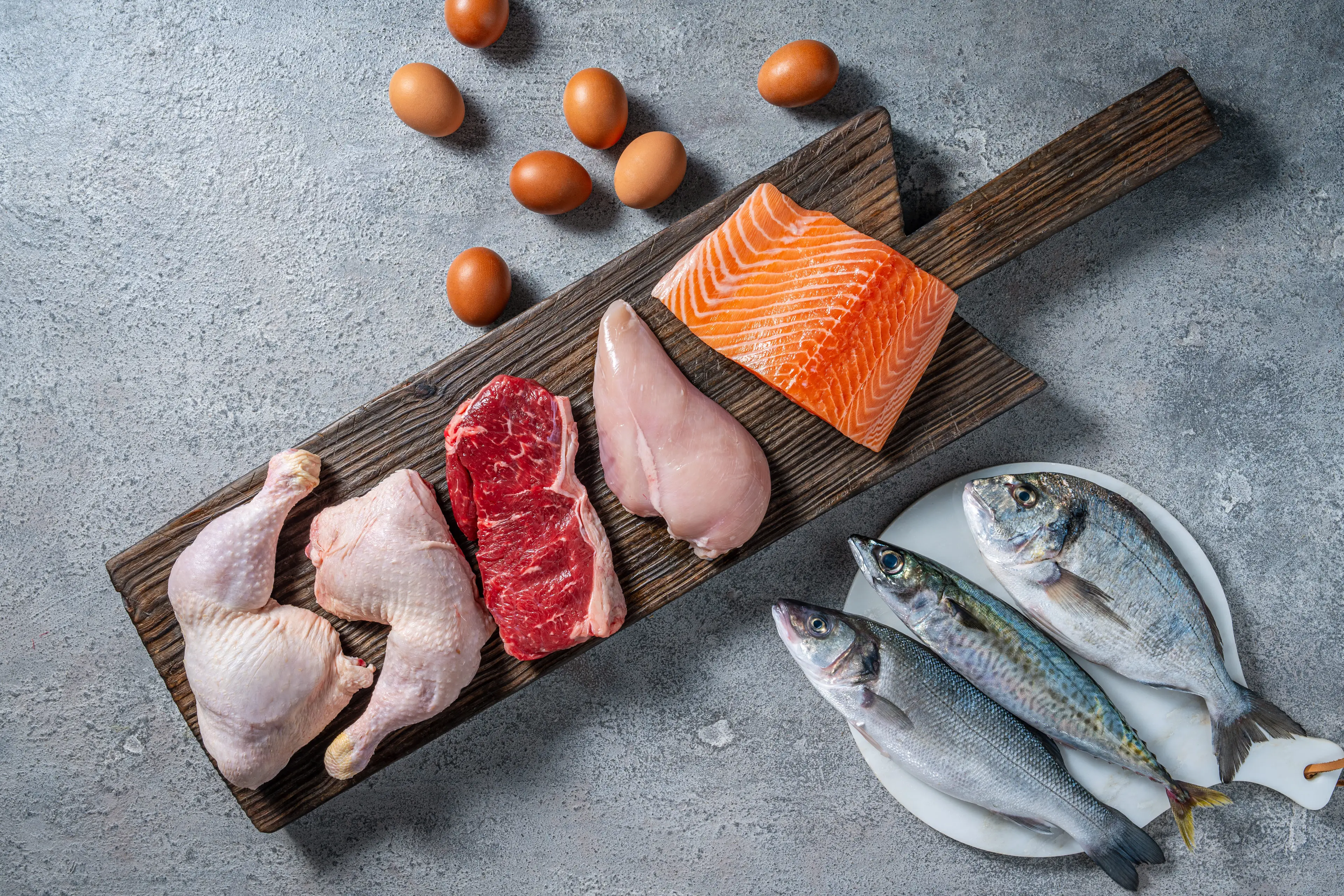
‘High-quality, nutrient dense protein foods’ are recommended.
These should be served with no or limited added sugars, chemical additives, refined carbohydrates or starches, the guidelines say.
FDA Commissioner Marty Makary noted that this change had come into play because the ‘old protein guidelines were to prevent starvation and withering away’.
“These new protein guidelines are designed for American kids to thrive,” he said, as per CBS News.
It’s now agreed that American’s should eat between 1.2 to 1.6g of protein per kg of bodyweight everyday.
In the UK, the British Heart Foundation (BHF) says adults should eat around 0.75g per kg of bodyweight per day.
Refined carbohydrates are out
Highly-processed, refined carbohydrates are also on the chopping board.
These should be replaced with ‘fibre-rich whole grains’, according to the recently published guidance.
Saturated fat and healthy fat changes

And finally, the guidelines are making good on RFK Jr’s vow to ‘end the war on saturated fats’.
Americans are being told to 'prioritize oils with essential fatty acids, such as olive oil', with beef tallow and butter also promoted as experts claim full-fat options should be prioritised over previously-hailed, low-fat products
In total, saturated fat consumption should not exceed more than 10 percent of a person's daily calories, according to the new guidelines.
CBS notes that the 2020-2025 guidelines had similar recommended limits on saturated fats, though they noted a ‘healthy dietary pattern’ could include vegetable oils.
The fact sheet also called for ‘ending the war on healthy fats’. It recommends people get the bulk of their dietary fats from whole food sources, such as meat, avocados, and eggs.
Food pyramid
Despite the USDA phasing out the Food Pyramid in 2011, replacing it with the simpler MyPlate Icon, the former is back in business for 2025.
Officials released the new version this week, and it harbours some major changes.
The first is that the traditional pyramid is now inverted, with protein, dairy, healthy fats making up the top left corner, and vegetables and fruits in the other.
Illustrated items making up the bulk of the pyramid include red meat, cheese, whole milk, prawns, olive oil, butter, bananas, rice, and vegetables such as carrots, broccoli, and frozen peas.
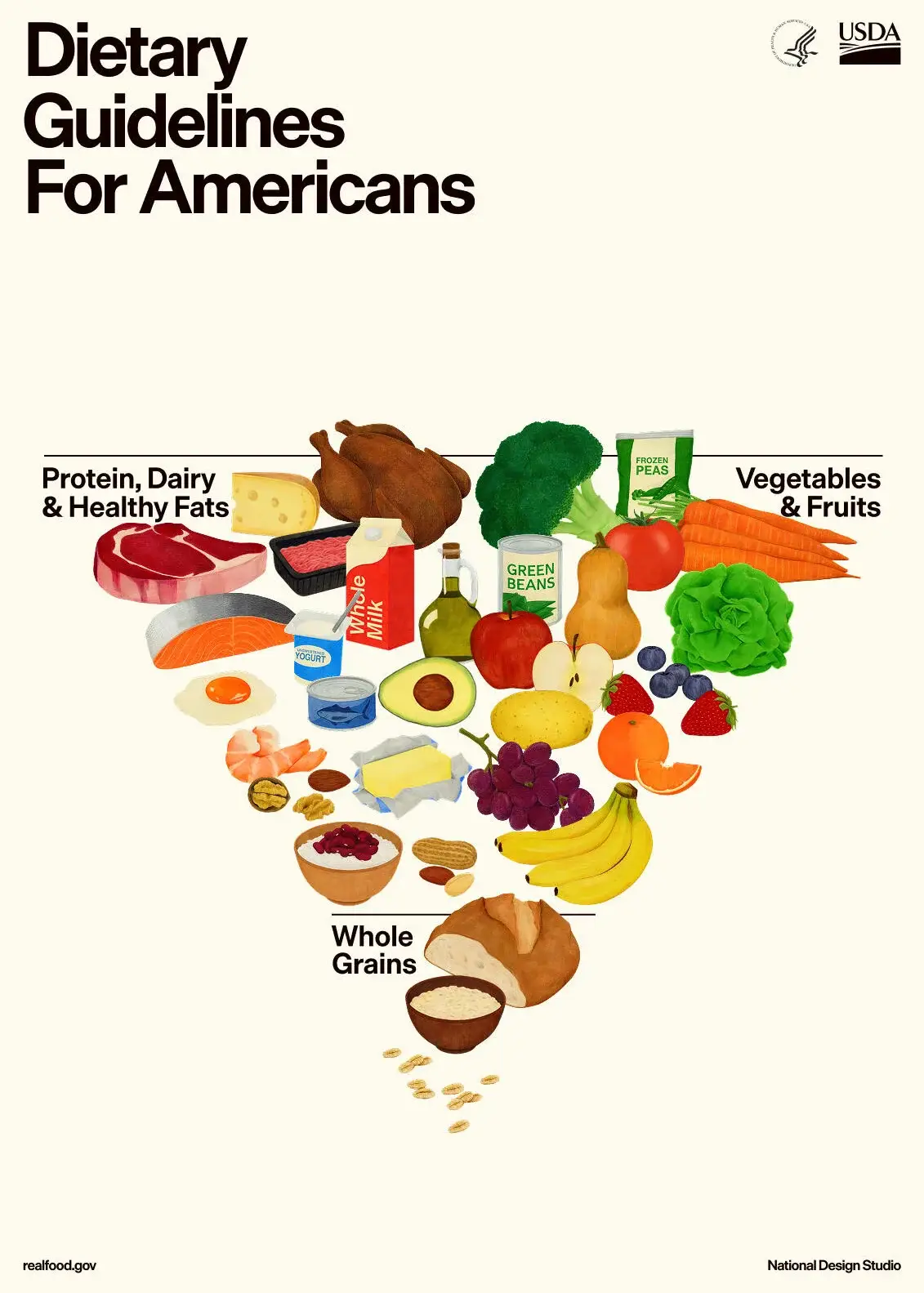
At the bottom of the pyramid sits whole grains, such as porridge, bread, and oats.
It’s believed that the new food pyramid will have implications for federal-funded programmes, such as SNAP and WIC, as well as Meals on Wheels, military kitchens, and school dinners.
What Robert F Kennedy Jr has said
The HSS revealed the new dietary guidelines at a White House briefing on Wednesday alongside Agriculture Secretary Brooke Rollins and other administration officials.
Alongside calling it ‘the most significant reset of federal nutrition policy in history’, the environmental lawyer said that the new recommendations would help boost the overall health of Americans.
He also alleged the new legislation would decrease US spending on healthcare.
“Today marks a decisive change in federal nutrition policy, made possible by President Trump's leadership and the work of MAHA moms and public health advocates who demanded reform,” RFK Jr told White House revellers.
"Protein and healthy fats are essential and were wrongly discouraged in prior dietary guidelines. We are ending the war on saturated fats.

“My message is clear: eat real food.”
The new dietary recommendations were published just days after the CDC scaled back recommended childhood immunisations.
Regarding the diminished number of injections, RFK Jr added: "We want to maximise the uptake of the vaccines by making sure that Americans know that we are making recommendations that are science-based, that are common sense, that are grounded in science.”
Under the new guidelines, the CDC recommends all children be vaccinated against 11 diseases, a decrease from the 17 immunizations previously recommended, as per CBS News.
Mixed reaction from experts
Experts have been weighing in on the new dietary guidelines and the food pyramid, with Christopher Gardner, a nutrition expert at Stanford University, expressing his ‘disappointment’ with the latter.
He told NPR that he was unimpressed with the fact the pyramid featured red meat and saturated fat sources at the very top.
“As if that's something to prioritise,” he remarked. “It does go against decades and decades of evidence and research.”
Opposite Gardner is The American Medical Association (AMA) which released a statement ‘applauding’ the Trump administration’s new guidelines.
"The guidelines affirm that food is medicine and offer clear direction patients and physicians can use to improve health," Dr. Bobby Mukkamala, the president of the AMA, shared.
The lobbying group added that it would follow RFK Jr’s guidelines with a collection of educational resources, and hold discussions with experts to ‘strengthen nutrition education and clinical competency’.
It also pledged to work with Congress to expand food labelling efforts and increase investment in nutrition research.
Marion Nestle, a former New York University nutrition professor has criticised the pyramid’s promotion of protein, claiming it makes ‘no sense’ for Americans to eat more.
“Except for the excellent advice to reduce intake of highly processed foods, which were not particularly prevalent back then, these guidelines take us back to the diets of the 1950s, when everyone was eating lots of meat and dairy and not worrying much about vegetables, and heart disease was rampant," she said, according to the BBC.
Meanwhile, The American Heart Association (AHA) has said it’s ‘concerned’ about the legislation suggesting citizens should eat more salt and red meat.
The experts claimed it could ‘inadvertently lead consumers to exceed recommended limits for sodium and saturated fats, which are primary drivers of cardiovascular disease’.
AHA also claimed the documents ‘underscored’ the importance of healthy eating.
Despite its criticism, it praised RFK Jr's guidelines for putting a greater emphasis on vegetables, fruit, and whole grains.

Others like Lindsey Smith Taillie, a nutrition epidemiologist and co-director of the Global Food Research Program, have commented on how ‘harmful’ the red meat recommendation could be for the environment.
“We know that beef production in particular is responsible for the majority of food-related environmental harms,” she explained to PBS News.
Elsewhere, the American Academy of Paediatrics (AAP) commended the guidelines for focusing on whole foods for kids.
According to Scientific American, it favoured ‘evidence-based policy related to breastfeeding’ and the introduction of ‘solid foods, caffeine avoidance and limits on added sugars’.
You can see the new US dietary recommendations here.
 Ella Scott