RFK Jr's new dietary guidelines raise 3 key 'concerns'

Experts are divided on Robert F Kennedy Jr’s new dietary guidelines for 2025-2030, with some claiming there’s a major ‘conflict of interest’.
Last week, on 7 January, the US Department of Agriculture (USDA) and the US Department of Health and Human Services collaborated to update The Dietary Guidelines for Americans.
However, the 10-page document, featuring crucial health guidance, has raised eyebrows.
Some critics have taken aim at low-fat products being discredited, while others have praised the idea that children consume ‘no amount of added sugars’.
Advert
US citizens are now advised to select ‘oils with essential fatty acids’, such as beef tallow and butter, and replace refined carbohydrates with ‘fibre-rich whole grains’.
“The new dietary guidelines call for prioritising high-quality protein, healthy fats, fruits, vegetables and whole grains – and avoiding highly processed foods and refined carbohydrates,” a notice from the Department of Health and Human Services read.
However, RFK Jr’s guidelines have received backlash, with health experts citing serious concerns with its protein-heavy focus and vague alcohol limits.
Meat and dairy
Animal products are getting a serious push from the Trump administration.
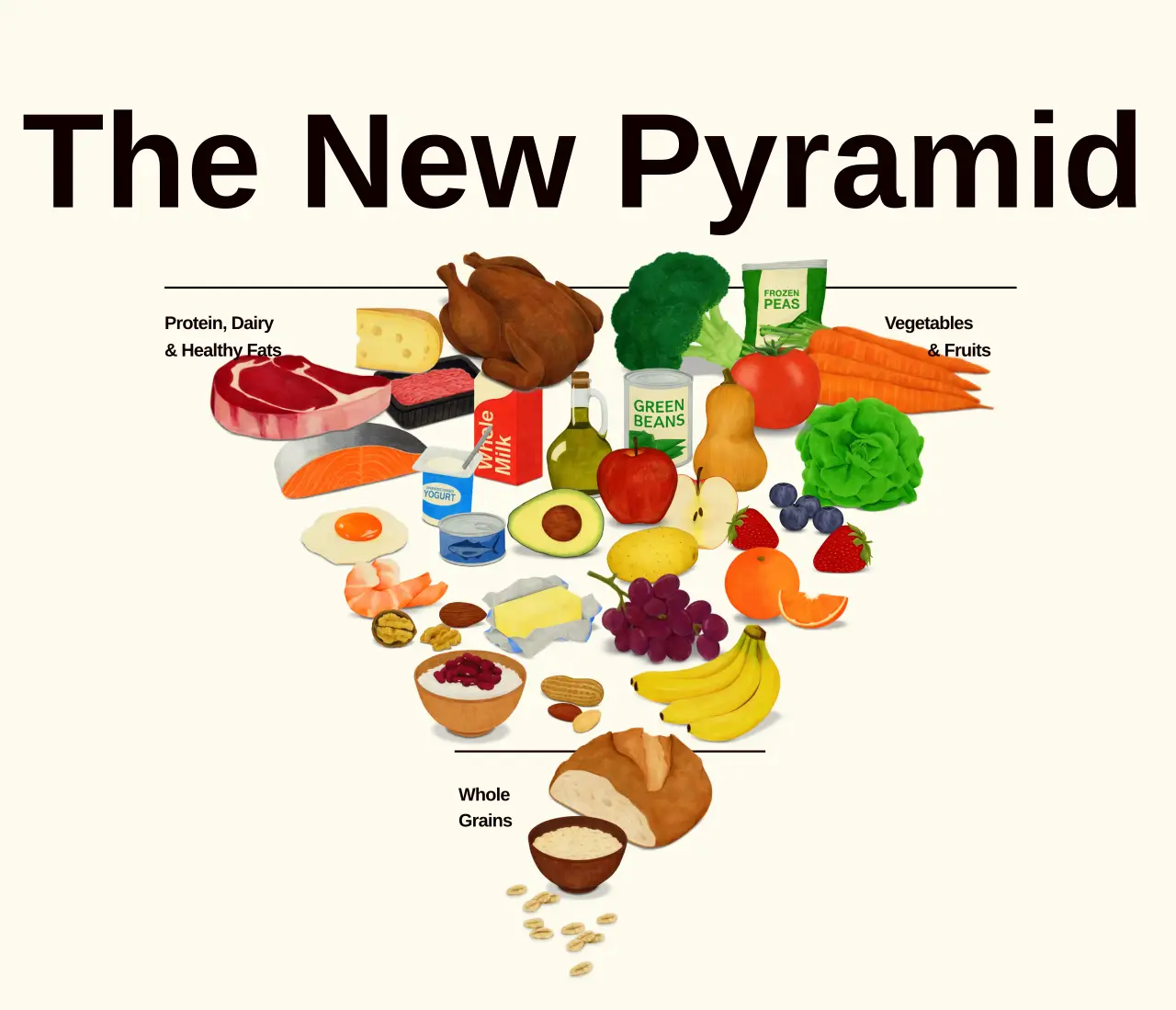
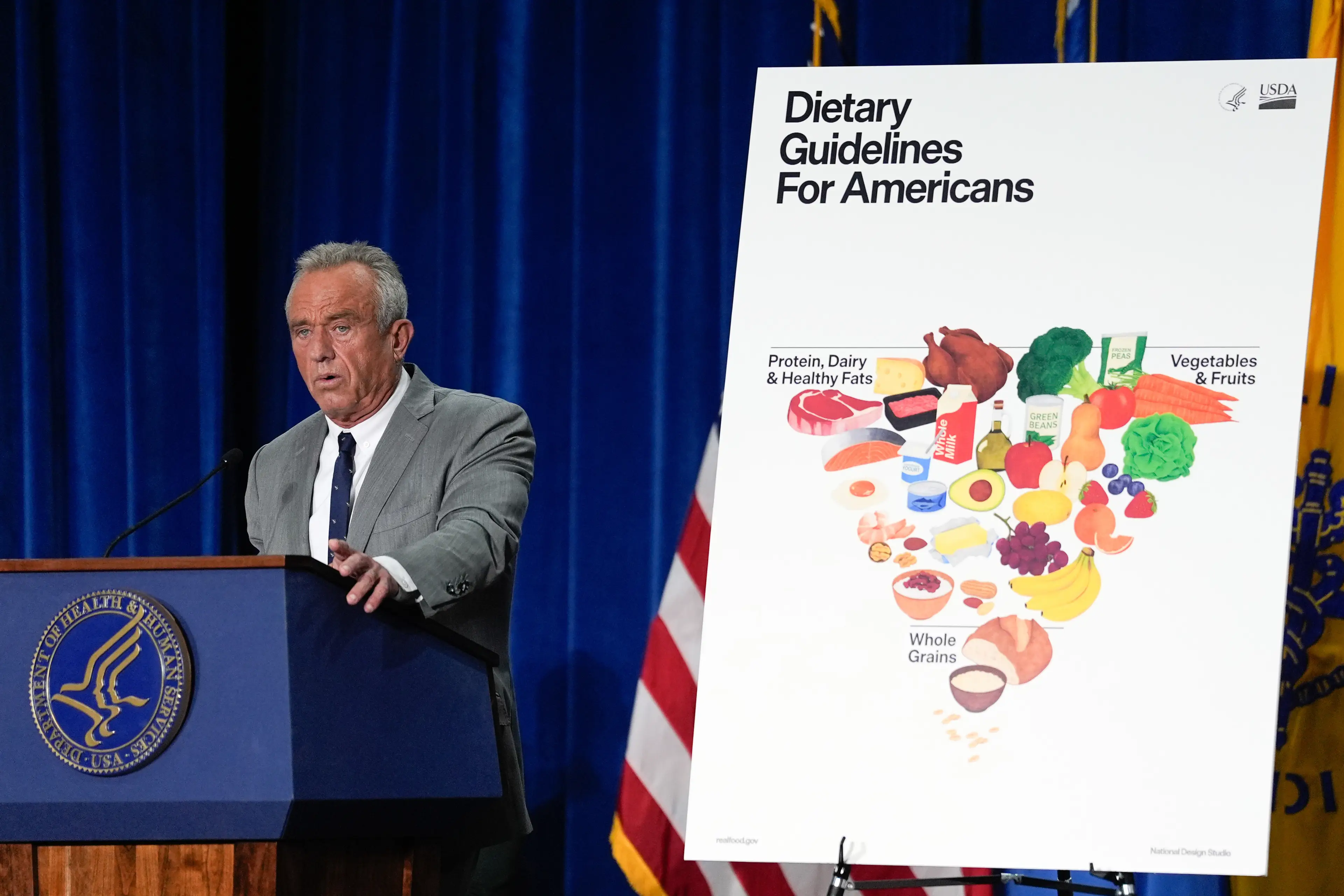
On the newly revamped food pyramid, red meats such as steak and ground beef, as well as chicken, whole milk, tuna, cheese, and yoghurt, sit at the top, with vegetables and fruits alongside them.
At the bottom, you will find whole grains and refined carbohydrates.
Ultra-processed foods have also been demonised. The advice is to limit these or cut them from your diet completely.
“These new protein guidelines are designed for American kids to thrive,” said FDA Commissioner Marty Makary.
He noted that the meat and diary-based focus was mainly because the ‘old protein guidelines were to prevent starvation and withering away’.
According to the new legislation, American’s should eat between 1.2 to 1.6g of protein per kg of bodyweight everyday, and prioritise ‘eating real food’.
The guidelines’ focus of meat and dairy has divided health experts, with Brooke Rollins, US Secretary of Agriculture, saying it puts ‘real food back at the centre of the American diet'.
“Real food that nourishes the body, restores health, fuels energy, and builds strength,” he added.
However, Dr Anna Herby, nutrition education specialist for the Physicians Committee, said that research suggests that a diet focused on meat and dairy can ‘increase risk of diabetes, heart disease, and some types of cancers’.
“These new Guidelines will do very little to help Americans make healthier food choices," she explained, as per the Physicians Committee of Responsible Medicine.
Meanwhile Lindsey Smith Taillie, a Nutrition Epidemiologist at University of North Carolina at Chapel Hill, told PBS News that while she thinks the advice is ‘enormously helpful, both for policymakers and for your everyday consumer’, she is worried about how ‘harmful for the environment’ it could be.
“We know that beef production in particular is responsible for the majority of food-related environmental harms,” she explained.
The Humane League writes that these environmental issues include: deforestation, greenhouse gas emissions, water pollution, and biodiversity loss.
A 2021 study suggested that 30 percent of all biodiversity loss has been linked to raising animals for meat, while beef production is responsible for 41 percent of global forest loss in total.
Alcohol guidelines
Prior to the release of the 2025-2030 guidelines, officials advised women to drink no more than one alcoholic beverage, whilst male consumption was capped at two.
With the new advice, a major departure has been made.
The USDA and the Department of Health and Human Services is now recommending both men and women ‘limit alcohol beverages’ and consume less for ‘better overall health’.
This is despite previous research showing the sexes metabolise alcohol differently.
Dr Mehmet Oz, the administrator of the Centers for Medicare & Medicaid Services, reasoned that there was ‘never really good data to support’ the guardrail.
He called alcohol an ‘excuse to bond and socialise’.
“And there’s probably nothing healthier than having a good time with friends in a safe way."

Dr Oz added: “There is alcohol on these dietary guidelines, but the implication is don't have it for breakfast, right? This should be something done in a small amount, with hopefully some kind of an event that may have alcohol at it.”
The updated alcohol guidelines have received backlash from groups, including the US Alcohol Policy Alliance, a non-profit working to reduce alcohol-related disease, death and injury, according to its website.
Mike Marshall, the organisation’s CEO, said: “Given how deeply alcohol is embedded in American life, the public deserves clear, honest information about the risks of drinking so they can make the best decisions for themselves, their families, and their communities.”
He added that the revamped guidelines fail to address the direct link between alcohol consumption and cancer risk, which leading US surgeon general Vivek Murthy published research on last year.
“For certain cancers, like breast, mouth, and throat cancers, evidence shows that this risk may start to increase around one or fewer drinks per day,” Murthy stated.
Speaking to the New York Times, Katherine Keyes, a professor of epidemiology at Columbia University, has claimed that the lack of clarity over alcohol limits may cause issues in the future.
She remarked that the advice is supposed to be a ‘benchmark’ and that they should be updated with the ‘most recent scientific evidence’.
Meanwhile, Dr. Laura Catena, a winemaker and managing director of Catena Zapata winery in Argentina, said to the publication that she wanted American’s to ‘make health decisions based on conversations with their doctor’, rather than via guidelines.
Conflict of interest
Smith Taillie claimed that there was a major ‘conflict of interest’ when it came to the new Trump administration-approved dietary guidelines.
She said that researching food’s processing, packaging, and distribution is ‘new’, and if you look at past members of the Dietary Guidelines Scientific Committee and who funds their research, those scientists ‘have been funded by organisations that produce ultra-processed foods’.
“And I think that has a lot to do with what kind of guidelines you see in the previous guidelines and then also today,” she explained to PBS News.
She claimed that this time, those working behind the scenes on the document have ‘ties to the beef and diary industries’.
“We still have the same question of, is this actually based in gold standard scientific evidence, or is this essentially food industry propaganda that is kind of coming from the federal government?”
Smith Taillie’s thoughts come as it was revealed that three of the nine members of the advisory board had received grants or done consulting work for the National Cattlemen’s Beef Association and the National Pork Board.
Moreover, it was reported that at least three members had financial ties to dairy industry organisations, such as the National Dairy Council, while another was a co-creator of a high-protein meal replacement product.
It should be noted that these experts did not write the guidelines. They produced reviews of scientific evidence on which the guidelines were based.
Dr Herby claimed that these conflicts of interest showed how the ‘Administration has been hoodwinked by scientists working for the dairy and meat industries, rather than for the health of Americans’.
However, Andrew Nixon, a spokesman for the health department, claimed that the guidelines were based on ‘rigorous scientific review and independent oversight’ and that it was ‘absurd to suggest that anything other than gold standard science guided our work on this presidential priority.’
Meanwhile, Mark Kennedy, the senior vice president of legal affairs for the Physicians Committee for Responsible Medicine, has filed a complaint, claiming that disclosing conflicts of interest at the end of the process it ‘isn’t really going to cut it’.
The criticism came after RFK Jr. had previously sworn that his expert panel would ‘have no conflicts of interest’.
When asked to comment, a USDA spokesperson told FOODbible: "Expert reviewers conducted systematic reviews, umbrella reviews, and comprehensive literature syntheses. Evidence was evaluated based solely on scientific rigor, study design, consistency of findings, and biological plausibility. All reviews underwent internal quality checks to ensure accuracy, coherence, and methodological consistency."
 Ella Scott