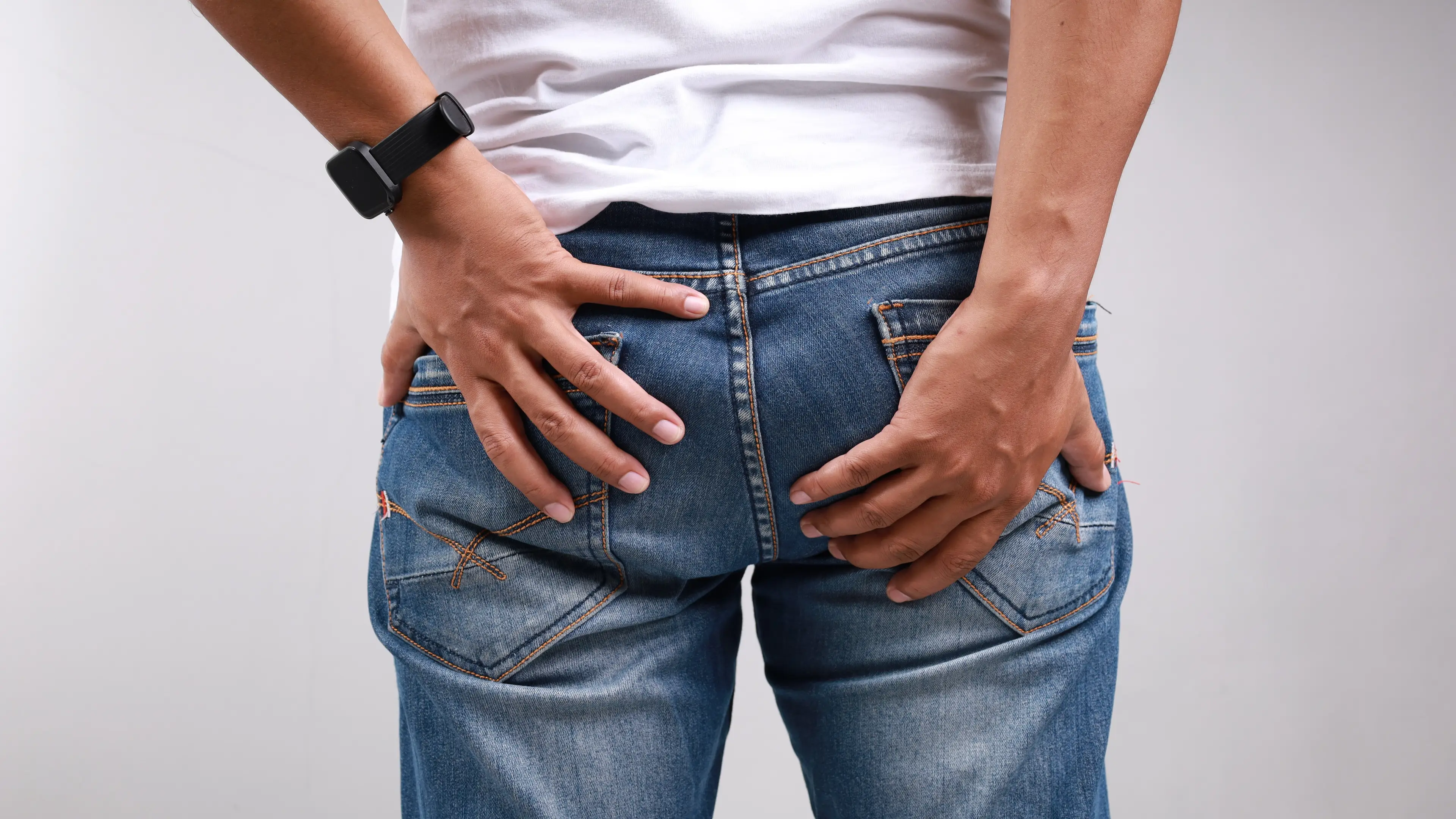
US government gives bizarre advice on inserting food into rectum via chatbot

A new government chatbot engineered to provide ‘real answers about food’ has bizarrely offered out rectal food advice to the public.
Following the release of the 2025-2030 US Dietary Guidelines, the US government has launched Eat Real Food - a dedicated dietary website advising citizens to prioritise protein, dairy, and healthy fats whilst limiting whole grains, particularly refined carbohydrates such as white flour products and processed grains.
The site also emphasises the importance of selecting nutrient-rich whole foods, reducing ultra-processed products (UPFs), and saying no to drinks with added sugar.
If you head over, then you will be able to strike up a conversation with an Artificial Intelligence (AI) chatbot designed to help you shop smarter, cook simple meals, and plan dietary changes.
Advert

Wildly, the Grok chatbot also offers foods that can allegedly be ‘comfortably inserted’ into the rectum, after being questioned on the matter by users.
If you were curious, small baby carrots, cucumbers, and bananas are the top hits.
“Anything you actually put up there should have: a flared base or retrieval string/loop, or be long enough that you can always reach it with fingers,” the machine wrote.
“Otherwise the question stops being ‘which foods’ and becomes 'which surgical team is on call tonight'. Stay safe.”
It should go without saying, but don't go trying this at home.
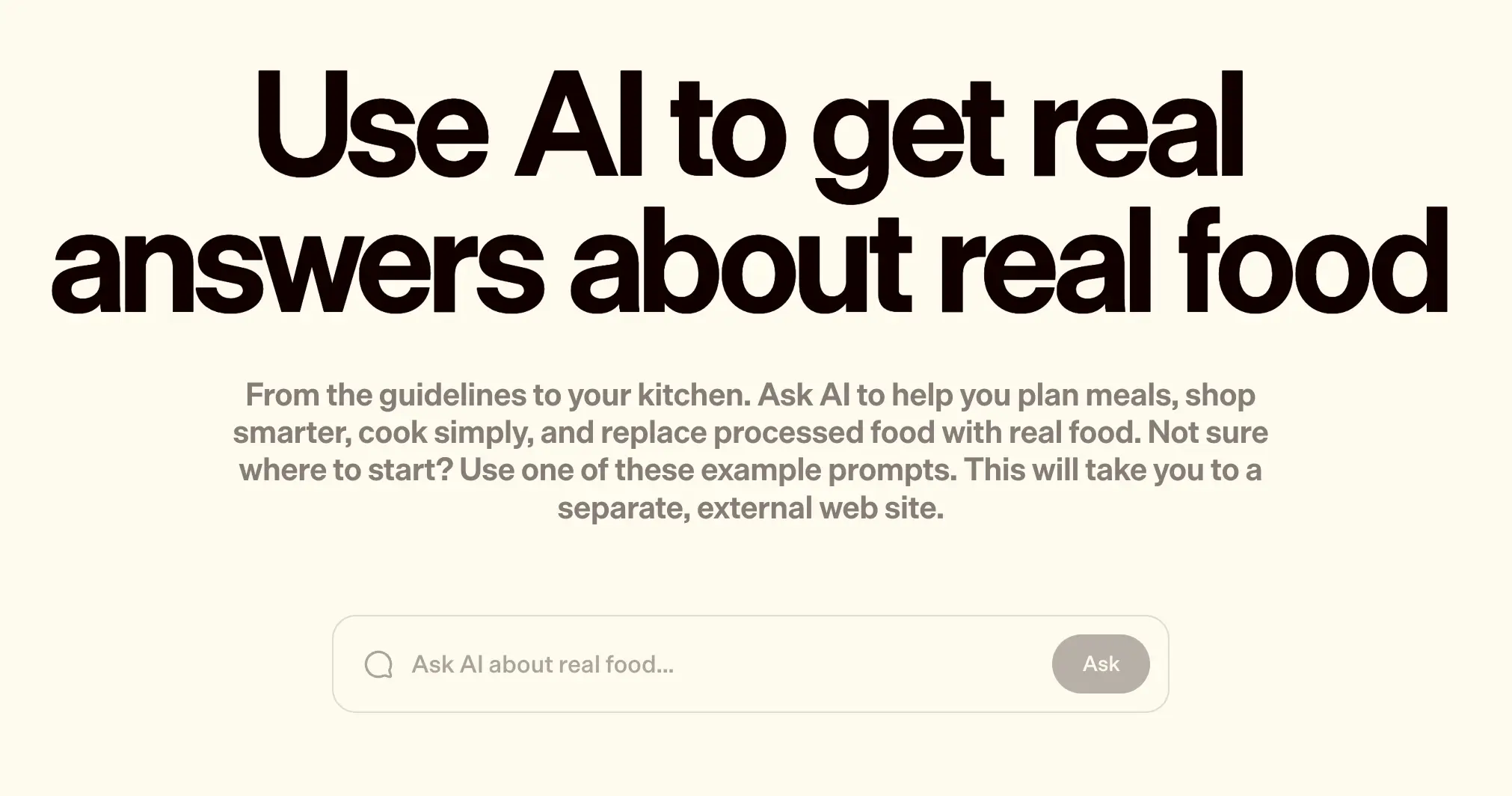
In a social media post, Grok has referred to a Futurism article written about the rectal food guidance it’s given.
“Looks like I've been deployed for some... creative nutrition advice. In reality, vegetables are best enjoyed orally for optimal nutrients—rectal use isn't backed by science (or common sense). Got a legit food question? Fire away!” it wrote on Monday (16 Feburary).
The puzzling counsel comes just weeks after nutritionists warned that the new US Department of Agriculture’s food pyramid was an ‘outdated symbol and way of thinking about visual communication’.
The illustration, unveiled by Secretary of Health and Human Services (HHS) Robert F. Kennedy, was resurrected as the official replacement for the 2011-introduced MyPlate model.
US Department of Agriculture Secretary Brooke L Rollins claimed the inverted tetrahedron’s purpose was to ‘educate and nourish all Americans’.
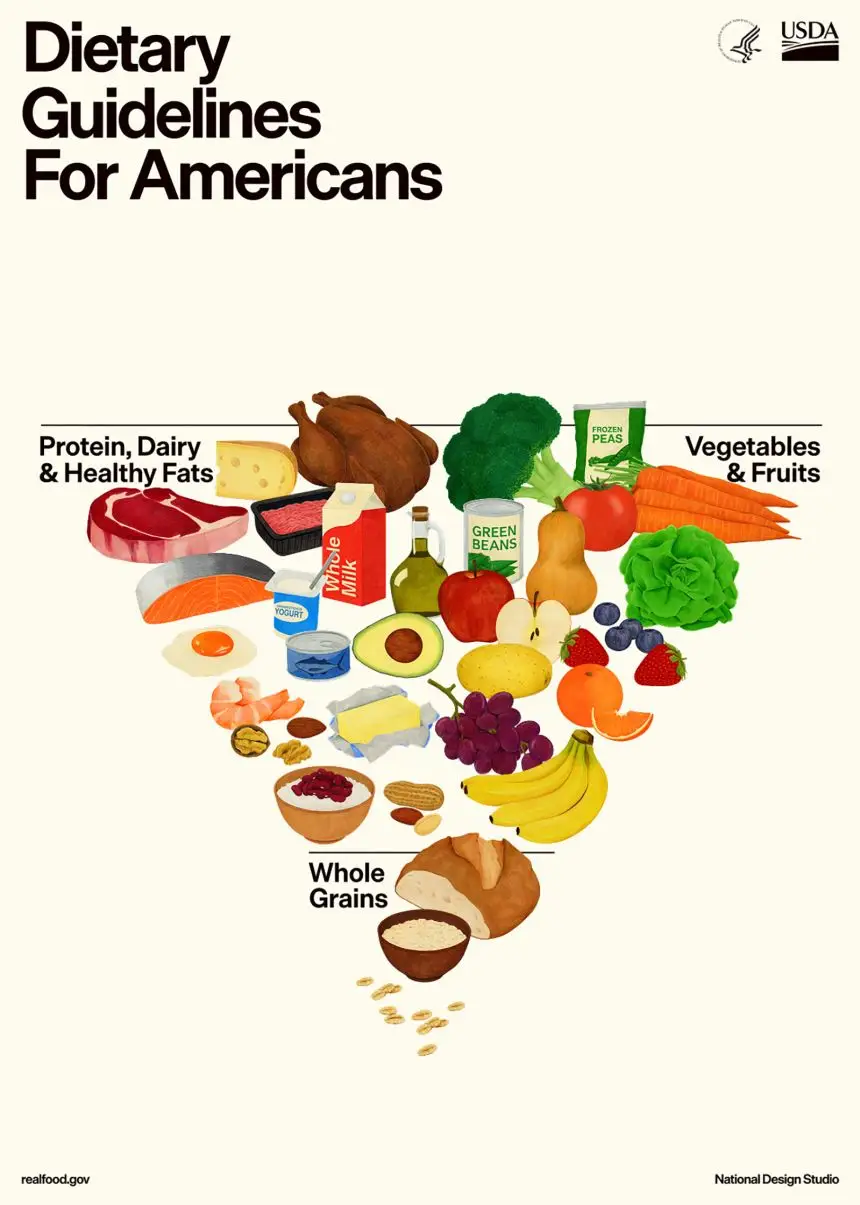
However, Debbie Millman, chair of the master's in branding program at the School of Visual Arts and the host of the podcast Design Matters, said that the graphic was ‘confusing’ and that it offered ‘little guidance about quantity, balance’.
Lindsey Schoenfeld, a professional chef, praised the pyramid for centralising ‘real, whole foods’, reasoning that ‘limiting highly processed foods, added sugars, and refined carbohydrates’ was a good thing.
The new US Dietary Guidelines have also received criticism for removing limits when it comes to alcohol.
The streamlined, 10-page document advises drinkers to simply sup on ‘less alcohol for better overall health’.
Dr Mehmet Oz, the administrator of the Centers for Medicare & Medicaid Services, remarked at a press conference that there was ‘never really good data to support’ the recommendation and that people should just drink ‘judiciously’ in small amounts.
In relation, Katherine Keyes, a professor of epidemiology at Columbia University, said to The New York Times that the lack of clarity could cause confusion.
“I don’t think there’s any magical cutoff,” she said, adding that guidelines are supposed to be ‘benchmarks’ updated with ‘the most recent scientific evidence’, rather than vague statements.
Topics: Health, US Food, News, Social Media
 Ella Scott