
What it takes to feed an NFL team on 5,000+ calories a day

NFL season is officially winding down with Super Bowl Sunday roaring into action on 8 February - but that doesn't mean the grind stops for the rest of the squads.
For many teams, the offseason has already begun. Workout programs aren’t due to resume until 20 April - except for those with new head coaches who are allowed back on the field two weeks earlier (6 April).
With the league year officially opening on 11 March, players across the United States, including the Los Angeles Chargers, are poised to return to winning ways - but it takes more than just the athletes to get them there.
In September, the Bolts’ official YouTube page gave insight into how kitchen executives work to successfully feed an NFL team.
Advert

The experts dived into: what goes into produce selection, how many eggs are boiled daily, and what options the athletes have to choose from.
How menus are made
“A lot goes into actually feeding a team beyond just what you see,” Grant Harris, director of performance nutrition, said.
“We sit down about once a week and we’ll look at the menus and review what we need to do in terms of making it approachable for the players for practice [and] gamewise.”
Menus are usually organised into six to eight-week cycles and are planned around two months ahead of time to provide as much variety as possible.

Once the menus are approved by nutrition experts, the kitchen staff will accurately and efficiently execute the meals, making sure to prioritise organic and local produce.
“We make sure that they receive the best quality ingredients from fresh produce to the best quality protein,” explained executive chef Joel Ramirez.
He added that the team consumes around 600lbs across the breadth of the day, including 40 chickens during the NFL season.
How many calories do the players eat
Harris claimed that members of the team, such as the linesmen, are likely to eat between 3000 and 5000+ calories per day.
Despite being stereotypically smaller, wide receivers are still advised to consume one or two thousand more calories than the average person due to the amount of running they are expected to do.

US adults typically require between 1,600 and 3,000 calories per day. However, this can vary depending on sex, activity levels, and general health.
“We try our best to make them happy. Those guys are sweating out there burning so much calories so we’ve got to make sure that we are also doing our part in sustaining that energy,” Ramirez admitted.
How much food is made
Ramirez confirmed in the YouTube video that his culinary squad is likely to cook for more than 50 NFL Players, 120 football staff, and around 100 to 120 business staff on a daily basis.
“It definitely takes an army to feed,” he stated.
It’s understood that around 6,000 pounds of snacks and food are consumed by the players each week

Due to the volume that everyone is eating, it’s possible that just 10 stars can ‘wipe out the buffet’ in one go.
Ramirez says that this is where communication is key, remarking that a runner is employed each day to inform chefs what dishes need replenishing and when.
Breakfast
In the morning, the Los Angeles Chargers players and coaching staff will be welcomed into The Bolt practice facility, situated in El Segundo, with a breakfast buffet.
Yoghurts and boiled eggs - of which the staff smash out around 50 of - are on offer, alongside sausages and other morning favourites.
Linebacker Daiyan Henley said in the YouTube video that the kitchen not only caters to him and his teammates, but always serve up ‘quality’ dishes.
“It’s always quality and they care. Good people back there,” the 26-year-old added.
Cleaning eating bar
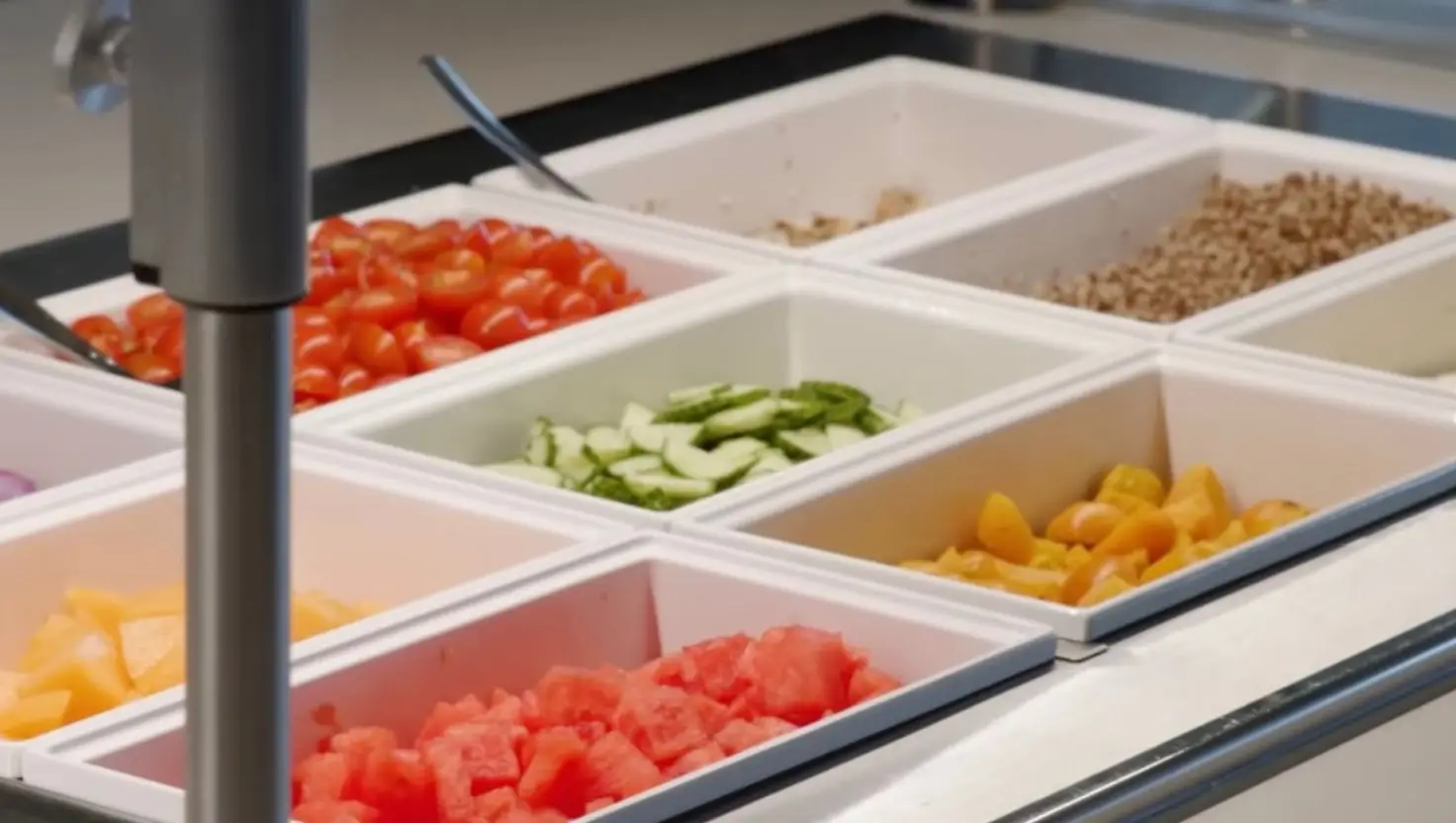
A clean eating bar serving no-nonsense items is on offer for anyone who chooses to have lunch pre-practice.
This ‘basic’ approach features various carbs, vegetables, and protein with little to no seasoning.
Harris reasoned that this food is designed to ‘sit a little bit easier’ on the athletes’ stomaches compared to the general, international menu.
Cold line and grab and go area
If it’s fruit like watermelon and mango, or salad items such as tomatoes, cucumbers, and red onion that the players are after, then they will head over to the so-called ‘call line’.
Harris reasoned that this area is perfect for anyone who requires ‘quick carbs'.
Sports people and executives on the move are also able to pick up grab-and-go options such as pre-packaged salads, sandwiches, and potato chips.
Topics: US Food, YouTube, Social Media
 Ella Scott