Kids who eat more ultra-processed foods are rewiring their brains

Ultra-processed foods have been under scrutiny for years, but new research suggests their potential effects on children could go beyond what ends up on their plates.
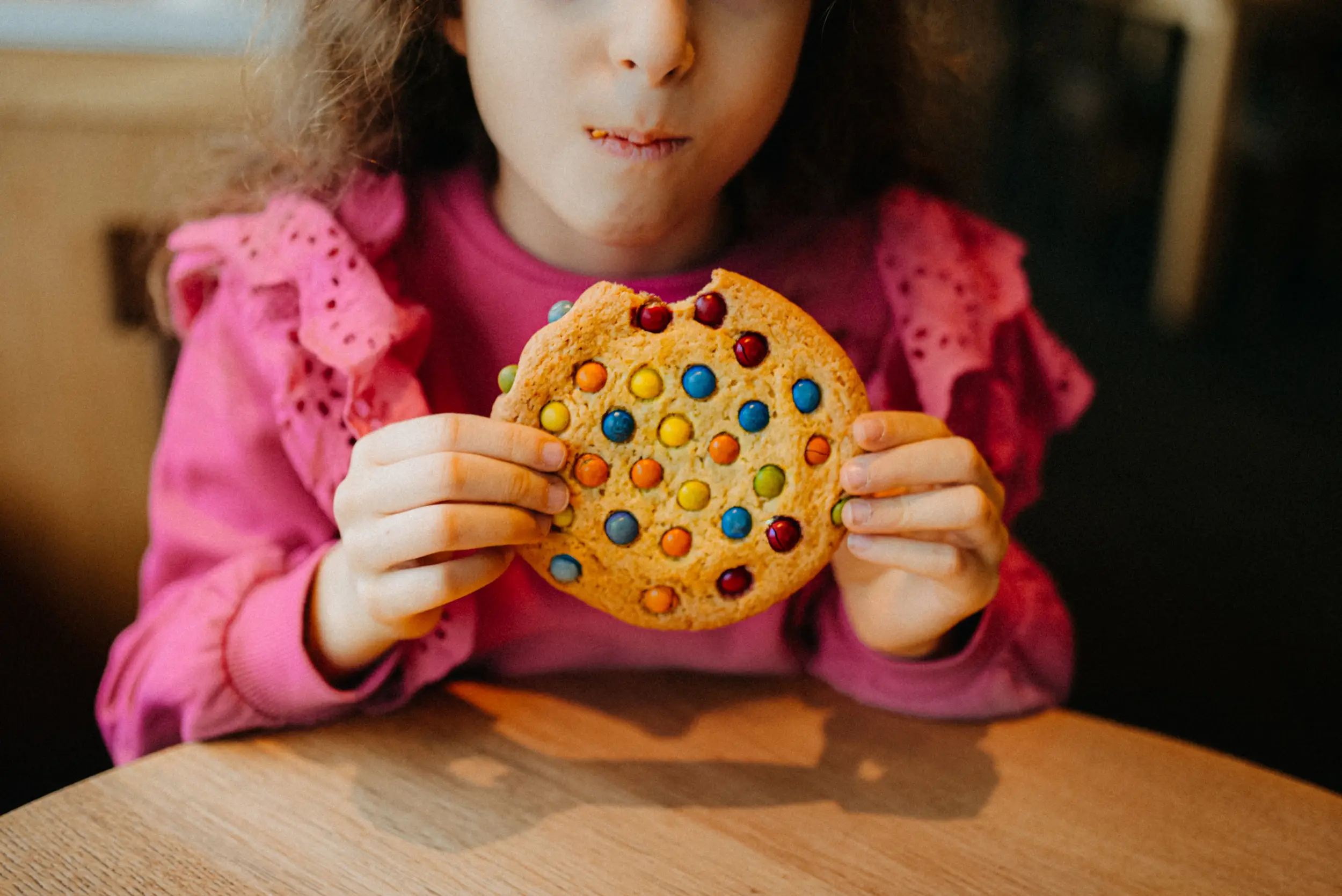
A study has found that children who eat more ultra-processed foods show stronger activity in the part of the brain linked to reward and motivation when looking at tempting foods such as cookies and fries.
Even more concerning, those heightened responses were associated with greater increases in body fat over the following year.
The findings have raised fresh questions about how children's eating habits could influence their developing brains, although experts are keen to point out that the research does not prove these foods are permanently changing the way children's brains work.
Advert
Published in JAMA Network Open, the study was carried out by researchers at the Keck School of Medicine at the University of Southern California.
It followed 46 children aged between seven and 10, all of whom had a healthy weight at the beginning of the research.
Researchers used MRI brain scans to examine how the children responded to pictures of appealing foods, including cookies and French fries.
They also assessed their diets and measured their body composition, including BMI, body fat percentage and waist circumference.
The team found that children who consumed more ultra-processed foods showed greater activity in an area of the brain called the dorsal striatum.
This region plays an important role in reward and motivation, including how we respond to things we find pleasurable.
When the researchers returned to measure the children's body composition one year later, those with stronger responses in this brain region tended to have experienced greater increases in BMI and body fat.
The researchers also found that accounting for the brain responses weakened the association between ultra-processed food consumption and BMI by 31 percent, and the association with body fat percentage by 44 percent.
In other words, the way children's brains responded to tempting food images may help explain some of the relationship between diets high in ultra-processed foods and changes in body composition.
Kathleen A. Page, the study's senior author and a professor at the Keck School of Medicine, highlighted why childhood is such an important period to investigate.
"Children's brains are still developing, habits are still forming and food preferences are still being made. It's an important period where the brain is very sensitive to food and the food environment," she said.

Expert advice
What does this mean for parents, and should families be worried about the occasional packet of crisps or biscuit?
Penelope Henderson, Registered Nutritionist (RNutr) and Children's Nutritionist at Nutrition 2 Nourish & Flourish, says it's important to be aware of associations, but not to be afraid of food.
She also warns against treating every food that falls into the ultra-processed category as equally unhealthy.
"I would focus on building a wide variety of foods as young as possible rather than demonising foods," she said.
"Not all ultra processed foods are nutritionally the same, for example some breads and fortified cereals fall into this category too," added the expert.
"Foods higher in sugar, salt or saturated fat can have a place in the diet, but we need to pay attention to how often they are offered and the amounts served."
How can parents encourage healthier eating habits without making food a battle?
For many families, completely avoiding ultra-processed foods simply isn't realistic.
They're often affordable, convenient and easy to fit around busy school and work schedules.
Rather than banning particular foods, Henderson recommends establishing a relaxed routine around meals and snacks.
"I would teach moderation through regular meals, planned snacks and boundaries. Offer manageable portions and respect when children show they have had enough.
"Avoid calling foods ‘good’, ‘bad’ or ‘naughty’, and try not to make pudding something they need to earn by eating vegetables," she added.
"This can make sweet foods seem more desirable and vegetables feel like a chore. You can say, ‘We’re having biscuits with our snack this afternoon,’ without bringing weight, calories or guilt into the conversation."
It's also worth remembering that the research does not establish what will happen to the children as they get older.
"The findings suggest a possible link between food related brain responses and later increases in body fat. But they do not show permanent brain changes or tell us what will happen to these children into adulthood," Penelope explained.
"The wider evidence around diets high in ultra processed foods deserves attention, while questions remain about processing itself and overall nutritional quality. For parents, I would keep the focus on supporting growth, variety and a positive relationship with food, rather than worrying about every mouthful."
The researchers acknowledge that tackling diets high in ultra-processed foods cannot fall entirely on parents.
Dr Page said: "Changing the food environment to help people access healthier, more minimally processed foods is an important part of the solution."
The study is still in its early stages, and further research will be needed to establish whether changing children's diets can actually alter their brain responses to food.
For now, the message for parents isn't to panic over the occasional biscuit or ready-made snack.
Instead, offering a variety of foods, keeping mealtimes positive and helping children develop a healthy relationship with what they eat may be a far more useful place to start.
 Jen Thomas