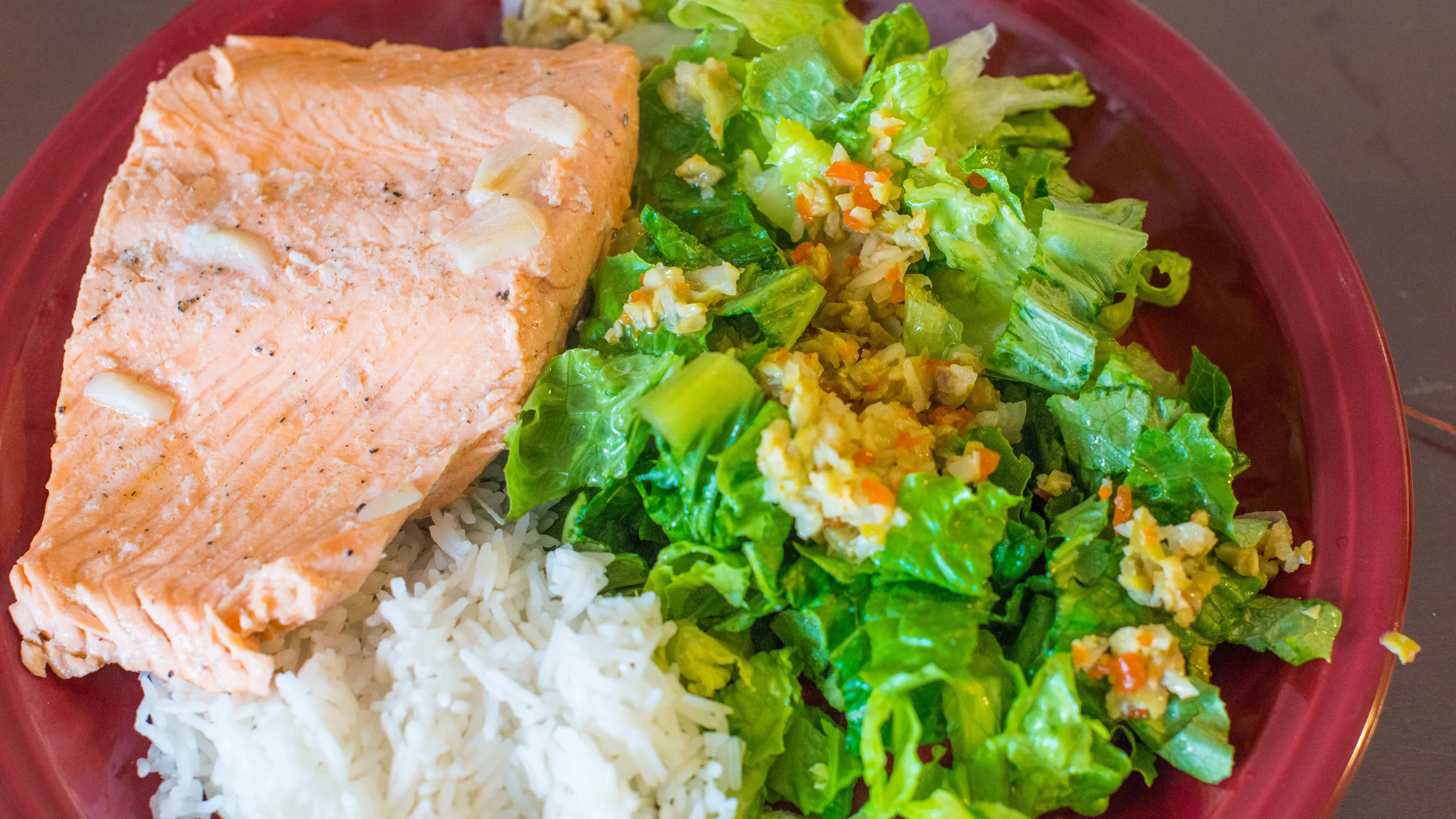
What the white 'goo' that comes out of salmon actually is

Picture this: you’ve chosen to cook a sweet, succulent salmon fillet for dinner. You laid it out on your baking tray, seasoned it to perfection, and shoved it in the oven.
However, when you’ve pulled it out, it’s suddenly covered in a strange white film that definitely wasn’t present 15 minutes ago.
If the scenario is all too familiar and you want to know if the white stuff is safe for you to eat, then don’t worry—we have the answers.
Numerous experts have written articles about the excretion, revealing exactly how it comes about and also giving handy tips on how to get rid of it.
Advert
Introducing albumin, a ‘flavourless, moisture-rich protein that collects on the surface of salmon as it cooks’, as per the Wild Alaskan Company.
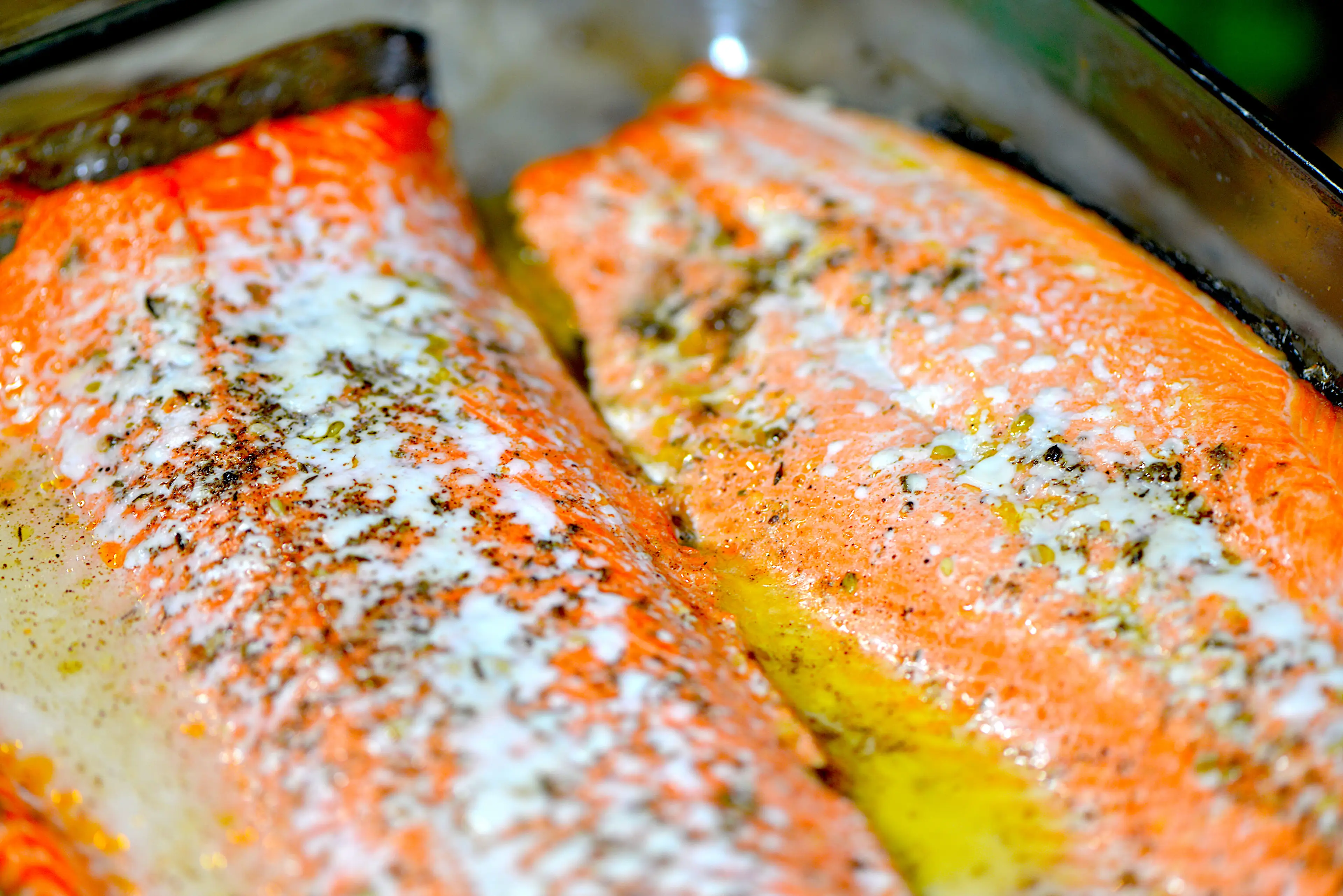
“It is completely natural and a normal part of the salmon cooking process. Albumin is safe to eat.”
The US company claimed that different cuts of salmon can be ‘more susceptible to albumin formation’, with salmon burgers more likely to produce a significant amount as they cook.
“Albumin can indicate how much moisture is left in cooked salmon. A small amount of albumin is normal, as fish naturally expels some moisture as it cooks,” the manufacturers wrote on their blog.
“However, when you see lots of albumin on the surface, it can suggest that the fish has lost a significant amount of moisture during the cooking process.”
Essentially, the higher the heat being used to cook the fish, the more likely it is that albumin will form.

Does albumin have any health benefits?
The natural, gooey substance that seeps out of your salmon not only doesn’t look great, but it doesn’t actually have any additional health benefits.
But that doesn’t mean you should avoid salmon in general!
The nutrient-dense oily fish is a good source of omega-3, with studies suggesting the item can also help lower blood pressure, reduce inflammation, and maintain strong bones and muscles.
Doctors suggest eating around two portions per week.
How to avoid albumin?
Despite describing albumin as ‘harmless’, Andrew Janjigian, baking teacher, recipe developer, and former test cook at Cook’s Illustrated magazine, understands that the excretion doesn’t always look appealing.
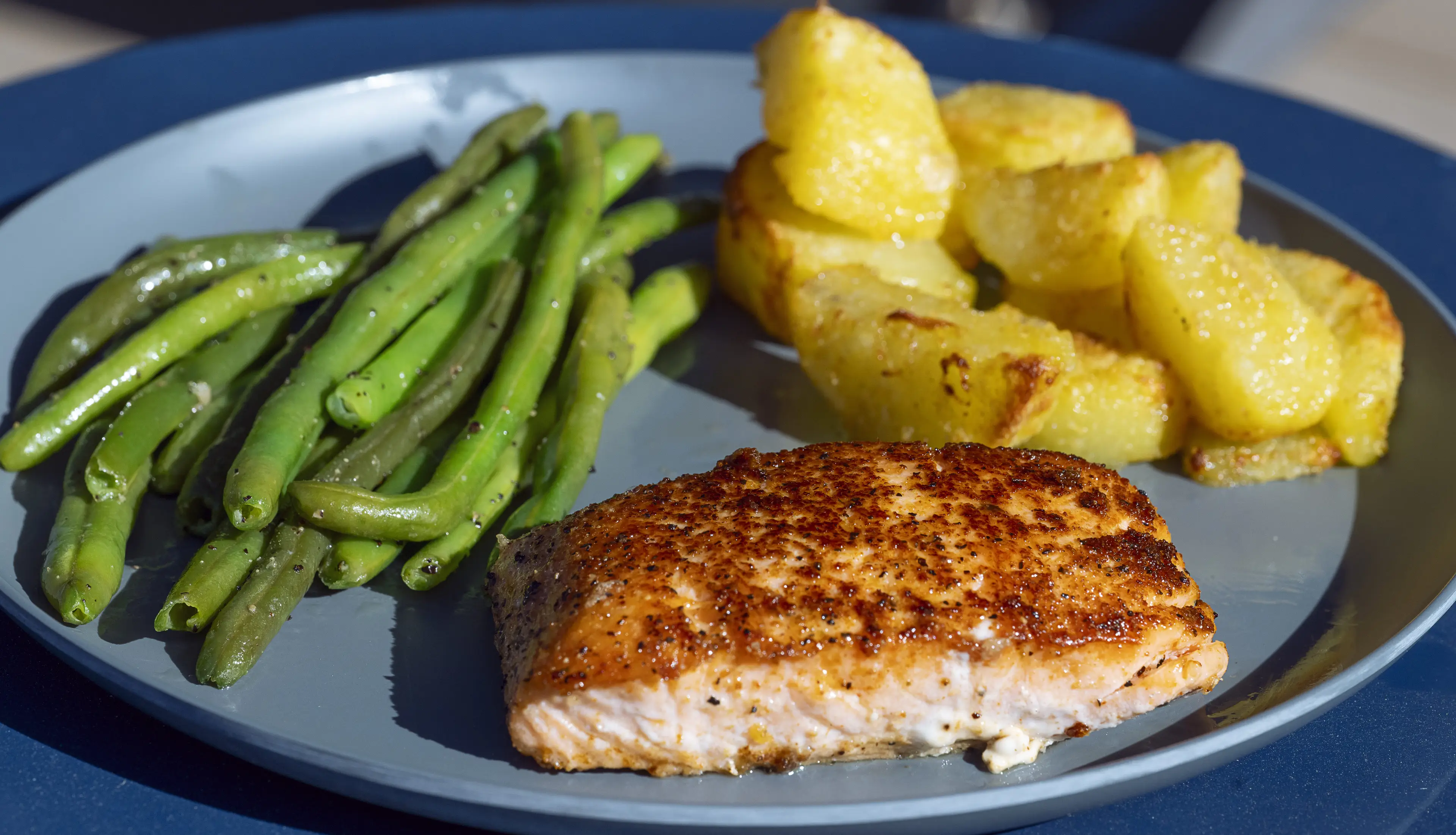
In an America's Test Kitchen article, he claimed there were two easy ways to eliminate the protein so that your fish slab appears aesthetically pleasing.
The first is to brine the raw fish, using five tablespoons of salt in two quarts of water for 15 minutes.
“This will not only reduce the presence of albumin but also season the flesh and help prevent it from drying out as it cooks,” he wrote.
Secondly, use a paper towel to swab the puncture site after taking its temperature.
Experts at EatingWell have suggested cooking salmon at a lower temperature. Bare in mind you will probably need to cook your fish for longer if you decide to turn down the thermostat.
 Ella Scott