
Raspberries urgently recalled after sickness spreads with norovirus contamination

Frozen raspberries have been recalled after a food safety investigation found a link between the fruit and an outbreak of norovirus.
The recall is the latest across the US and Canada, after various mixed berries were previously found to have a high risk of E.coli.
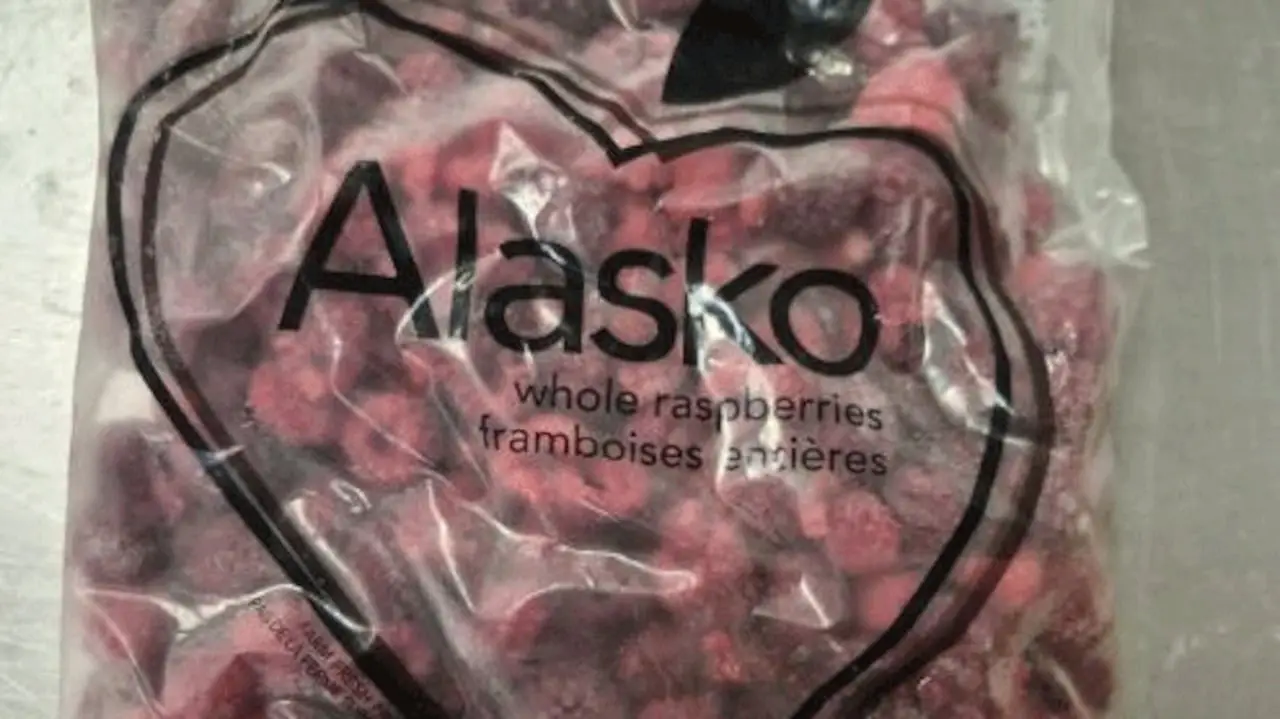
The Canadian Food Inspection Agency (CFIA) issued the recall on September 15, warning people not to eat certain Alasko frozen whole raspberries.
The products were distributed in Manitoba, New Brunswick, Newfoundland and Labrador, Nova Scotia, Ontario, Prince Edward Island and Quebec.
Advert
Illnesses have been reported in connection with consumption of the affected products, but the number of cases has not been revealed.
The recall has been classified as Class 1, the highest level used by the Canadian authorities, and they have stressed the importance of checking the labels.
It means there is a reasonable probability that eating the recalled food could cause serious health consequences.
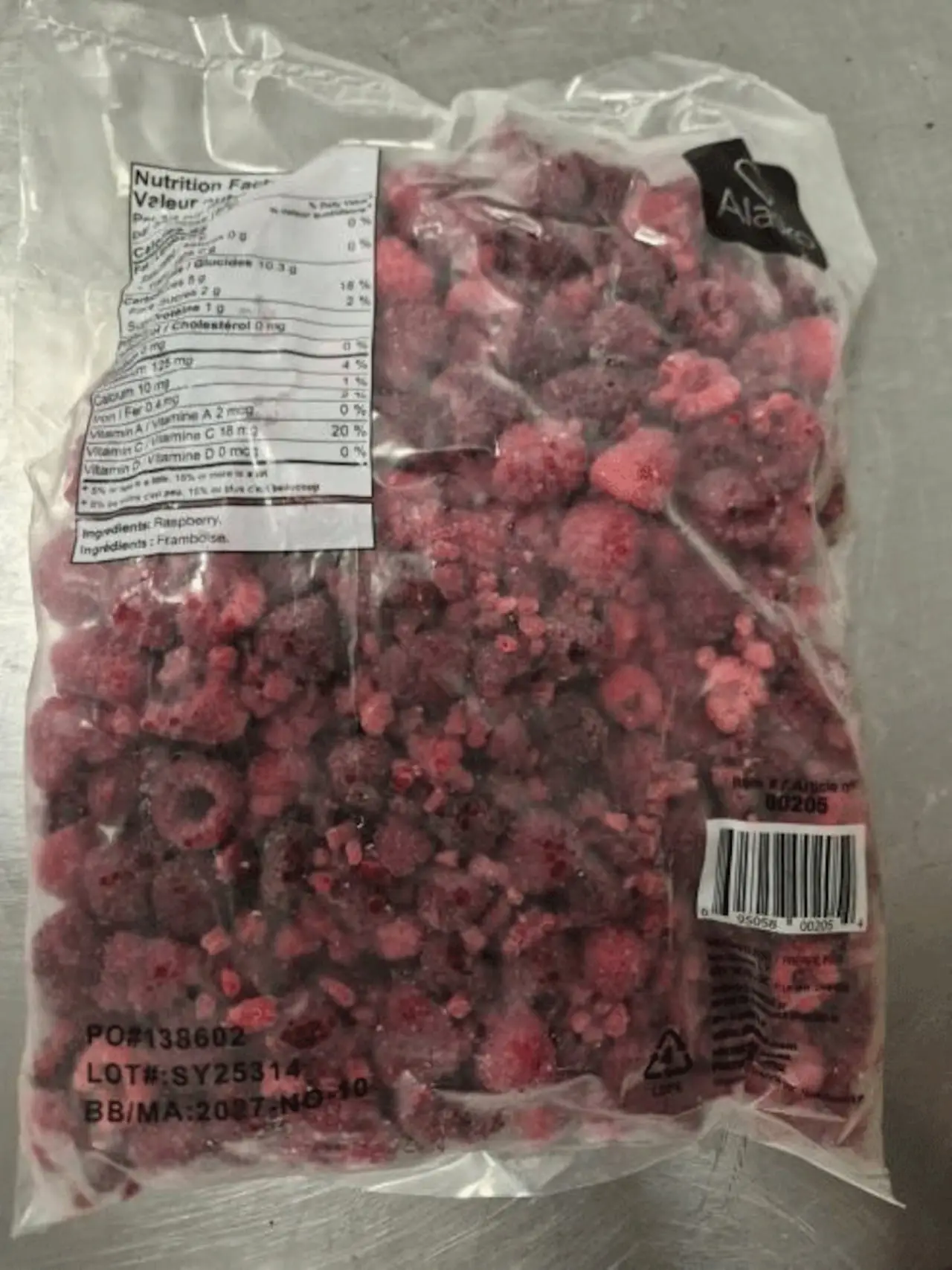
The recall covers Alasko Whole Raspberries sold in 1kg bags and Alasko IQF Whole Raspberries supplied in 5kg packs containing five 1kg bags.
Consumers should check the packaging carefully.
The affected products have lot number SY25314 and purchase order number 138602, with a best-before date of 10 November 2027.
The CFIA has told consumers, retailers, food service operators and institutions not to ‘consume, sell, serve or distribute the recalled raspberries.’
Anyone who has the affected fruit at home should throw it away or return it to the place of purchase.
Norovirus is highly contagious and is one of the most common causes of gastroenteritis.
Symptoms can appear suddenly and include diarrhoea, vomiting, nausea and stomach cramps.
According to the CFIA, symptoms usually develop between 24 and 48 hours after exposure, although they can begin as soon as 12 hours afterwards.
Most people recover within one or two days, but vomiting and diarrhoea can cause dehydration.
In more serious cases, hospital treatment and intravenous fluids may be necessary.
People who believe they have become ill after eating the recalled raspberries are advised to contact a healthcare provider.
The investigation into the raspberries remains under way.
The CFIA said further products could be recalled as officials continue to examine the source of the contamination and check that affected products have been removed from the market.
The warning comes during a period of increased scrutiny of frozen berries in North America.
In July, frozen organic blueberries sold through Publix stores in the US were recalled as part of an investigation into an E. coli outbreak.
The US Food and Drug Administration later expanded its concerns to additional frozen berry products connected to the same Chilean supplier.
The outbreak investigation involved E. coli O145:H28 infections, with illnesses reported in Florida and Georgia.
The FDA said some people who became ill had reported eating frozen blueberries before developing symptoms.
A separate recall in September involved Great Value Organic Triple Berry Blend sold at Walmart.
The frozen mixture, containing strawberries, blackberries and blueberries, was recalled because of possible E. coli contamination.
The key recommendation is to check the labels and to not consume them.
 Jen Thomas