Scientists are developing bananas that don't go brown

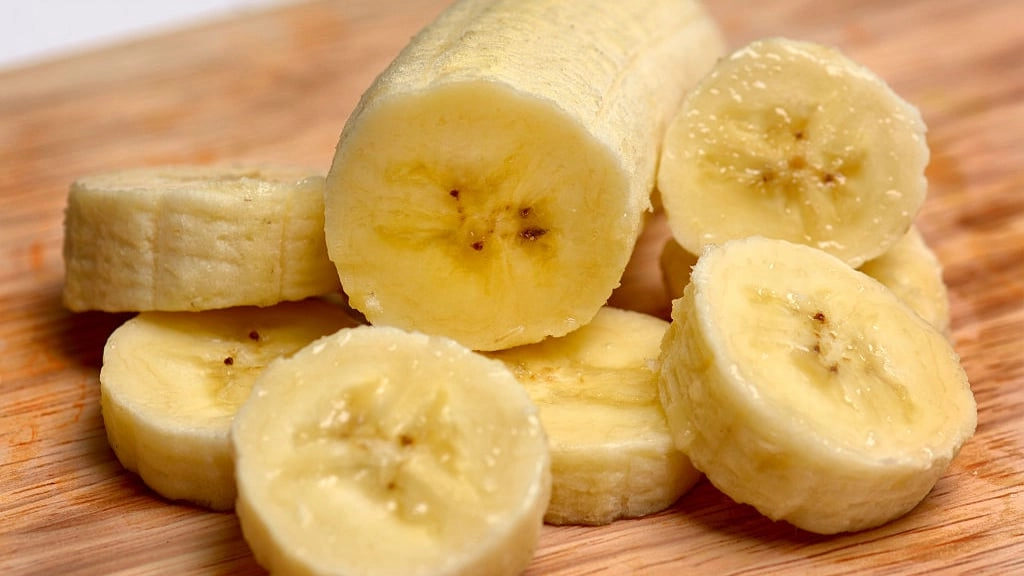
Scientists have developed a new type of banana that doesn't turn brown after being peeled, and the fruit could soon be making its way into UK supermarkets.
Anyone who's ever sliced a banana for their breakfast, only to find it turning an unappetising shade of brown minutes later, will probably appreciate this one.
A British biotechnology company has come up with a clever way of keeping bananas looking fresh for longer, potentially putting an end to one of the most annoying problems with the popular fruit.
The bananas have been developed by Norwich-based company Tropic Biosciences, which has used gene-editing technology to prevent the fruit from discolouring after being peeled or sliced.
Advert
The best part? According to the company, they taste and feel just like ordinary bananas.
The breakthrough has already received initial approval from the UK government, bringing the fruit one step closer to appearing on supermarket shelves.
How do the non-browning bananas work?
Normally, when you peel or cut a banana, the fruit begins reacting with oxygen in the air.
This triggers an enzyme called polyphenol oxidase, which causes the familiar brown patches to develop.
While the discolouration doesn't necessarily mean the banana has gone bad, it's enough to put plenty of people off eating it.
To tackle the problem, scientists at Tropic used a gene-editing technique known as CRISPR-Cas9 to alter three copies of a gene responsible for producing the enzyme.
By reducing its activity, they've managed to slow down the browning process without changing the banana's flavour or texture.
According to Tropic chief executive Gilad Gershon, the fruit can resist browning for an additional day or two after being peeled, with even longer-lasting results when refrigerated.
That could make a big difference for people preparing fruit salads, smoothies and breakfast pots in advance.
It could also open the door for supermarkets to sell more ready-to-eat products containing fresh banana, something that has traditionally been difficult because of how quickly the fruit changes colour.
Could the bananas help reduce food waste?
Beyond making breakfast a little more convenient, scientists believe the innovation could have a significant environmental impact.
A government study previously found that approximately 1.4 million edible bananas are thrown away in Britain every single day.
And around 30 percent of consumers admitted to binning a banana simply because it had developed a small bruise or black mark.
Tropic believes its new variety could reduce food waste and associated greenhouse gas emissions throughout the supply chain by more than 25 percent.
The company estimates the technology could potentially help cut annual carbon emissions from the global banana export market by over nine million tonnes.
That's because fewer bananas would be rejected during transportation, storage and preparation simply because of their appearance.
When will they be available in UK supermarkets?
The Department for Environment, Food and Rural Affairs (Defra) has approved a marketing notice recognising the bananas as precision-bred.
Unlike conventional genetic modification involving DNA from unrelated species, precision breeding makes targeted changes that could theoretically occur through traditional breeding methods.
However, the fruit still needs to pass a safety assessment by the Food Standards Agency before it can be sold in Britain.
Professor Cathie Martin, from the John Innes Centre in Norwich, told The Guardian that the approval process was still ongoing.
"It is not entirely clear how long this will take," she explained.
The bananas have already received regulatory approval in ten other countries, including Japan, Brazil and the Philippines, and are being grown in Latin America.
For now, British shoppers will have to stick with their usual bananas while the final checks take place.
But if everything goes to plan, those frustrating brown banana slices could eventually become a thing of the past.
Although anyone who loves making banana bread might have mixed feelings about that.
 Jen Thomas