Scientists think they've found a treatment for peanut allergies - it involves faeces

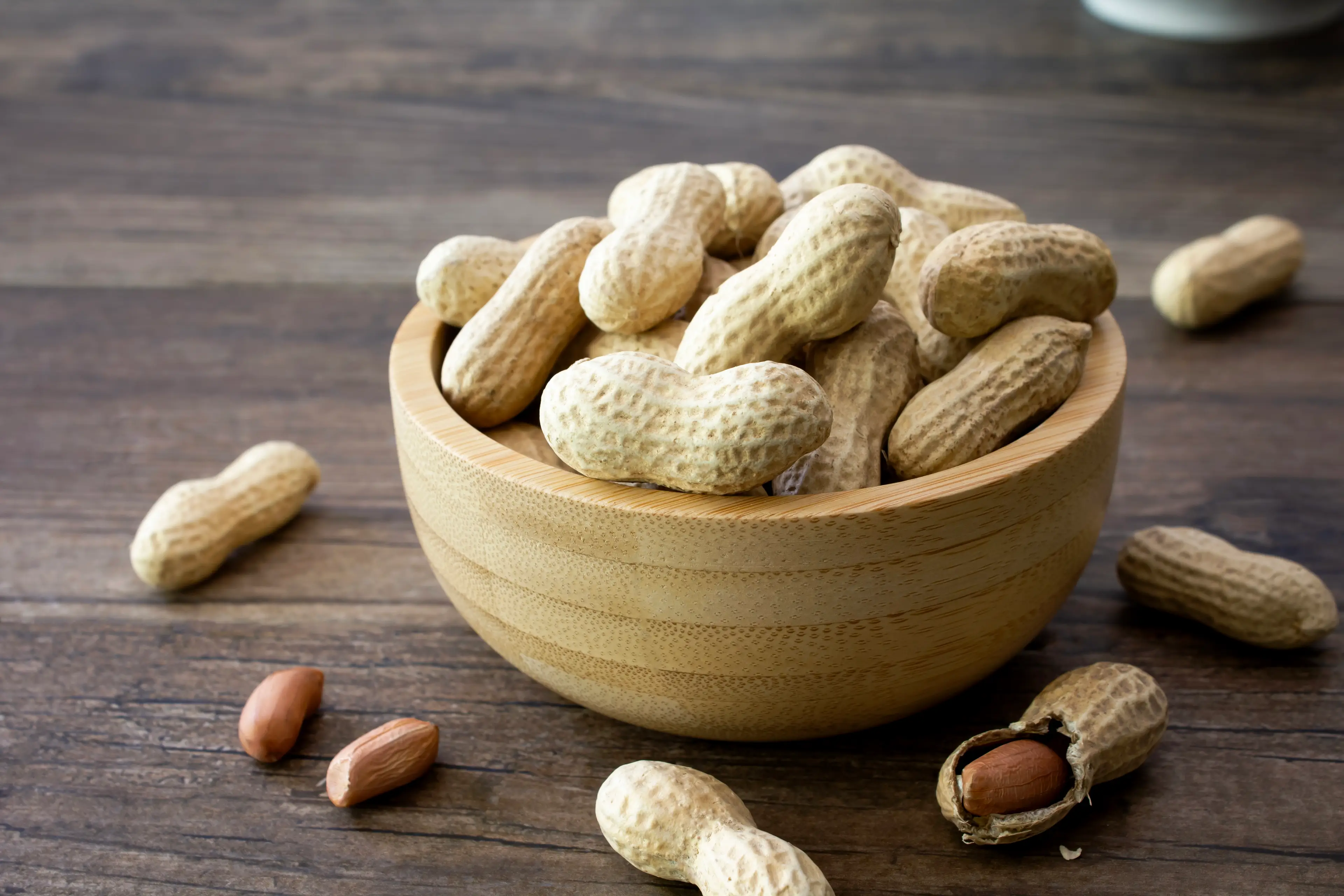
Peanut and tree allergies are extremely common in Britain — around 1 in 50 children (2 percent) and 1 in 200 adults have nut allergies, with side effects including mild skin irritation, stomach cramps, and vomiting, as reported by Anaphylaxis UK.
There has never been a cure for the allergy until now, with scientists boldly claiming faecal capsules could actually be the answer they’ve been looking for. Here’s everything you need to know.
The wacky suggestion that faeces may be an antidote to peanut allergies was outlined in a new study led by Rima Rachid, director of the Food Allergy Program and the Allergen Immunotherapy Program at Boston Children's Hospital, and Talal Chatila, director of translational immunology.
She claimed the result, published in Science Translational Medicine on 5 August, ‘provides the proof of concept that microbial therapy is an intervention that should be further evaluated for treatment of food allergy’.
Study suggests peanut allergies can be offset
Advert
Experts gathered 15 adults with a mean age of 21, all of which experienced allergic reactions after eating peanuts.
They were instructed to swallow 36 capsules containing the droppings of a healthy donor with no food allergies every day.
According to New Science, the idea was that the donor's gut microbes would help colonise the allergy sufferers' guts.
Testing at the four-month mark found that six of the 15 trial participants were now able to consume more peanuts without allergic reactions than previously observed.
The study suggested that the amount they were able to tolerate was equivalent to one whole peanut.
One person was eventually able to consume the equivalent of four whole peanuts.
“This landmark study was the first to demonstrate that a microbiome-based therapy may improve food allergy in people while also revealing how gut bacteria, their metabolites, and the immune system work together to influence treatment response,” Rachid claimed via the Boston Children’s Hospital website.
“These responses represent a marked improvement,” she continued.
Research criticisms, complaints, and next steps
However, the study was not without its faults; the expert admitted that participants still have to avoid peanuts and carry an EpiPen as researchers have yet to discover ‘how long the protective effect’ of the donor’s faeces will last.
Some of the volunteers reported side effects from the capsules, like diarrhoea or abdominal pain.
People also quit the study or didn’t become more tolerant of peanuts, possibly because ‘the microbes from the donor faeces failed to colonise their guts’, Rachid said.
John Ziegler at the University of New South Wales, Australia, has argued that more research should be undertaken before conclusions can officially be drawn
Rachid and Alexander Khoruts, MD, of the University of Minnesota, are currently embarking on the next step: running a larger trial in children and teenagers aged 12 to 17 with peanut allergies.
Unlike the first sample, these kids will either take purified capsules containing concentrated faecal microbes from a healthy donor or a placebo.
“Larger studies of faecal and microbiota transplantation are now essential to confirm these findings, identify the patients most likely to benefit, and discover beneficial bacteria that could be developed into targeted probiotic therapies for food allergy,” she added.
You can read the full findings via Science Translational Medicine.
 Ella Scott