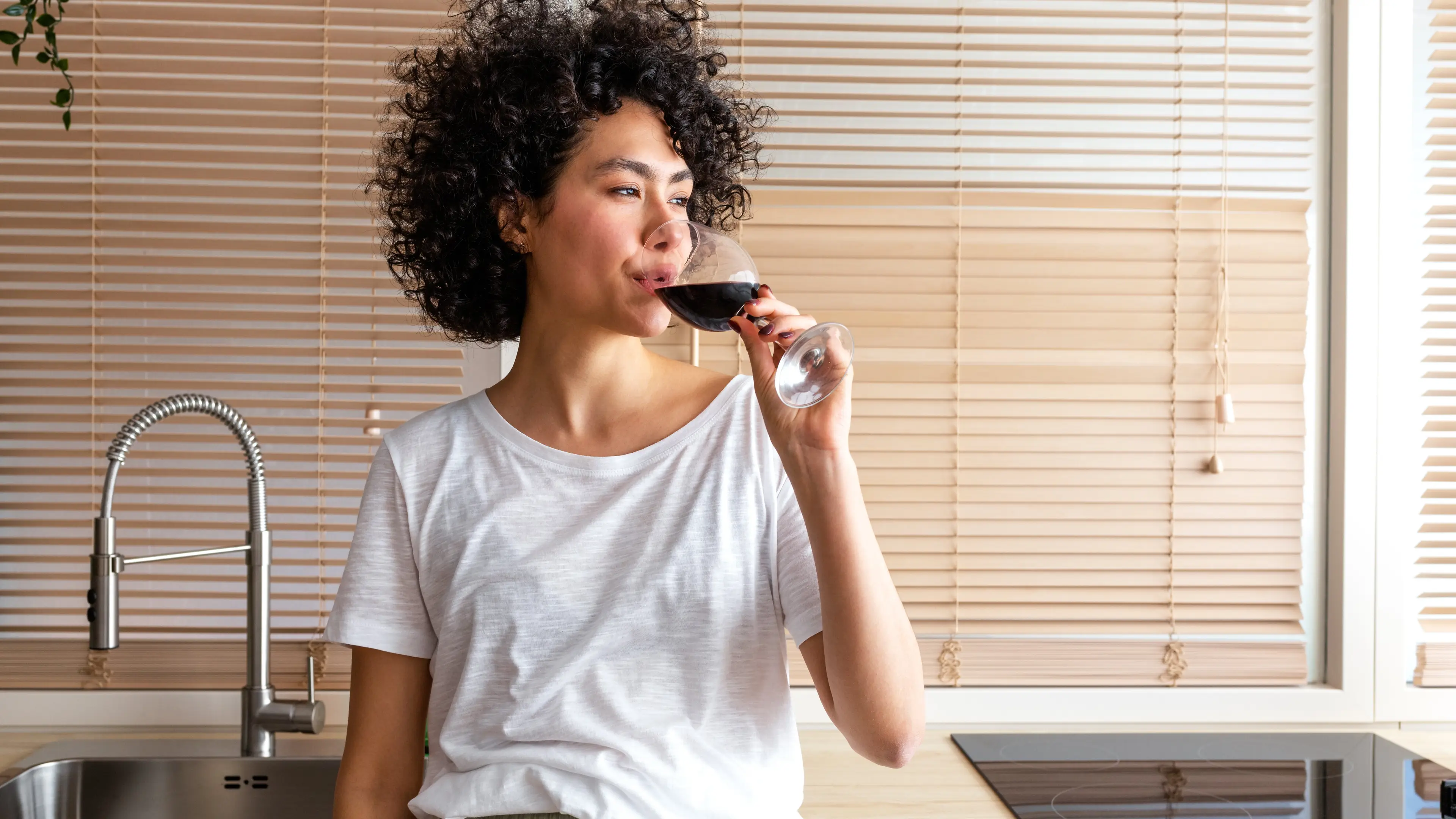
Woman shares stark warning to 'wine o'clock mums'

Warning: This article contains discussion of alcoholism which some readers may find distressing.
A sobriety expert has explained how her mental health deteriorated after she firmly became embroiled in ‘wine o’clock mum’ culture.
Even though the World Health Organisation (WHO) has stated that there was ‘no safe alcohol drinking level’, it hasn’t stopped some people from boozing.
National statistics for the UK suggest that around 42 percent of women drink once a week, while a study, published in the Alcohol and Alcoholism journal, found that 33.9 percent of parents reported snaffling a glass of alcohol each day, or a couple of times a week.
Advert
It’s believed that nearly 2.5 million children are living with one or both parents suffering from serious alcohol dependency or abuse (via the UK Parliament) - and many of these are so-called ‘wine o’clock mums’.
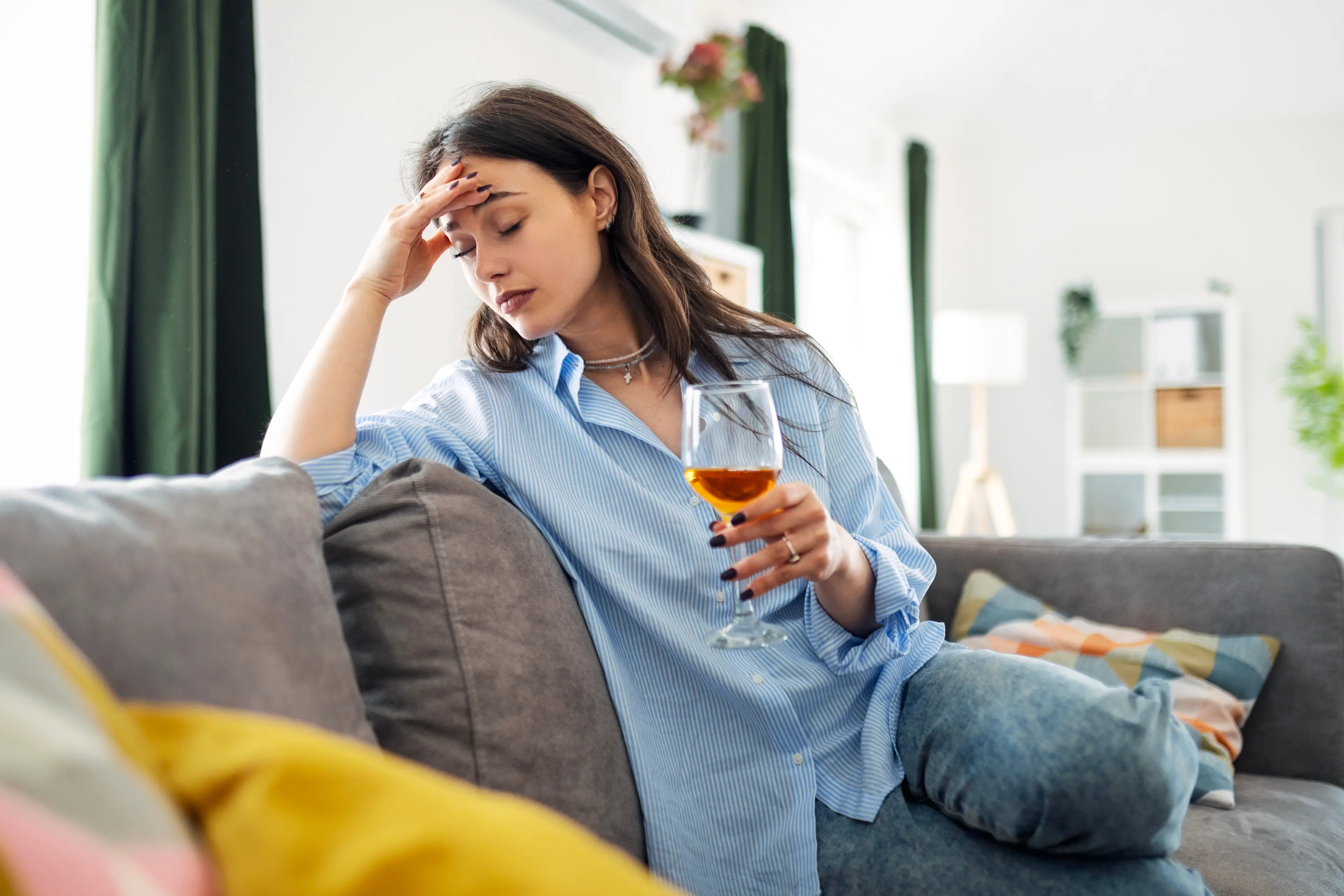
What is a ‘wine o’clock mum’?
If you’ve ever found yourself on MumTok, then you may have come across humorous videos showing mothers religiously cracking open bottles of wine at 5pm.
These creators, called ‘wine o’clock mums’, often consume alcohol daily, using it as stress reliever or as a symbol of freedom, as per Harley Therapy.
Sarah Rusbatch, an accredited sobriety and grey area drinking coach based in Australia, is a self-described former ‘wine o’clock mother’.
In a recently penned a piece for The Telegraph, she discussed how she finally realised she had a troubled relationship with drinking.
After recounting how she drank as a student, guzzled booze as a backpacker, and indulged in cocktails after work in London, the expert revealed that after moving across the world and having kids with her husband, she’d find herself ‘counting down to 5pm bottle-opening time’.
“I heartily embraced ‘wine o’clock’ along with every other mummy I knew (for play dates after midday, it was a given that drink would be involved,” she admitted.
“Heavy drinking was – and remains – a popular form of self-care for exhausted mums. But the problem was, it was the opposite.”
Sobriety expert reveals impact of daily drinking
At the height of her drinking, Rusbatch said that he sleep was shot, her anxiety was through the roof, and she would ‘analyse perfectly innocent text messages from friends the next day, feeling paranoid they were ‘off with me’.
“Then panic attacks began,” Rusbatch continued, alleging that she wasn’t really ‘living’ during the height of her ‘wine o’clock mother’ era.
Instead, she claimed she was ‘merely existing’ and that she ‘hated’ the kind of parent she had become.
In a blog post, written in February 2025, Rubatch warned that tapping into ritualistic drinking caused her mental health to deteriorate.
“Alcohol started taking so much more than it was giving.”
The drinking coach replaced everyday alcohol with exercise
After several attempts, the coach eventually cut alcohol out of her life in April 2019.
She replaced it with yoga, running, ice baths, saunas, and used essential oils that made her ‘feel safe’.
The mum-of-two added that once she’d eliminated booze from her diet, her relationships with her children ‘got better’.
She also remarked that she had so much more energy and could play sports in the garden with the pair.
But Rusbatch isn’t the only victim of ‘wine o’clock’ fever.
Former ‘wine o’clock mum’ details consequences
In 2022, another mum, Rachael Shephard, told Metro that she would start ‘drinking the moment I got in the door from the school run at 4:30pm’.
“In my head it was close enough to ‘it’s 5 o’clock somewhere’ to be acceptable. I’d drink while they watched TV, I’d drink while I made their tea,” she lamented.
After her mother died and she got divorced, Shephard said her alcohol tolerance had increased and she was ‘having up to two bottles’ of wine per night.
“Some people claim to have a single lightbulb moment, but mine was a slow, gradual realisation that I was no longer happy.

“I loathed how I felt the day after drinking, how exhausted I felt, how I could never sleep properly, how all I thought about was booze,” she penned.
Shephard eventually quit booze and remarked on how ‘mummy drinking’ memes had made her alcohol addiction seem normal.
How to cut back on booze
There are various tried-and-tested methods for reducing your alcohol consumption, including scheduling alcohol-free days and setting yourself limits, according to Change Grow Live.
Writing down how much you consume in a week may help you understand your habits more, the health and social care charity added.
Rusbatch, who hosts an online global community called ‘The Women's Wellbeing Collective’ via Facebook, recommends replacing your 5pm glass of wine with a ‘delicious alcohol-free’ alternative.
“If you usually go to the fridge as soon as you're home for wine to relax, continue making yourself a nice drink – just replace the wine,” she told The Telegraph.
Please drink responsibly. If you want to discuss any issues relating to alcohol in confidence, contact Drinkline on 0300 123 1110, 9am–8pm weekdays and 11am–4pm weekends for advice and support.
Topics: Alcohol, Drinks, Social Media, TikTok
 Ella Scott