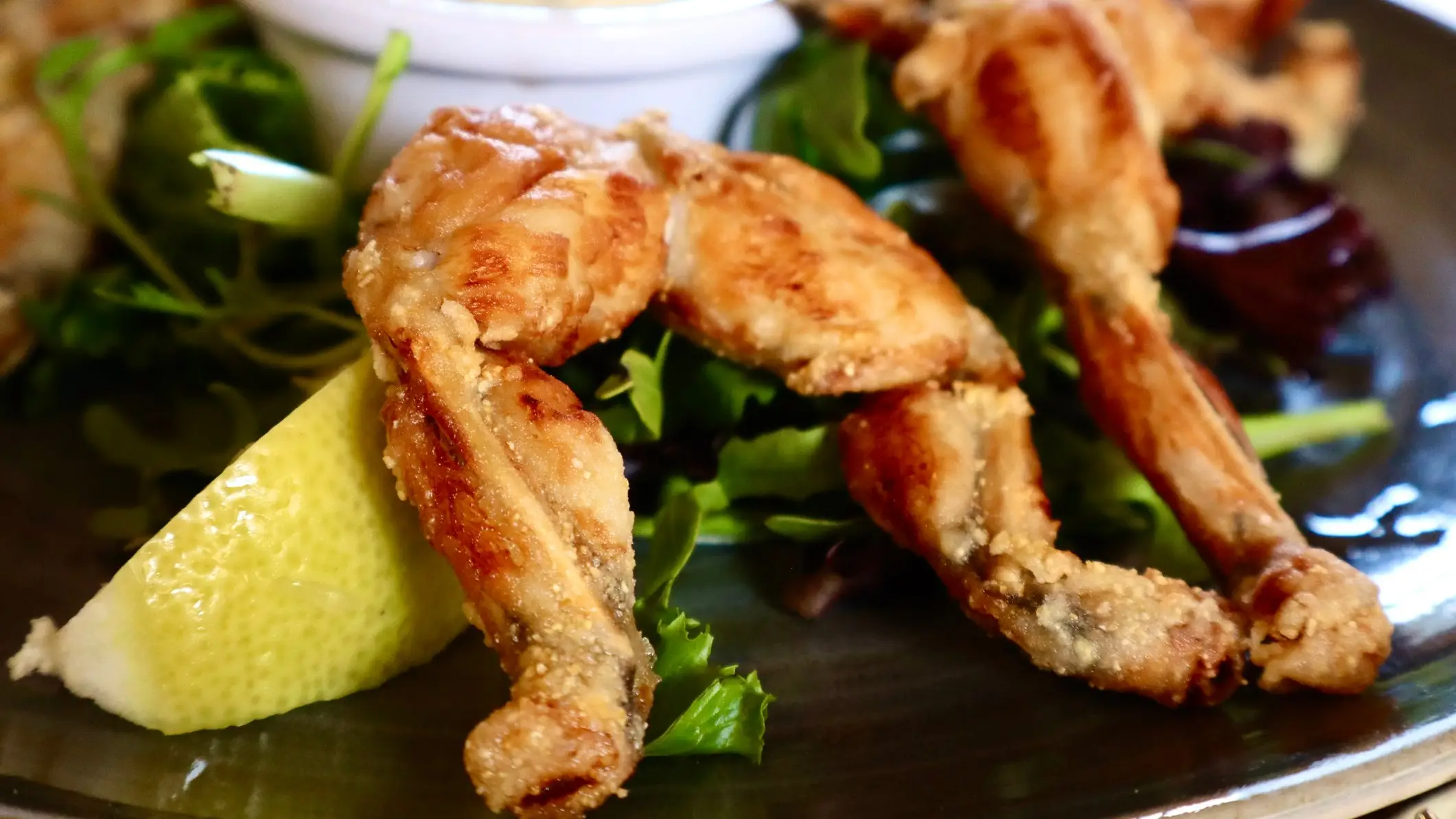
Record number of frogs' legs imported into the UK

Britain's appetite for frogs' legs appears to be growing, with a record 34 tonnes imported into the UK last year.
That’s despite the dish remaining something of a culinary curiosity for most people.
New trade figures reported by The Sun show that UK imports reached 34 tonnes in 2025, a dramatic increase from previous years.
Over the past decade, the average was less than 10 tonnes a year.
Advert
Business is booming, and a whopping £281,000 was paid in import tax on the amphibian delicacy, compared with £104,000 in 2020.
Frogs' legs are, of course, closely associated with French cuisine, but Britain clearly has its own group of enthusiasts.
While you are unlikely to find them next to the sausages and chicken breasts in your average supermarket, they have been appearing on restaurant menus for years.
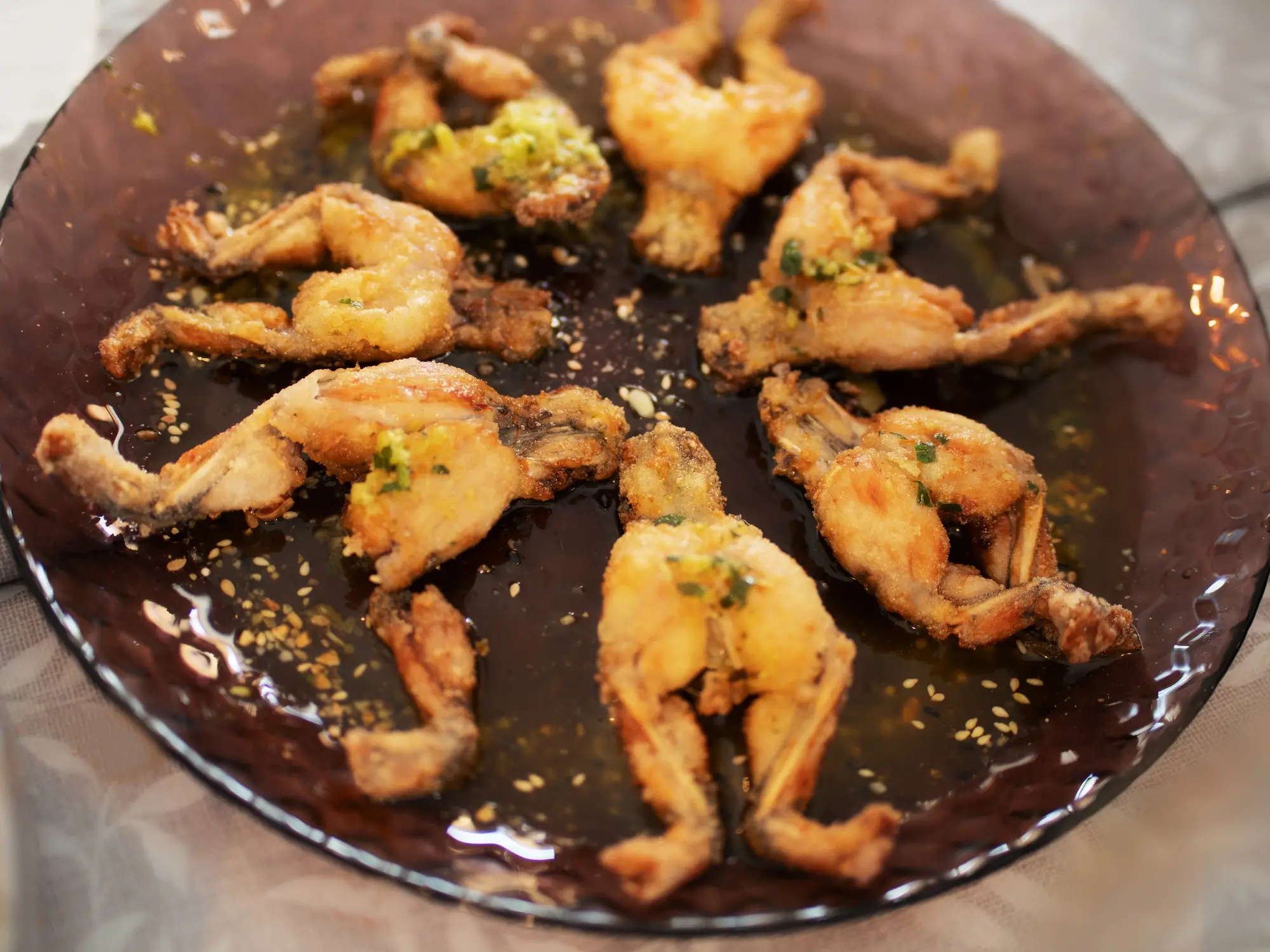
One London restaurant that knows its way around the dish is Le Sacre Coeur, a French bistro which has been serving frogs' legs since 1994.
Head chef Gungor Arslan said the restaurant has noticed strong demand, although getting hold of the product has become increasingly difficult.
“We have been serving frog legs since 1994, so they have been a long-standing part of our menu,” Arslan told The Sun.
He said additional certificates and paperwork had made sourcing them harder over the past year, while the price has also risen sharply.
“The price has also doubled, but they remain very popular,” he said.
The restaurant says it makes sure its Vietnamese suppliers meet its welfare requirements.
Vietnam is one of several countries supplying the international trade in frogs' legs, alongside countries including Indonesia, Turkey and Albania.
Europe has long been the biggest market, with France and Belgium particularly prominent in the trade.
This is where the numbers become rather startling.
A scientific review of the international frogs' legs trade found that the EU imported around 40.7 million kilograms between 2010 and 2019.
Researchers estimated that this could represent somewhere between 814 million and two billion individual frogs, depending on the size of the animals and the amount of meat obtained from each one.
The UK figure is tiny by comparison, but its recent jump is nevertheless striking.
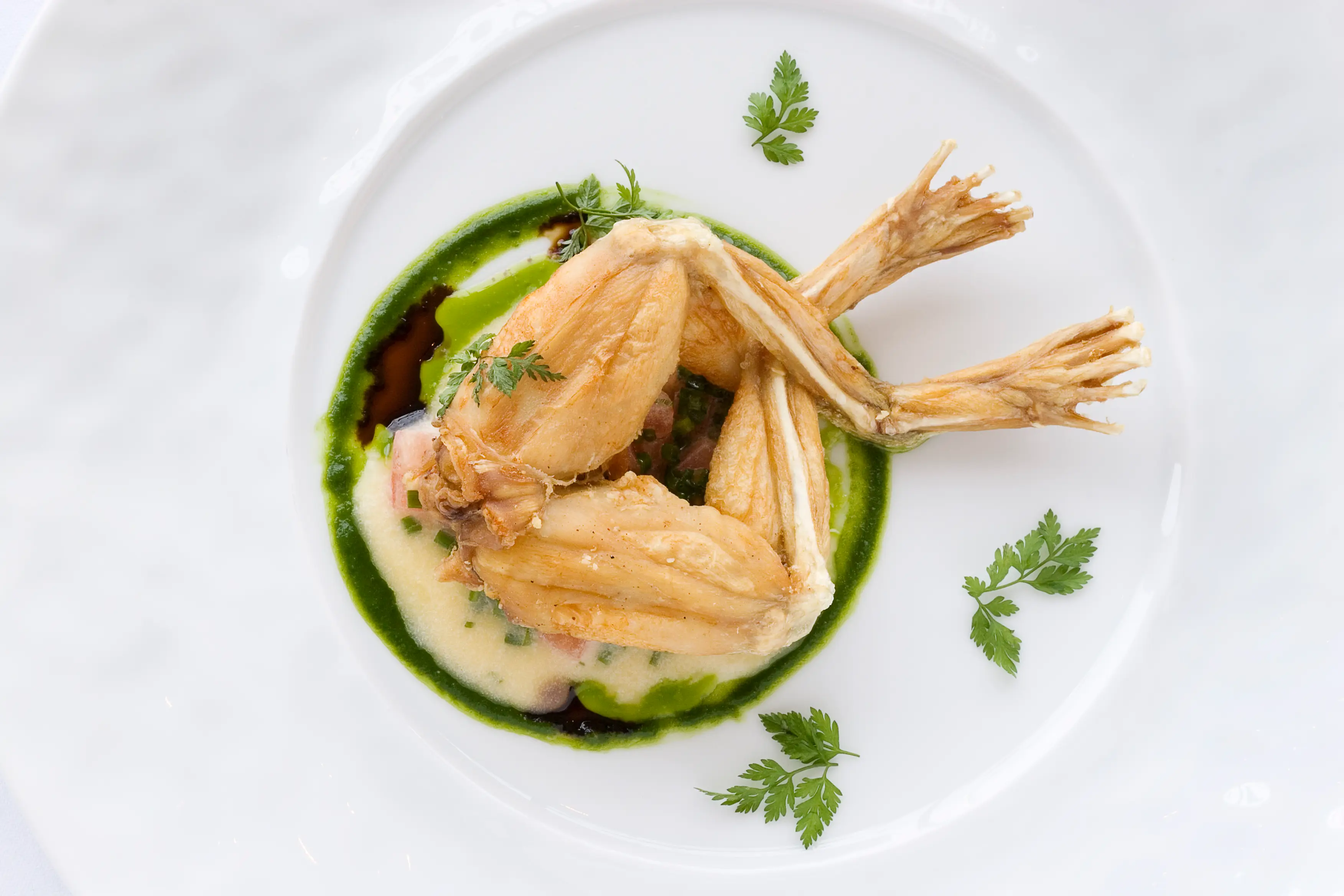
In fact, 34 tonnes is more than three times the sort of annual quantities Britain had been importing over much of the previous decade.
The growing appetite for frogs' legs has also raised concerns among conservationists and animal welfare groups.
Research into the European trade has warned that millions of wild frogs are killed for their legs, with concerns over over-harvesting, declining populations and a lack of transparency around exactly which species are being traded.
A 2023 study described the international trade as suffering from significant data gaps, while researchers warned that overexploitation is becoming an increasingly important threat to some frog populations.
National Geographic, reporting on the same research, noted that the EU imported an estimated 89.7 million pounds of frogs' legs between 2011 and 2020 and highlighted concerns over the impact on wild populations.
There are also animal welfare concerns surrounding farming and processing practices.
The latest report highlights allegations from animal rights organisation PETA concerning frogs bred in Vietnam, including claims that some were skinned while still alive.
Those allegations concern particular practices and suppliers, rather than proving that every frog entering Britain is treated in this way.
For anyone who has never eaten them, frogs' legs are often described as having a flavour somewhere between chicken and fish, with a delicate texture.
They are certainly no longer confined to the menus of French restaurants. The latest import figures suggest there is a small but growing British market for them too.
Whether 34 tonnes represents the beginning of a great British frog-leg boom or simply a blip in an otherwise niche market remains to be seen.
 Jen Thomas