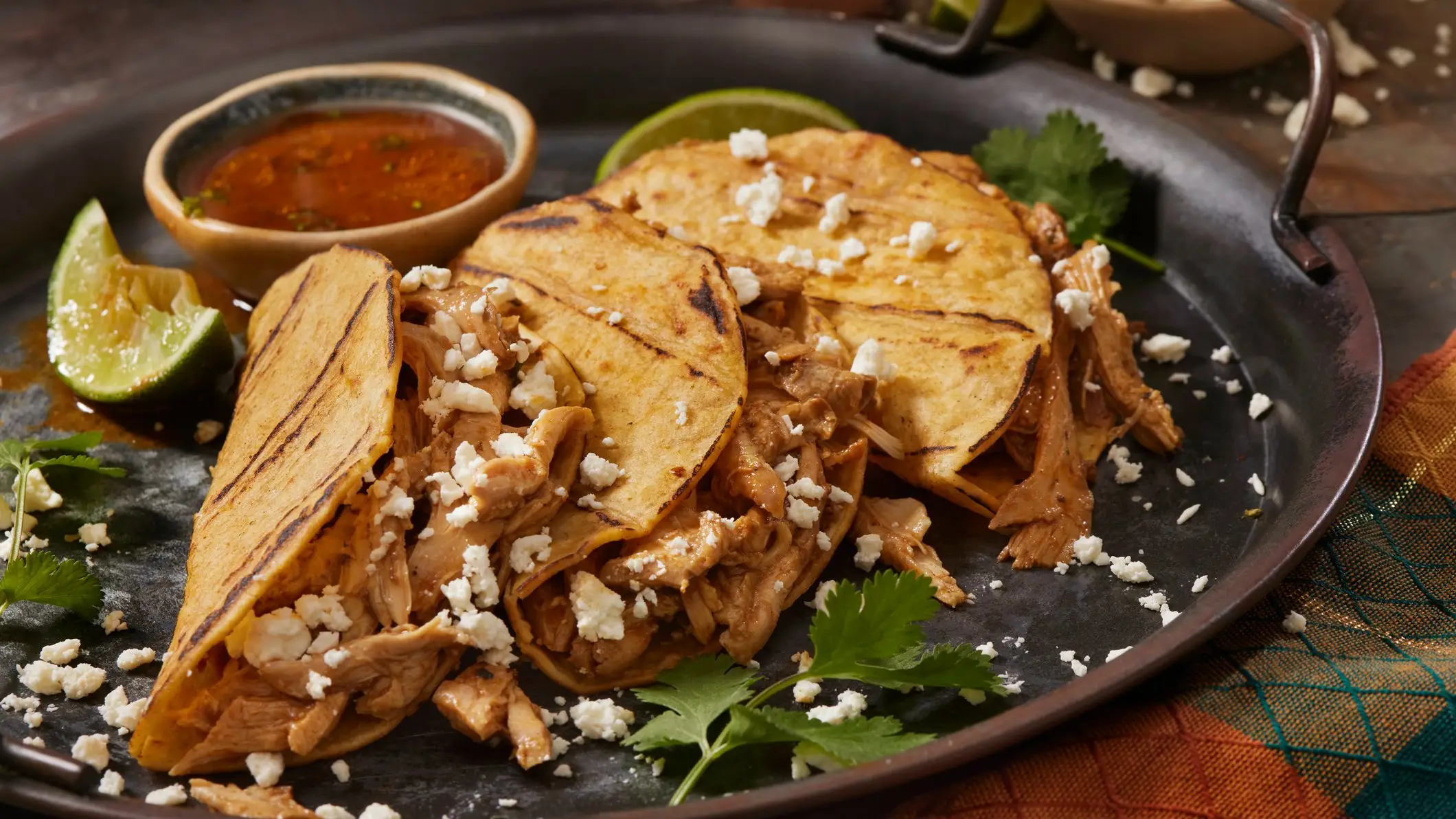
California's 'tortilla law' may be rolled out to other states

California’s new 'tortilla law' came into effect at the start of this year, subtly changing the rules around corn masa flour and wet corn masa products sold in the state.
Introduced back in January, the measure in Assembly Bill 1830 requires folic acid to be added to those products, bringing a familiar staple into the wider conversation around food fortification in the US.
While the nickname has helped it travel across social media and other online spaces, the law itself was introduced for a serious reason. Supporters say it could help reduce neural tube defects, severe conditions that develop very early in pregnancy, by extending a public health measure that has long applied to many wheat-based foods but not to corn masa.
Now the California measure may be spreading, with Alabama set to bring in a similar law in June and Florida, Georgia, Oklahoma, and Oregon also considering legislation.
Advert
According to the LA Times, Texas, Delaware, New Jersey, and Pennsylvania have also shown active interest, raising the prospect that California’s approach could be adopted more widely.
The push comes after years of research around folic acid fortification in the US. Since 1998, folic acid has been required in many enriched wheat-based foods, including breads, cereals, and pasta.
Reporting on the latest developments says that the move cuts serious birth defects such as spina bifida and anencephaly by about 30 percent, preventing around 1,300 cases a year. Corn masa flour was left out of that original mandate, despite being a staple in many Latino diets.
That omission has become central to the argument for change. By 2023, only around one in seven corn masa flour products contained folic acid, while no corn tortillas did. Latinas are reported to have the highest rates nationally of pregnancies affected by neural tube defects, and in California, the rate among pregnant Latinas is said to be twice as high as for white or Black women.
For Andrea Lopez, whose son Gabriel died 10 days after birth in 2011 after being born with anencephaly, the law is tied to a deeply personal loss. She said: “It’s such a small effort for such a tremendous impact…There is very little that I wouldn’t do to spare anybody this heartache.”
California Assembly member Joaquin Arambula, who sponsored the legislation passed in 2024, said the state’s move could open the door for others. He said: “You have to be the first oftentimes to get the ball rolling…So, I’m glad other states have taken up that mantle.”

The shift is already being reflected by major manufacturers. Mission Foods now adds folic acid to all of its branded and private-label corn tortillas in the US, while Gruma has said 97 percent of its retail sales in the country now include folic acid, with the remainder expected to follow before July.
There has also been criticism. Robert F. Kennedy Jr. attacked the California law in a post on X (formerly Twitter), writing: “This is insanity. California is waging war against her children — targeting the poor and communities of color.”
According to medical experts and other advocates, though, those accusations are baseless, and Kennedy’s spokesperson has reportedly declined to elaborate on U.S. Health and Human Services Secretary’s comments.
Topics: Social Media
 Ben Williams