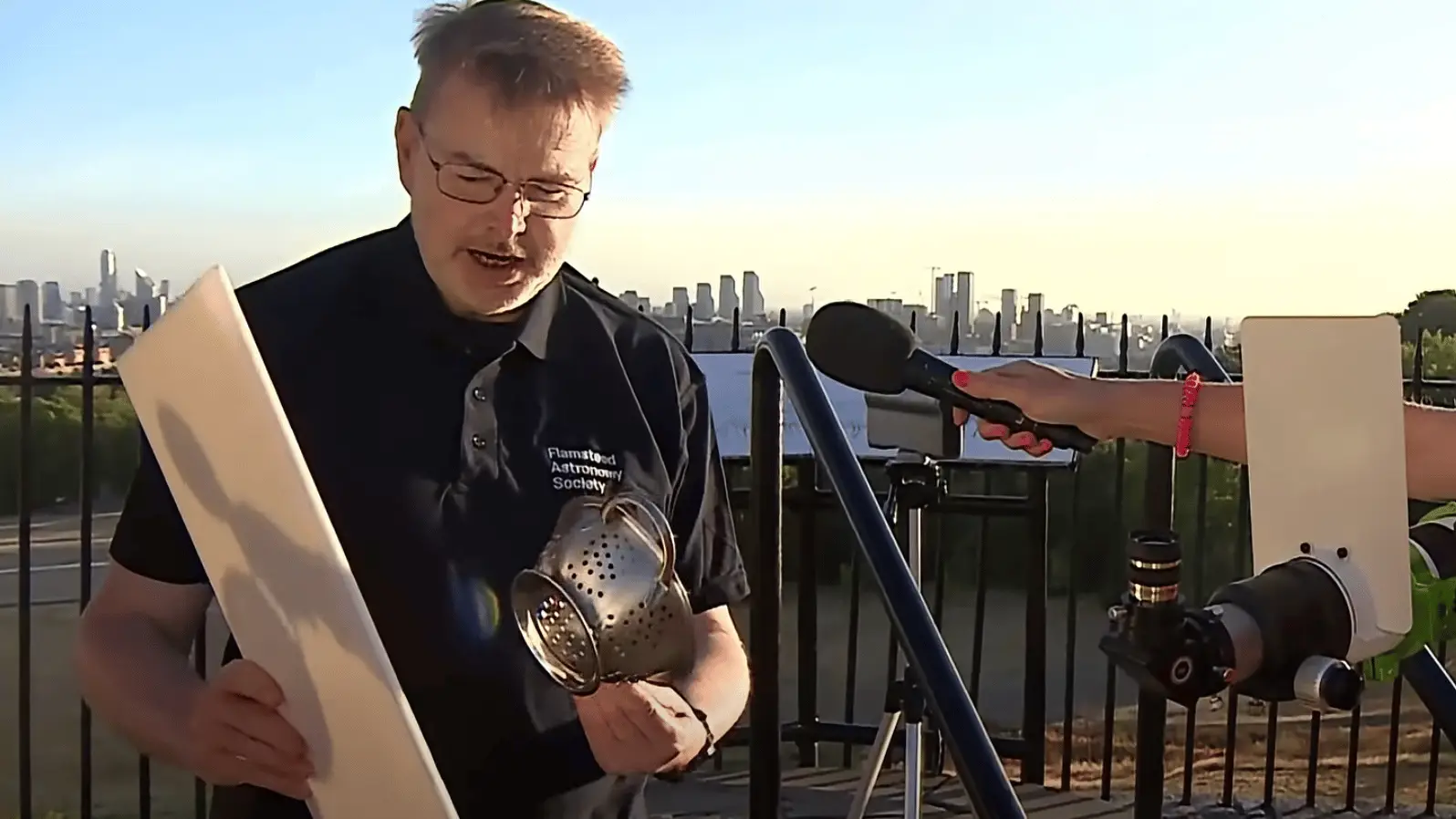
How to use a colander to view the solar eclipse without glasses

Don’t fret if you didn't manage to get your hands on a pair of solar eclipse glasses in time to view tonight's phenomenon, as an astrophysicist at Oxford University has said you can use a colander instead.
The United Kingdom is currently preparing itself for what Sky News has dubbed the ‘most spectacular solar eclipse in a generation’.
On Wednesday, 12 August, the once-in-a-generation event will see the moon pass directly between the Earth and the sun, plunging the country into total darkness for a brief period.
It’s understood that London dwellers will see up to 96 percent of the sun covered, while those living in Spain, Iceland and Greenland will experience the eclipse in all its glory.
Advert
The partial eclipse will make first contact at 6.08pm in Edinburgh and Glasgow, with the eclipse maximum hitting at around 7.05pm.
In Manchester, first contact is scheduled for 6.13pm; Norwich at 6.15pm, and London, Bristol, and Cardiff at 6.17pm.
How to use a colander to view the solar eclipse
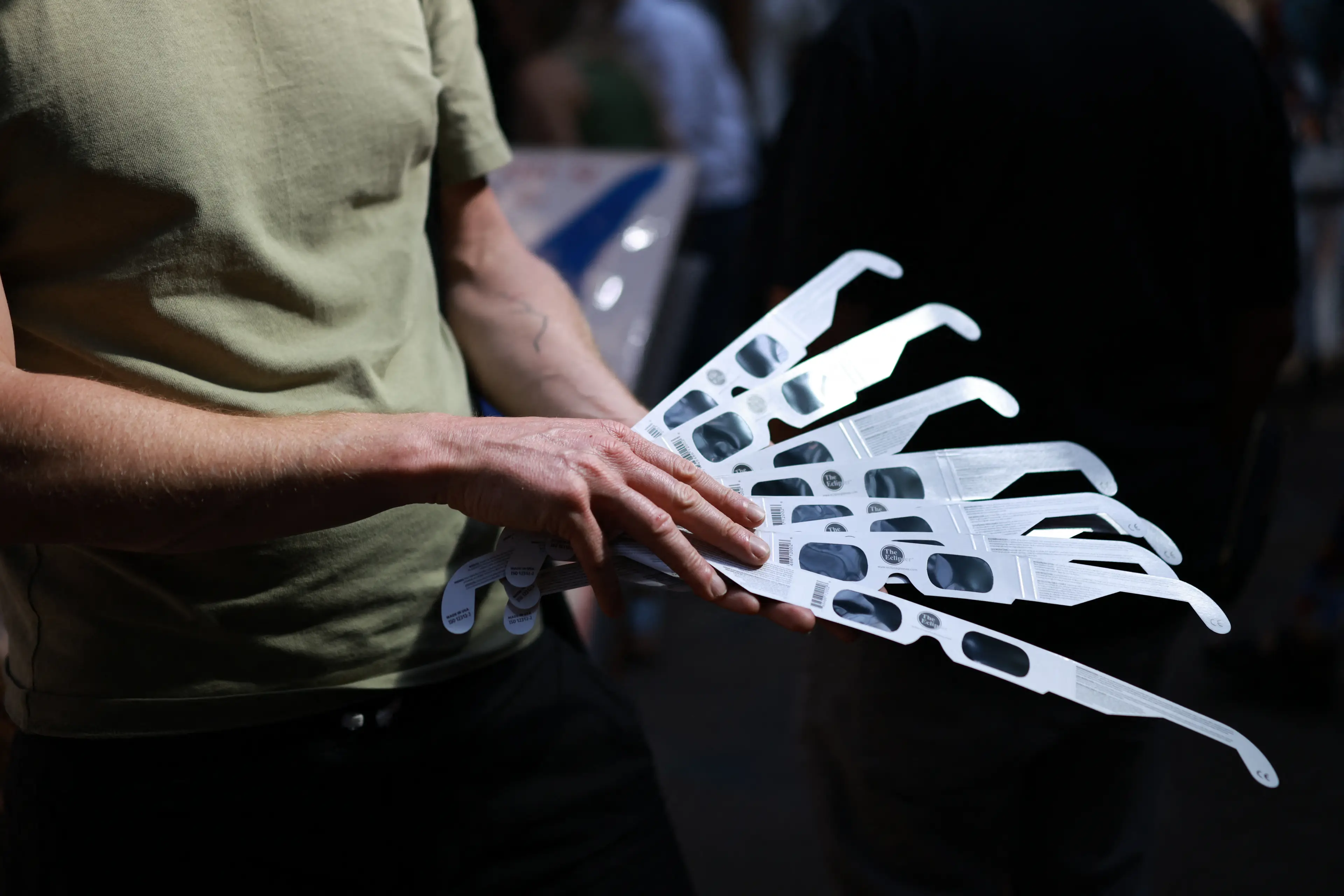
Keen stargazers are probably already aware, but you can seriously damage your eyesight if you directly watch the eclipse without UV protection.
Many have already purchased specialist eclipse glasses. Without yours? Use a colander instead, says Dr Becky Smethurst.
The British astrophysicist and Royal Astronomical Society Research Fellow at the University of Oxford recently took to social media to show hopeful eclipse watchers how they can use a bit of kitchenware to their advantage.
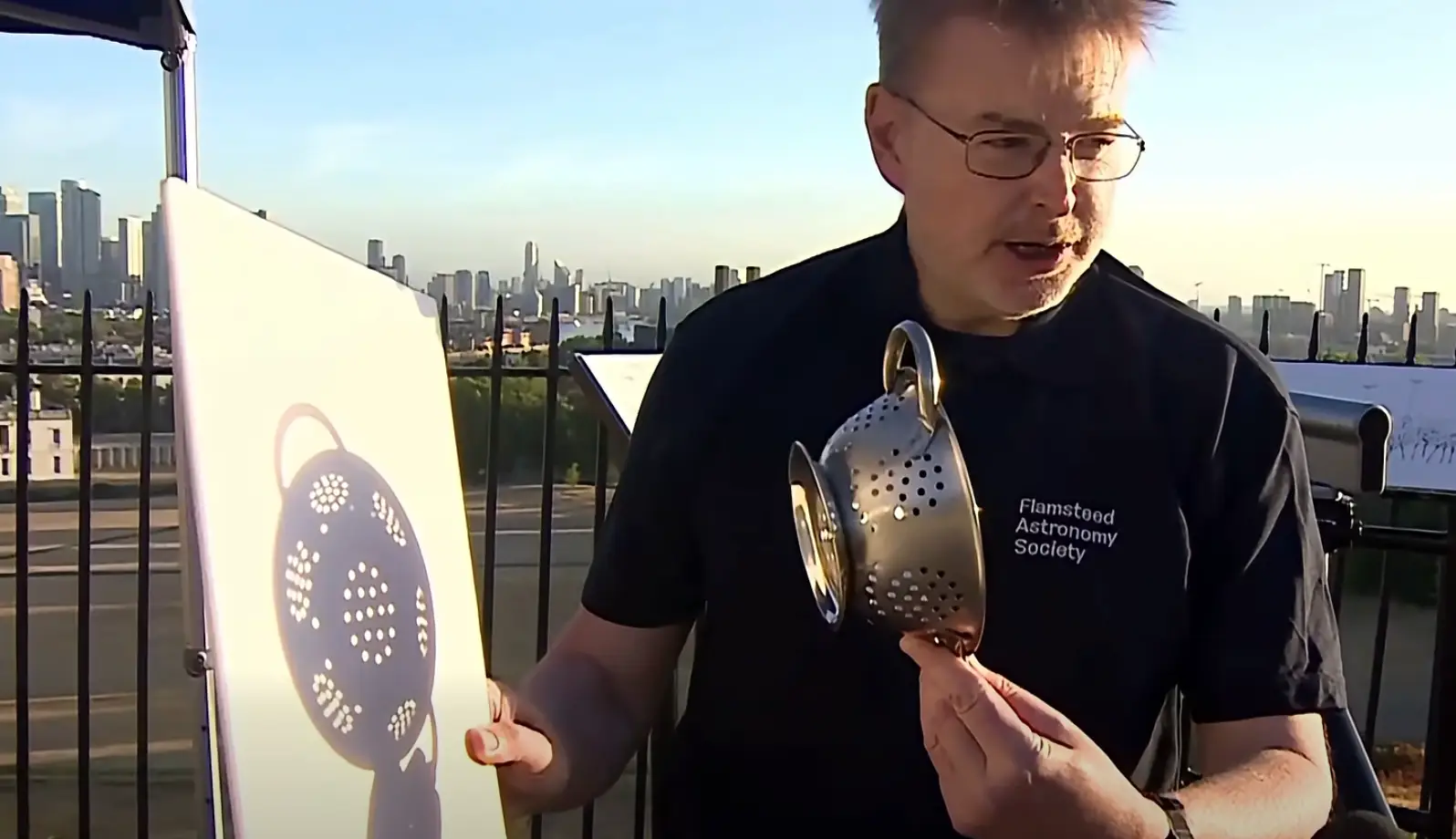
“Turn your back to the Sun and use the colander to project the image of the eclipse down onto the ground.
“Anything you can find with holes like this will work,” she wrote, adding that reflecting light onto a piece of blank paper can make the viewing experience less arduous.
The BBC has also touted the colander method as a foolproof, damage-free way of viewing the eclipse, tapping Eye specialist David Jones, consultant ophthalmologist at the Royal Cornwall Hospitals Trust, for expert advice.

“If you hold the colander to the Sun and you look away from the Sun, protecting your eyes, you can make not just one picture of the Sun but a hundred all at once,” he said.
In his own video, Jones showed that holding a piece of paper in front of a colander will create a kaleidoscope of images, allowing you to see a shadow of the moon passing over the sun without hurting your eyes.
How to view a solar eclipse without a colander
If you don’t have the nifty kitchen apparatus to hand, then don’t worry! You can undertake this DIY pinhole projector project instead.
You don't need fancy, expensive equipment to safely view a solar eclipse, as a pinhole projector can be very easily made at home if you follow these simple steps.
According to NASA, all you'll need is:
- 2 pieces of white paper card
- Aluminium foil
- Tape
- Pin, paper clip, or a pencil
Step one: Start making your pinhole camera
Cut a one-inch to two-inch square or rectangular hole in the middle of one of the pieces of card stock.
Step two: Tape on the foil
Tape a piece of aluminum foil over the hole.
Step three: Poke a hole
Flip over your paper and use your pin, paper clip, or pencil to poke a small hole in the aluminum foil.
Step four: Try it out
Place your second piece of card stock on the ground and hold the piece with aluminum foil above it (foil facing up). Stand with the Sun behind you and view the projected image on the card stock below.
The farther away you hold your camera, the bigger your projected image will be.
However, it's important to remember to never look directly at the Sun without equipment that's specifically designed for looking at the Sun. Sunglasses, binoculars, and telescopes do not count as proper protection.
Why you shouldn’t record the eclipse on your phone
As it’s not every day that you get to witness a full or partial solar eclipse from the comfort of your own home you may be tempted to document it using your smartphone.
Nasa has advised against this, claiming that both you and your device could be damaged by the decision.
“To take images when the Sun is partially eclipsed, you'll need to use a special solar filter to protect your camera, just as you'll need a pair of solar viewing glasses (also called eclipse glasses) to protect your eyes,” the space agency said.
Explaining that the sensors in your phone could break if pointed directly at the Sun, Nasa continued: “This is especially true if you're using any sort of magnifying lens attachment on the phone.”
 Ella Scott