Experts say the best breakfast is more about what you eat rather than when

If you've ever wondered whether you are eating breakfast too early, too late or perhaps even at the 'wrong' time, experts have some reassuring news.
When it comes to your first meal of the day, what you eat matters for your health far more than when you eat it.
Food and diet trends come and go, but one that has been increasingly popular is intermittent fasting.
The hashtag for it on Instagram has more than 5.2 million results, and one expert recently told GQ that you should wait several hours after waking before you eat to increase your 'fasting window'.
Advert
Does it really matter what time you eat, so long as you're eating something that's good for you?
According to nutrition and medical experts, there is little evidence that healthy adults need to follow such strict rules.
Penelope Henderson is a Registered Nutritionist (RNutr) and Children’s Nutritionist at Nutrition 2 Nourish & Flourish, and she says there isn't currently enough evidence to make such bold claims.
Speaking to FOODbible, she said: "There isn't strong enough evidence to say that everyone should eat breakfast at a particular time for better health or longevity," she explains. "Some observational research suggests benefits from eating earlier, but this can't prove that timing itself is responsible."
"For most people, I'd focus much more on what they're eating and their overall dietary habits than whether breakfast is at 6am or 11am."
That may come as a relief to anyone who struggles to eat first thing in the morning, works shifts or simply prefers a later breakfast.
Dr Thuva Amuthan, is GP and founder of Dr.Derme Skin Clinics, similarly says there is 'no single ideal breakfast time'.
He notes that eating earlier in the day may be slightly better for blood sugar and metabolic health than eating very late, but adds that 'the difference between 6am and 8am is unlikely to matter much for most healthy people'.

Does eating breakfast actually make you healthier?
Despite breakfast's reputation as the 'most important meal of the day', experts say it depends on what you're opting to fill your plate with.
"Breakfast can be a great opportunity to include fibre, wholegrains, fruit, protein and other important nutrients, but eating something for breakfast isn't automatically healthier than skipping it," Henderson says.
"It's much more useful to look at what someone eats across the whole day."
Dr Amuthan agrees, pointing out that 'a poor-quality breakfast high in sugar and refined foods is not automatically healthier than skipping breakfast'.
The important factor, therefore, appears to be the overall quality of someone's diet rather than whether they have eaten by a particular hour.
That doesn't mean that breakfast has no benefits.
Henderson says it 'can certainly be an important meal', providing energy after an overnight fast and offering an opportunity to consume key nutrients.
There can also be particular benefits for children, that eating 'breakfast can support aspects of concentration, memory and learning,' she says.

Should you wait before eating?
The idea of waiting for an hour or two after waking before having breakfast has become another popular piece of wellness advice online.
But Henderson is clear that there is no need to follow such a rule.
"There's no need to set a timer after you wake up before you're allowed to eat!" she says. "There isn't good quality evidence showing that adults need to wait one or two hours before breakfast for better health or longevity."
Both experts agree that drinking water after waking is sensible, particularly after going several hours without fluids overnight.
However, hydration and breakfast do not need to be treated as competing priorities.
"You can hydrate and eat breakfast," Henderson says. "It doesn't need to be one or the other."
What should you actually eat?
Rather than looking for a magical breakfast food that promises to increase your lifespan, experts recommend building a meal around nutritious, minimally processed foods.
"There's no single breakfast that's going to make us live longer," Henderson says. Instead, she recommends focusing on 'the foods and dietary patterns that we know support long term health'.
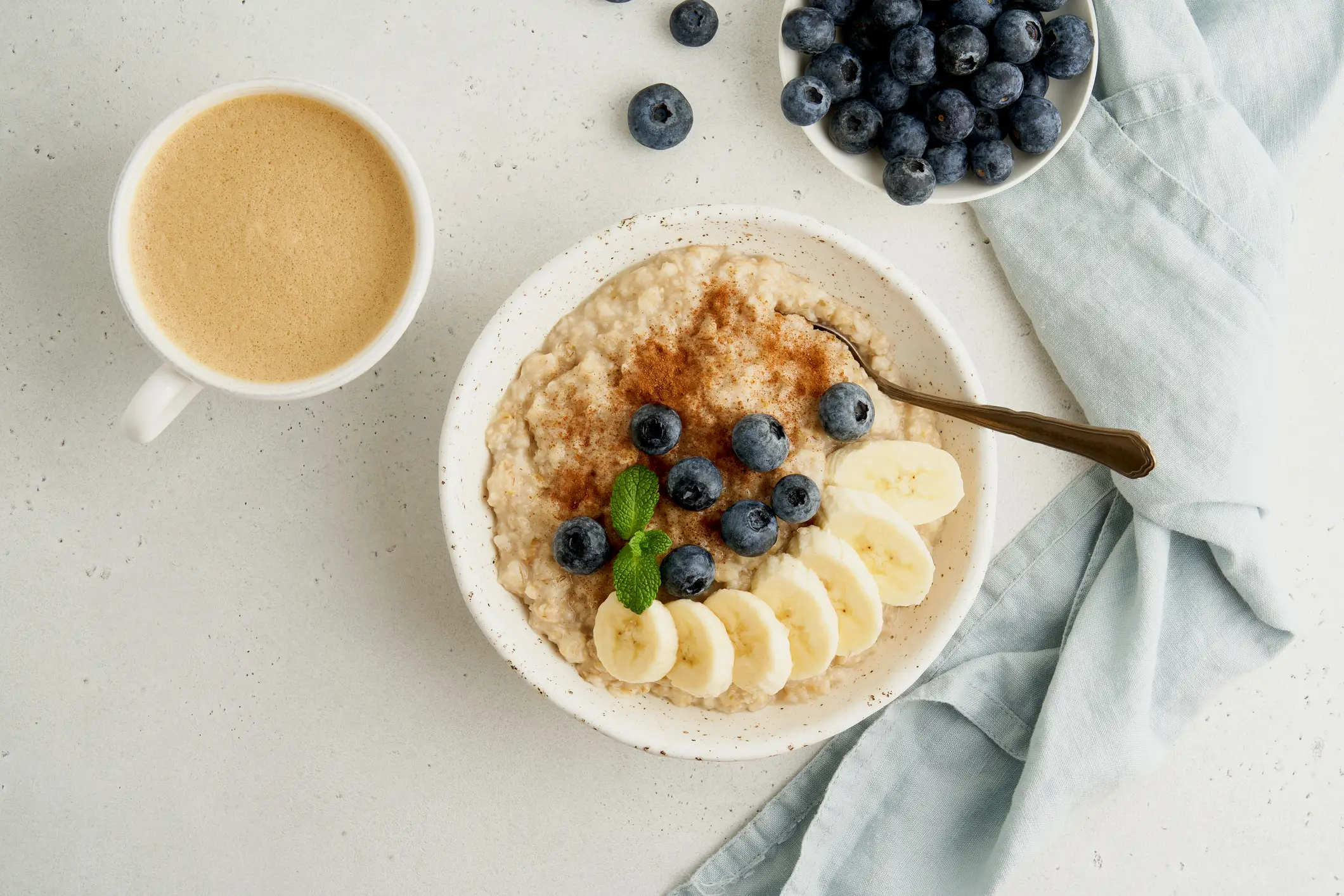
Her example is a simple bowl of porridge topped with berries, yoghurt and nuts or seeds, as this provides wholegrains, fibre, fruit, protein and healthy fats.
Dr Amuthan gives a similar recommendation, while stressing that 'there is no single 'longevity breakfast'.
The message is therefore less about finding one perfect meal and more about building healthy habits over time.
"Variety across the whole diet is much more important than having the 'perfect' breakfast," Henderson says.
What about that morning coffee?
There is one area where timing does appear to matter: caffeine.
If you're a fan of a liquid breakfast rather than fixing yourself a plate of food, it's worth being mindful of what time it is.
Henderson warns that caffeine can affect both the length and quality of sleep, with its impact varying considerably from person to person.
"If you're struggling with sleep, moving your last coffee earlier in the day is a sensible place to start," she says.
For most healthy adults, up to 400mg of caffeine a day is generally considered safe, although Henderson points out that consuming this amount could still affect sleep.
Dr Amuthan recommends stopping caffeine at least six hours before bed, because its effects can linger for several hours.
It is also worth remembering that caffeine does not just come from coffee.
Tea, energy drinks, cola, chocolate and some supplements can all contribute to your daily intake.
So, while the perfect breakfast time may be difficult to pin down, the experts' advice is considerably simpler: don't obsess over the clock.
Whether you eat at 6am, 8am or 11am, prioritising wholegrains, fruit, fibre, protein and healthy fats is likely to be far more useful than following the latest breakfast rule on TikTok.
 Jen Thomas