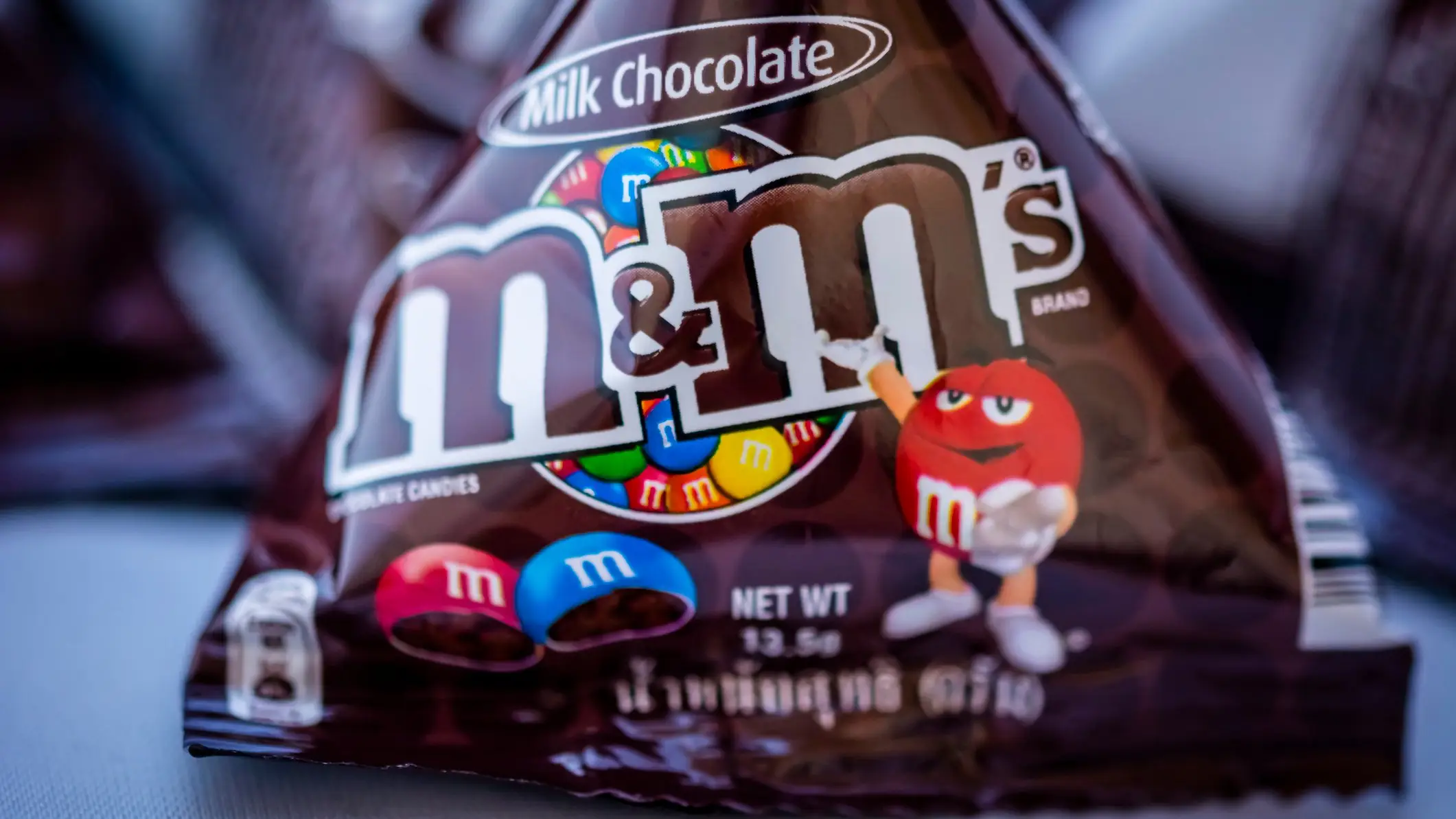
More than 6,000 cases of M&M's urgently recalled

M&M’s are one of those sweets that have been around for so long, it’s easy to think they can do no wrong.
From cinema counters to office desks, they’ve become part of the background of everyday snacking. However, that sense of comfort has been shaken after more than 6,000 cases of repackaged M&M’s (which has a surprising meaning in its name) were urgently recalled across the United States due to undeclared allergens.
The recall, which was initiated on 26 January, affects M&M’s that were distributed across 20 states. According to authorities, the products contained milk, peanuts and soy that were not listed on the packaging, creating a potential risk for people with food allergies.
What makes this situation particularly concerning is where these sweets ended up. The recalled M&M’s were not sold through standard supermarket channels, but instead repackaged for promotional use: corporate events, university campuses, conferences and branded giveaways — places where people are far less likely to check labels carefully, if they’re present at all.
Advert
The repackaging was carried out by Beacon Promotions Inc, a company that produces custom-branded products for organisations looking to get their name in front of consumers. In this case, that meant 1.3-ounce packs of peanut M&M’s sold under campaign-style names such as ‘Make Your Mark’, alongside versions branded for well-known companies including Morgan Stanley, Adobe, Xfinity and Subaru.
On 4 February, the US Food and Drug Administration classified the recall as Class II; as noted by People, this means consuming the affected products could ‘cause temporary or medically reversible adverse health consequences’ for people with relevant allergies. While that classification stops short of the most severe risk category, it still highlights a serious failure in allergen labelling.
The scale of the distribution has also raised alarm bells. The recalled products were sent to organisations across Alabama, Arizona, California, Florida, Iowa, Kansas, Kentucky, Maryland, Massachusetts, Minnesota, North Carolina, New York, Ohio, Pennsylvania, South Dakota, Tennessee, Texas, Virginia, Washington and Wisconsin.
Despite the wide reach, no illnesses have been reported so far. Even so, food safety officials are urging people not to be complacent, particularly those with allergies who may have picked up a packet months ago and forgotten about it.
Promotional food items often slip under the radar. They’re handed out casually, stored in drawers or bags, and eaten later with little thought. Unlike supermarket products, they may not be subject to the same level of consumer scrutiny, making accurate labelling even more important.
The FDA has published full details of the recall, including lot numbers and sell-by dates, and advises anyone who may have received promotional M&M’s to check them carefully.
Topics: US Food
 Ben Williams