
UK preparing for food shortages due to Iran war, according to government source

 Ella Scott
The UK government is reportedly planning and preparing for food shortages if conflict between the United States, Israel and Iran continues into the summer and beyond.
On 7 April, a temporary two-week ceasefire agreement was made between the three countries, subject to the ‘complete, immediate, and safe opening of the Strait of Hormuz’, as per US President Donald Trump.
In return, Iranian officials delivered a 10-point peace plan - initially described by the Republicans as a ‘workable basis on which to negotiate’ - which saw the country demanding it remain in control of the waterway.
The 104-mile-long area is considered one of the world's most critical maritime chokepoints, carrying around a quarter of global seaborne oil trade, as per the UN Trade and Development (UNCTAD).
Advert
As a result of blockades, the prices of petrol, diesel, and fertiliser have soared.
If conflict remains unsolved in the Middle East and the Strait of Hormuz continues to be weaponised, Britain could face reduced food choices in supermarkets, according to leaked government plans seen by The Times.
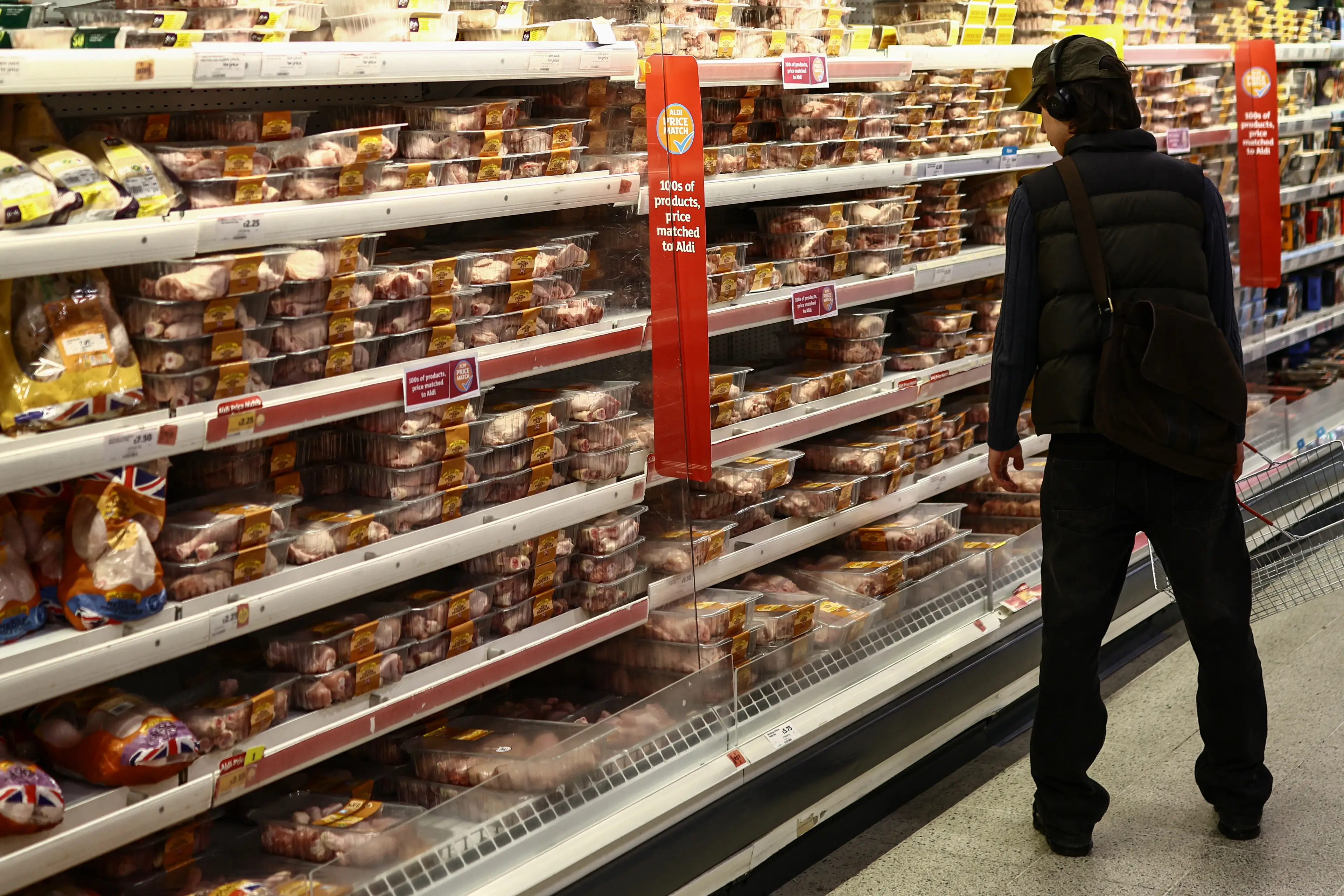
The publication reported that officials have drawn up contingency plans for a ‘reasonable worst-case scenario’ amid fears that salad, packaged meat, and baked goods could be impacted due to a carbon dioxide shortage.
Pork and chicken could be on the chopping block, with CO2 being used in the slaughtering process.
Breweries and soft drink manufacturers could also face disruption, with the gas being considered a crucial element.
It was reported that while critical food supply shortages are unlikely, there could still be a lack of product variety in shops.
Outside of food, CO2 is used in MRI scanning, water purification, and in the civil nuclear power industry.
On Thursday (18 April), Business Secretary Peter Kye said the British public could be ‘reassured’ that lawmakers are planning for scenarios where CO2 supplies fall to 18 percent of current levels.
“Scenario planning, by definition, means that we are looking into a variety of different scenarios that may or may not happen,” he continued, as per ITV News.
"People should go about their lives as normal. If there are changes to that, we will be upfront with the British public."
A government spokesperson has said: "We took decisive action last month to shore up the UK’s critical supplies of CO2 by temporarily restarting the Ensus bioethanol plant in Teesside and are continuing to work closely with business groups to tackle the impacts of events in the Middle East.
"Reasonable worst-case scenarios are a planning tool used by experts and are not a prediction of future events.”
ITV News reported that the Ensus plant will operate for three months to increase domestic CO2 production.
According to Tesco's chief executive Ken Murphy, none of the supermarkets’ growers, suppliers, or manufacturers had raised any supply risks, as per BBC.
The British Retail Consortium, which represents the likes of Sainsbury’s and Pret, claimed that its retailers were ‘experienced’ in managing supply chain disruption.
“However, the situation in the Middle East continues to add inflationary pressure at a time when retailers already face significant new costs from domestic policies," a spokesperson said.