Girl, 9, hospitalised after eating her own hair for years

Warning: This article contains discussion of eating disorders which some readers may find distressing.
A nine-year-old girl has been discharged from hospital in Vietnam after doctors successfully removed a life-threatening hairball from her gastrointestinal tract.
In a press release, dated 8 January, it was confirmed that the child from Ho Chi Minh City was brought to the Franco-Vietnamese Hospital after suffering from ‘abdominal pain, persistent vomiting, weight-loss and pallor’ for several days.
During the initial examination, doctors noticed the girl’s hair was ‘unusually brittle and standing upright’.
Advert
This prompted experts ‘to take a more detailed medical history’, according to Dr Le Duc Tuan of the General Surgery Department.
"Only then did the mother reveal that the child had developed a habit of pulling out and eating her hair since the age of two or three. The family had not paid much attention to it, assuming it was harmless,” he added.
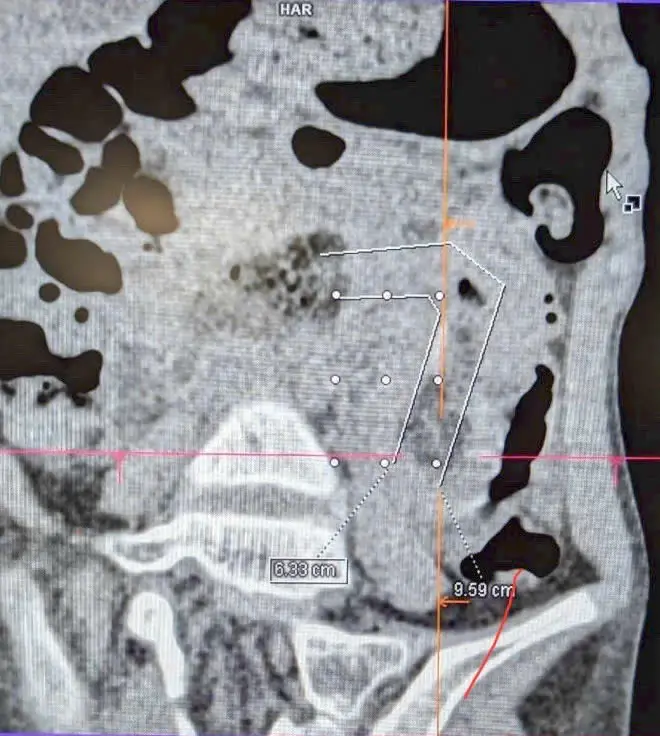
General Surgery, Gastroenterology, and Imaging specialists discovered a hairball of almost one meter long, tightly coiled from her stomach down into her small intestine.
The mass was causing ‘both intestinal obstruction and volvulus, creating a life-threatening situation’, as per the press release.
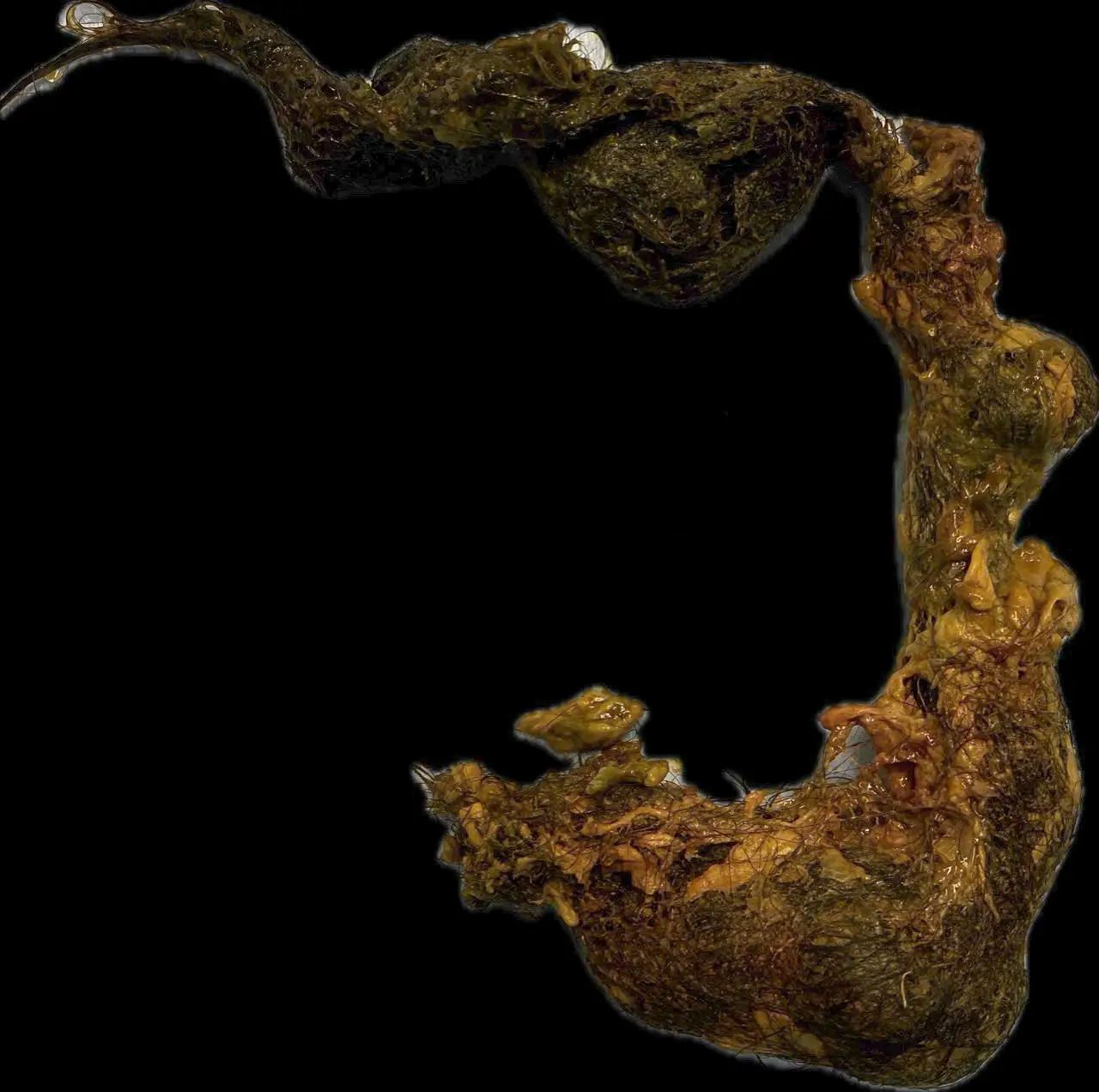
After a three-hour laparoscopic surgery and a gastrointestinal endoscopy, the hairball, which was ‘braided like a rope’, was removed.
Following surgery, the child experienced immediate pain relief and resumed normal eating.
She was discharged from the facility five days later, as per People.
In a recent follow-up, the child showed healthy weight gain and an improvement in both her physical and overall health.
It’s understood that the girl’s parents were advised to closely observe her, spend more time communicating, and seek professional help if they noticed that the behaviour continued.
What is trichophagia?
Trichophagia, a form of disordered eating, is the compulsion to repeatedly ingest one’s own hair.
According to DermNet, it can involve eating whole strands of hair, or just the roots or the tips.
This can be from your scalp, eyebrows, genital area, or beard.
It is estimated that trichophagia occurs in approximately 30 percent of patients with trichotillomania, or hair-pulling disorder.
Experts at the site claim that trichophagia can be caused by genetic predisposition, social environment, and/or neurobiological facts.
It very rarely leads to the development of hairballs, which can stop food from moving through your digestive system, as per the Cleveland Clinic.
Some people who develop the hair mass in their intestines may experience symptoms such as constipation, diarrhoea, indigestion, and feeling full after eating a very small amount of food.

How to stop eating your hair
If you have trichophagia and tend to eat your hair out of habit, then there are a number of ways you can stop.
These include speaking to your healthcare provider, joining online and in-person support groups, and practicing mindfulness to notice urges without acting on them, the Cleveland Clinic stated.
The NHS advises replacing hair pulling with another action, such as squeezing a stress ball or using a fidget toy.
Cutting your hair short, exercising, and putting plasters on your fingertips may also help manage your disorder.
If you've been affected by any of the issues in this article and would like to speak with someone in confidence, call the BEAT Eating Disorders helpline on 0808 801 0677. Helplines are open 3pm-8pm Monday to Friday. Alternatively, you can try the one-to-one webchat.
Topics: Health
 Ella Scott