
Scientists find new way of diagnosing ‘silent killer’ pancreas cancer – and it’s all down to your gut

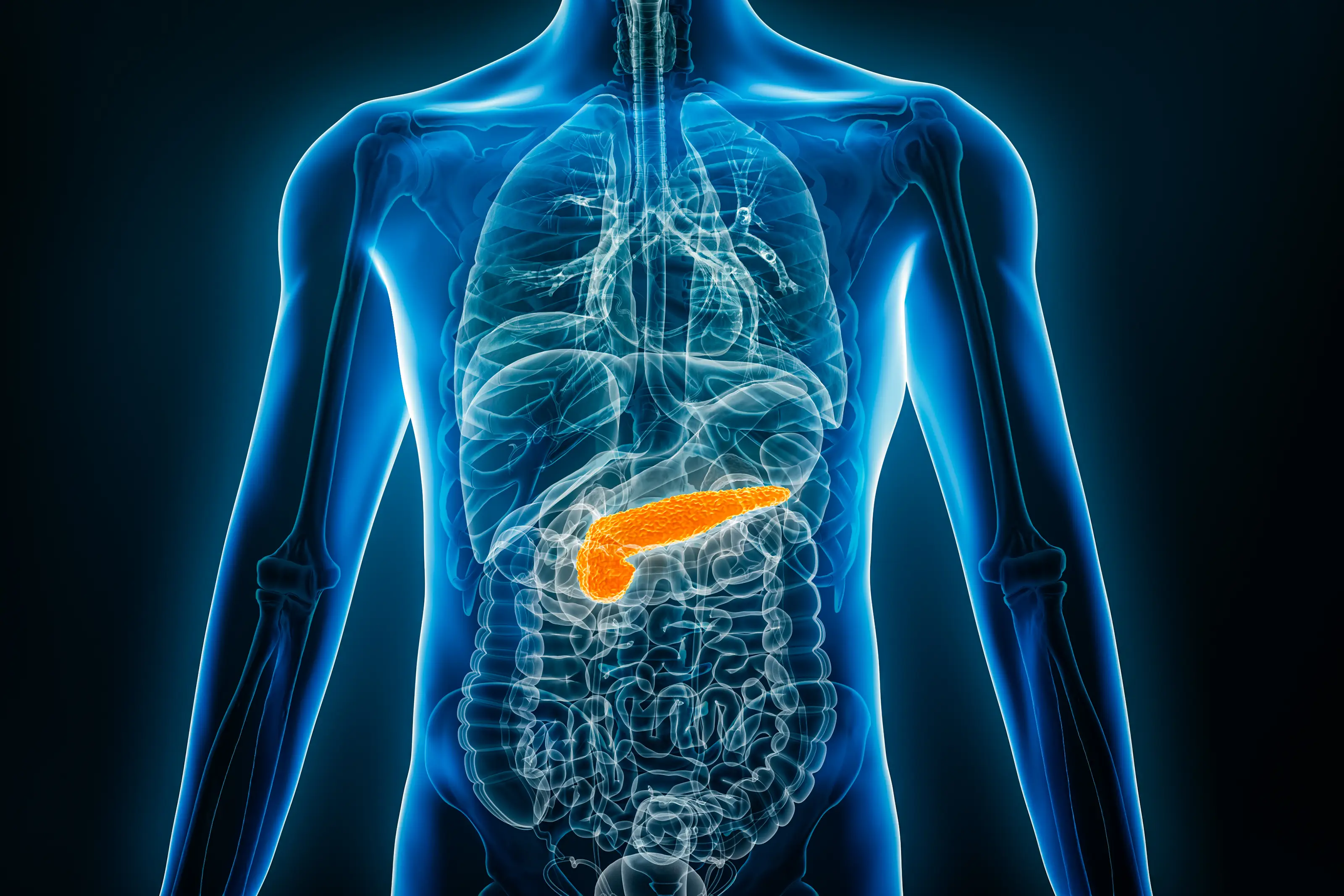
The pancreas is not an organ many of us give much thought to. It does its job quietly, releasing enzymes to digest food and hormones to regulate blood sugar, without demanding attention.
When it starts to fail, however, the consequences can be devastating. Pancreatic cancer is one of the deadliest forms of the disease, largely because it rarely makes itself known until it is too late.
Often described as ‘the silent killer’, pancreatic cancer develops with few clear warning signs. Fatigue, digestive issues or unexplained weight loss are easy to brush off, meaning diagnosis frequently comes at an advanced stage.
In the UK, survival rates remain stubbornly low, with incidence continuing to rise. The most common form, pancreatic ductal adenocarcinoma (PDAC), begins in the duct connecting the pancreas to the small intestine, interfering with digestion and energy use long before obvious symptoms appear.
Advert
For years, scientists have been searching for ways to spot this cancer earlier, when treatment options are wider and outcomes far better. Blood tests, scans and genetic screening have all shown promise, but none have yet cracked the problem at scale.
Now, researchers believe the answer may be hiding in an unexpected place: the gut.
Scientists have discovered that changes in gut bacteria, detectable through simple stool samples, could help identify pancreatic cancer much earlier than current methods. Because the pancreas is closely linked to the gut, PDAC appears to leave a distinct microbial fingerprint in the digestive system.
Our guts are home to trillions of bacteria, forming complex communities that reflect what is happening inside the body. By analysing stool samples from patients with PDAC and comparing them with those from healthy individuals, researchers found clear differences. People with pancreatic cancer showed reduced bacterial diversity, alongside specific bacteria that were either enriched or depleted.
The 2025 study, published in the National Library of Medicine, using a technique known as 16S rRNA gene amplicon sequencing, scientists were able to identify and count these bacteria. They then trained an artificial intelligence model to read the patterns. Remarkably, the AI could accurately distinguish cancer patients from healthy people based on gut bacteria alone.

This approach has been validated across multiple countries, including studies in Japan, China and Spain, with the aforementioned international study involving Finland and Iran strengthening the evidence. Noted by The Independent, more advanced tools, such as ‘shotgun metagenomic sequencing’, are now offering even deeper insights by analysing entire bacterial genomes rather than a single gene.
Researchers describe this shift as moving away from a purely human-centred view of health towards seeing ourselves as ‘human plus microbiome’. It is a perspective that could reshape how diseases are diagnosed and treated, not just for pancreatic cancer but for conditions like colorectal cancer and even neurological disorders.
Topics: Health
 Ben Williams