Sneaky 'psychology' McDonald's uses before you've even got your food

Brick-and-mortar McDonald’s stores ‘sneakily’ employ tactics to convince you to spend more money and say ‘yes’ to upgrades where you would usually decline, according to a business expert.
There are over 1,450 McDonald’s eateries across the United Kingdom and Ireland, all of which serve up fresh, meaty favourites such as the returning Big Arch burger and the new-and-improved £5.59 meal deal.
With the fast-food institution serving 68 million customers across the world on a daily basis, the business is often coming up with innovative ideologies to improve spend per head and footfall.
This may be in the form of limited-time promotions, such as the new Friends meal, or by implementing technology like the self-ordering kiosks.
Advert
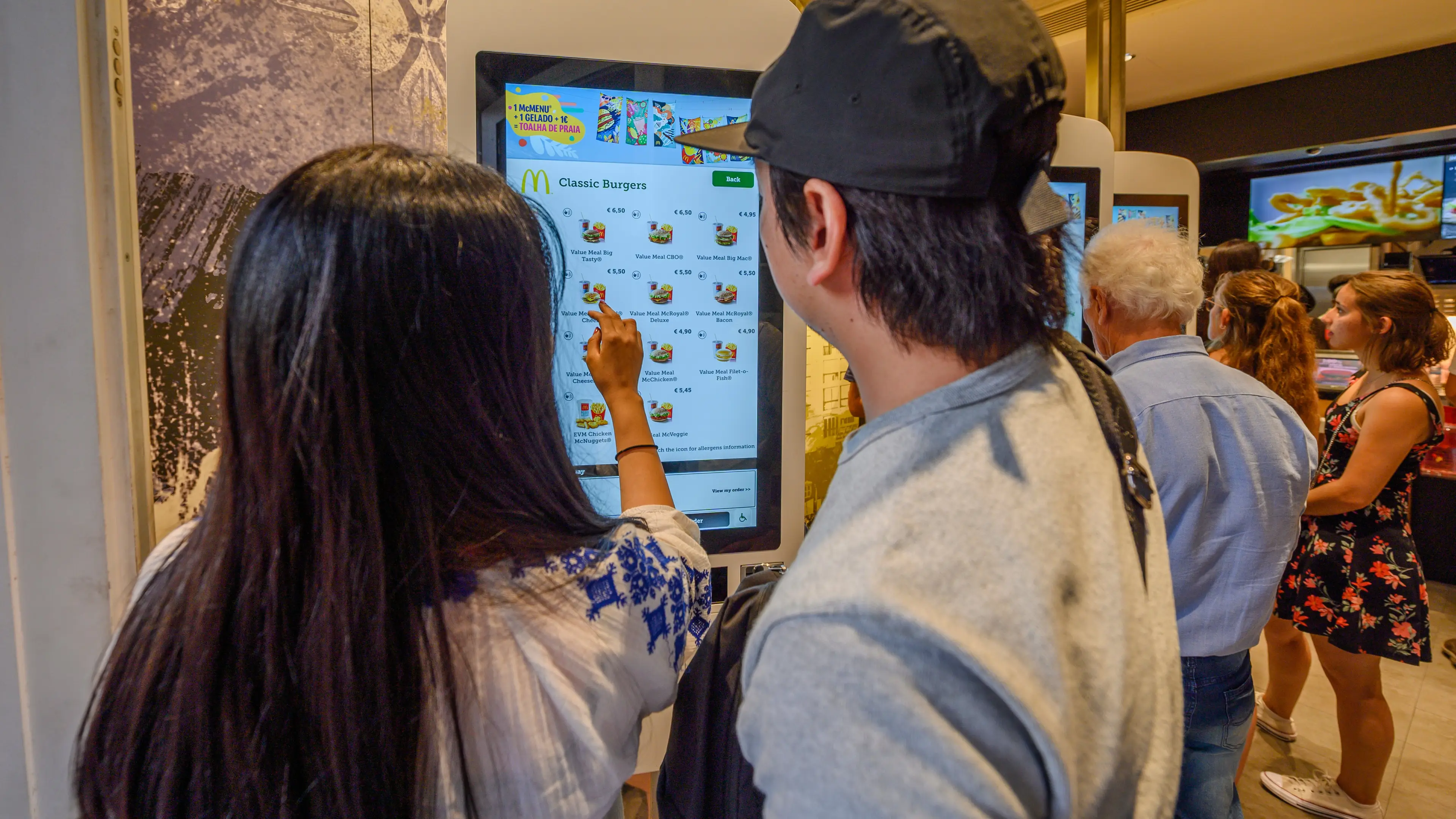
A McDonald’s staple since 2015, the modern electronic booths are engineered to reduce service times and allow customers to create unique orders without the hassle of explaining their concoction to staff.
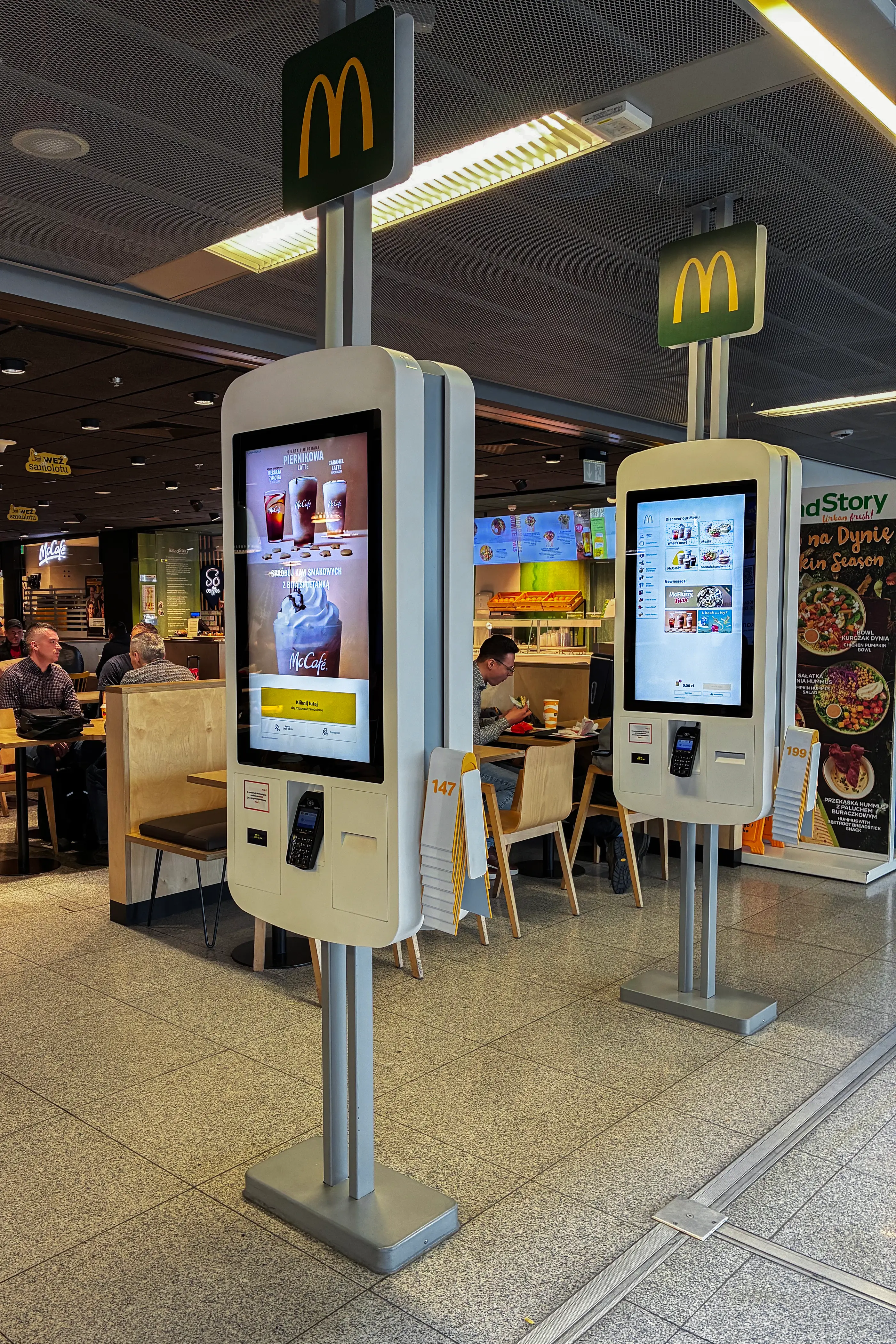
Following their debut as part of the company’s ‘Experience of the Future project’, the kiosks have remained a permanent fixture of many of the chain’s restaurants.
According to Vita Mojo, a London-based software company, 61 percent of customers spend more time customising their meals at a terminal than they would at a till.
Dean Ward, founder and chief product officer at Evoke Creative, built in-store touchscreens for the likes of McDonald’s, JD Sports, and the Travelodge hotel chain.
When asked why they are so popular, the expert explained that the machines simply ‘remove the psychology of speaking to someone and feeling judged’.
“We think that is a key factor,” he told the BBC, referencing the tool’s success.
"Would you like extra fries? Would you like to go large? Not all people, but I think there's definitely a large proportion of people who may feel judged in those instances, and may say no.”
Ward also spoke about the power of imagery; how the kiosks allow you to interact with the product on a deeper level than standard advertising.
Data suggests that people who use the McDonald’s kiosks are likely to spend more than 40 percent - and those figures may be related to ‘upselling’.
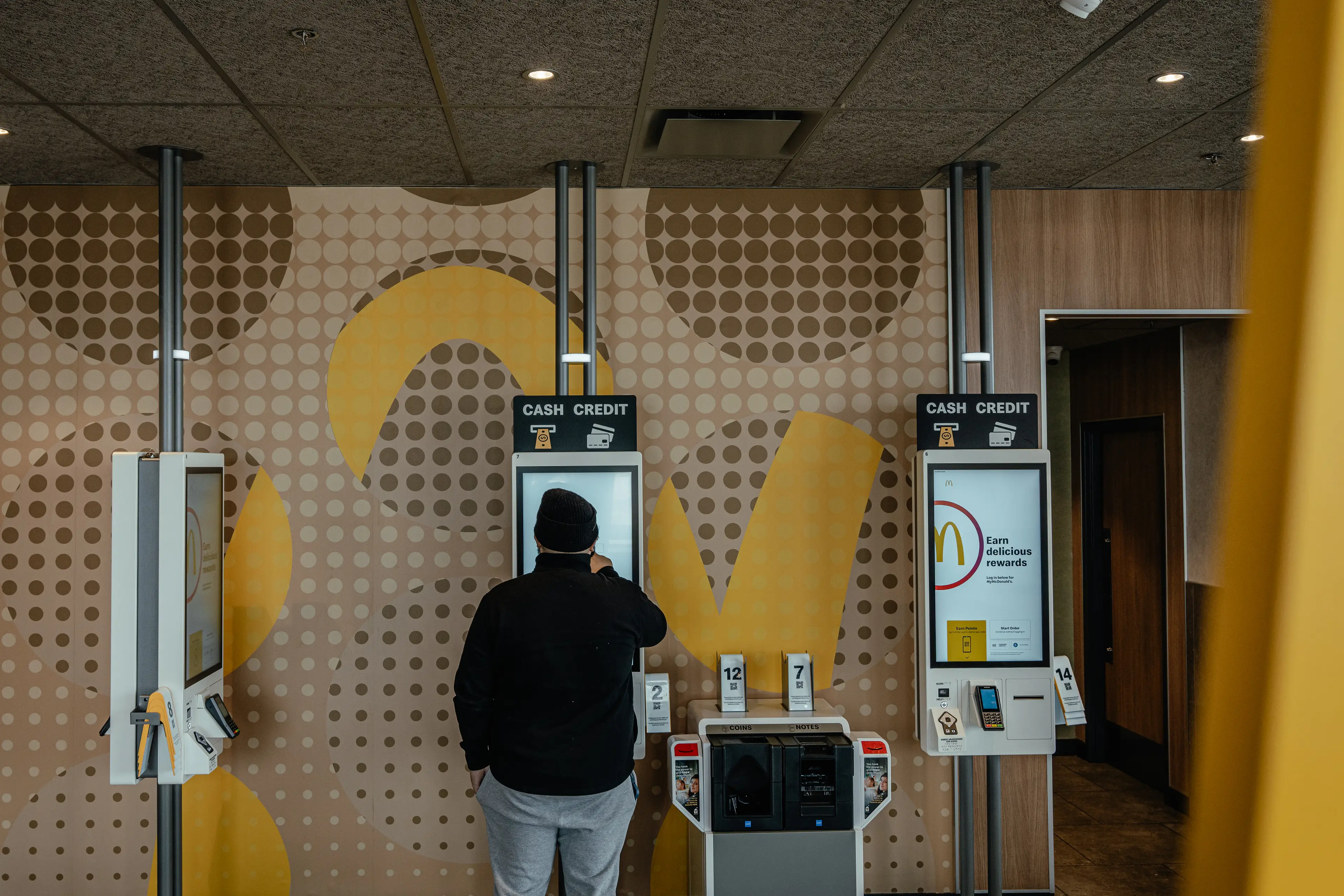
The art of the upsell is to persuade a customer to purchase a more expensive or upgraded version of an item they intended to buy.
At the fast-food titan, this may look like buying a side to enjoy with your main or being coaxed into choosing a larger drinks.
“At every opportunity within the customer journey on the terminal, you are asked would you like to add this, would you like to do that?,” the businessman claimed.
“Because you've got more time and you're not being judged, you're very much more inclined to actually say yes to these things.”
In a statement issued to FOODbible, a McDonald’s spokesperson said: “Our self-service kiosks are all about giving our customers what they want – that means food made fresh, personalised the way they want it, delivered fast.
“We know our customers enjoy using the kiosks, reflecting how they interact with technology in all parts of their lives, and being able to free up staff to support them allows us to deliver a high quality restaurant experience.”
 Ella Scott