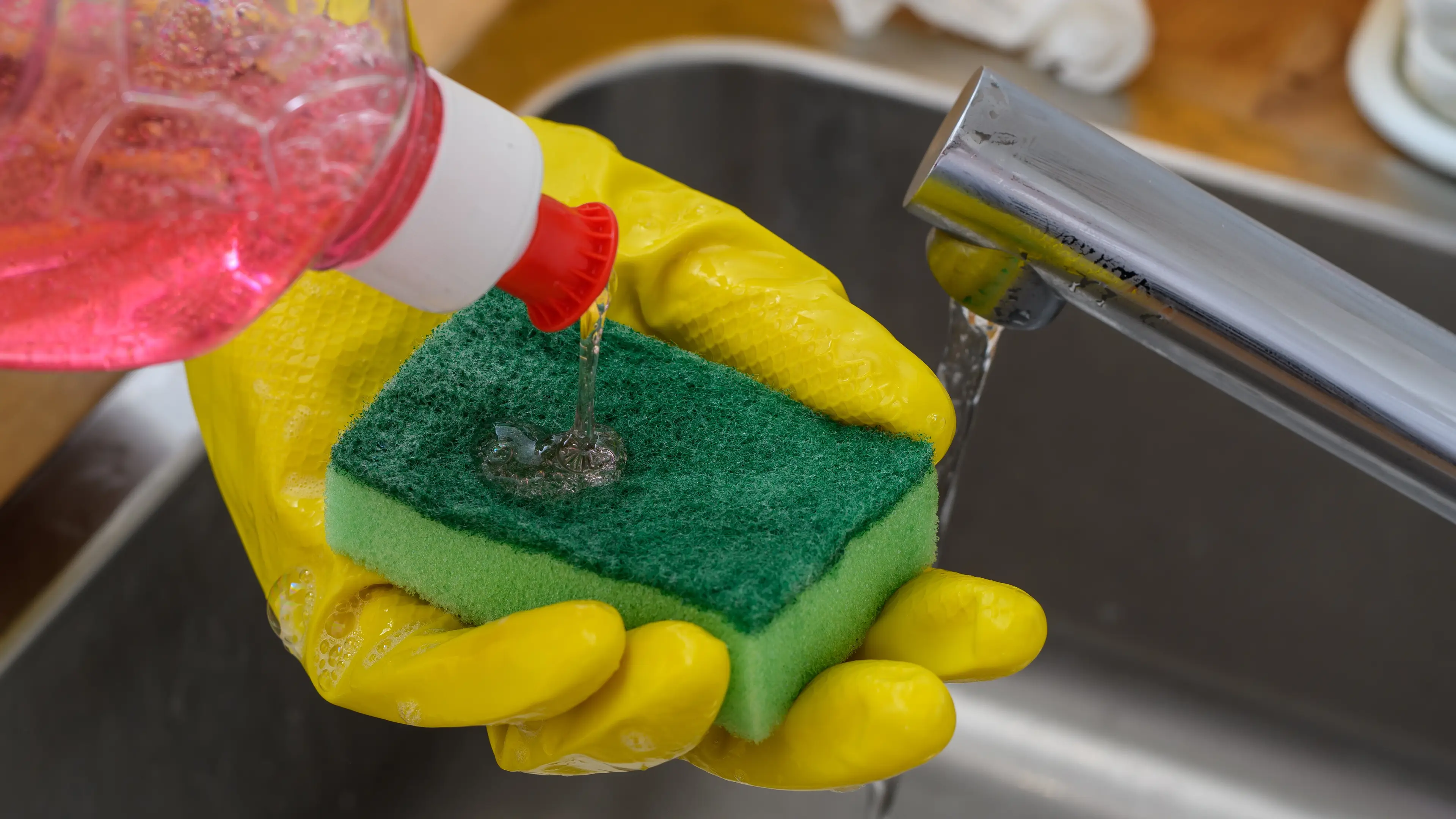
Grim reason why you should be microwaving your kitchen sponges

How often do you change your dish sponge? Because after reading this, you might start doing it more regularly.
Whether it’s scrubbing grime and grease off pans or giving the dishes and cutlery we eat from a good wipe down, the kitchen sponge is always on the go.
But it could be harbouring more than its ability to clean even the dirtiest dish.
According to a 2017 report led by microbiologist at Furtwangen University in Germany, Markus Egert, the bacterial microbiome of used kitchen sponges is pretty grim.
Advert
In fact, it might be the grossest thing you’ve got in your home right now.
Per the data, there were 362 species of microbes in those sponges tested, and in some areas, there was 54 billion individuals per square centimetre found.
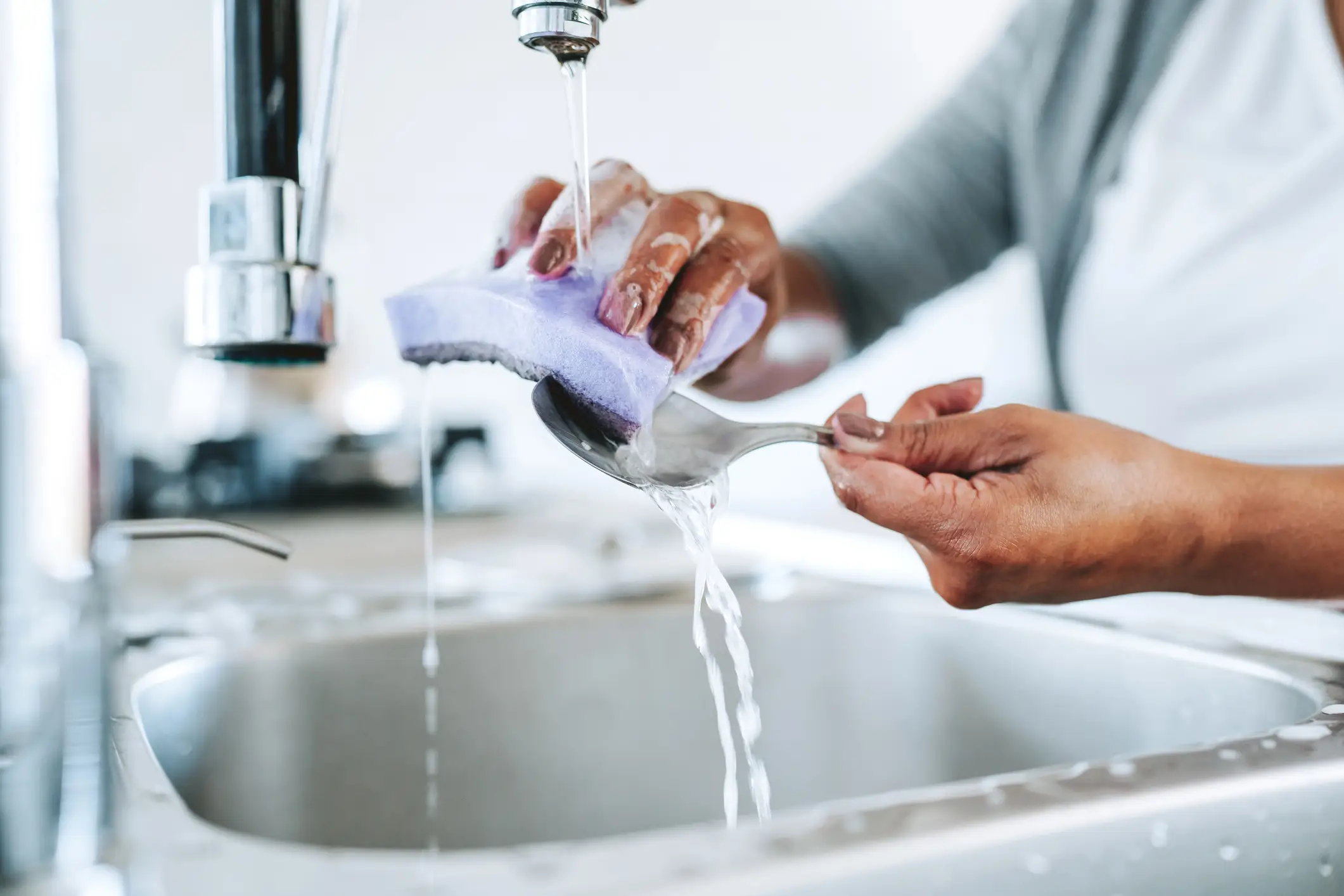
This, Egert said, is a similar number of bacteria you’d find ‘in a human stool sample’.
So, we’re cleaning our dishes with poo?
Not exactly, but it sounds like we might as well be.
The study went on to reveal that five out of 10 of the most seen species of bacteria on the sponges were closely related to bacteria known to cause infections in those who have a compromised immune system.
Scarily, even heating the sponges in a microwave or washing them with hot, soapy water, didn’t help the situation as it actually encouraged some species to grow.
However, Jennifer Quinlan, a professor of food safety at Prairie View A&M University in the US stated that microwaving the sponge is a good temporary solution to cleaning it and decreasing some of those bacteria.
Usually, it would take around a minute to be effective as you need to heat the sponge enough to bring it to a steaming point.
"There's two easy ways of cleaning them. You can put them in the dishwasher at the end of the evening, or you can microwave them for a minute until you can see steam coming off. That will kill the majority of the pathogens,” she said per the BBC.
Thankfully, none of the bacteria found in Egert’s study were linked to food poisoning in humans, as Egert noted: "We only found potentially pathogenic bacteria, so bacteria that can be dangerous to people with weak immune systems, or the elderly or children.
"Usually, for a healthy person, the bacteria inside the kitchen sponge are not harmful."
All in all, Egert said he ‘wouldn't use kitchen sponges at all’ and that he would instead choose to use a dish brush as the bacteria can dry on the surface, not get trapped in the holes of sponges.
As for Quinlan, she said she would replace her sponge weekly.
Topics: Health
 Britt Jones