We could be relying on 'fog harvesting' for drinking water in future

 Ella Scott
Climate change is the reason for unpredictable rainfall patterns, floods, drought, and freshwater glaciers melting at an unsustainable rate.
An increase in frequency, storm intensity, and warmer air temperatures can all have a major impact on the quality and quantity of our drinking water, according to the Environmental Resilience Institute.
Heavy downpours can also increase the amount of runoff into rivers and lakes, washing pollutants and animal waste, among other harmful substances, into water supplies making them unsafe to guzzle.
In an attempt to combat this, experts across the globe are currently looking for new solutions to replenish and protect our drinking water.
Advert
Thankfully, a group of scientists in Chile believe they may have discovered part of the puzzle: harvesting fog.
Their research was published in Frontiers in Environmental Science on February 20, 2025, under the title ‘Unlocking the fog: assessing fog collection potential and need as a complementary water resource in arid urban lands–the Alto Hospicio, Chile case’.

The National Geographic Society defines fog as a thick or thin cloud that touches the ground.
As fog is created when water vapour turns into liquid water droplets, the researchers wanted to know if they could capture and convert it into usable water.
The experts carried out their year-long experiment near Alto Hospicio, a city on the edge of the Atacama Desert, which often plays host to thick fog blankets.
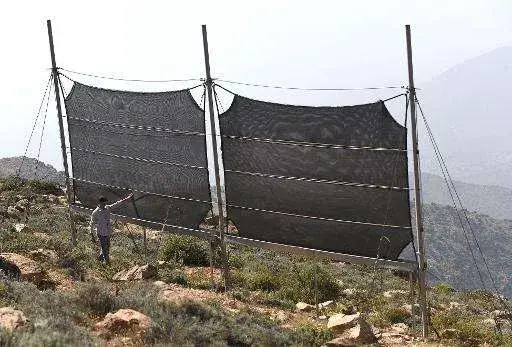
To collect the cloud, they used a method called ‘fog harvesting’.
This sustainable technology sees large pieces of vertical canvas being erected, allowing fog droplets flow down towards a trough under the canvas - known as a fog fence - as per the United Nations Convention to Combat Desertification (UNCCD).
After harvesting the fog, scientists discovered that they were able to capture up to 10 litres per square meter per day.
The study leads claimed that this amount would help support irrigation, agriculture and even human consumption a 10,000-people community.
Speaking about how fog can ‘serve as a complementary urban water’ in dry areas, Dr. Virginia Carter Gamberini, an assistant professor at Universidad Mayor and first co-author of the study, said: “This research represents a notable shift in the perception of fog water use — from a rural, rather small-scale solution to a practical water resource for cities."
However, there were limitations, with results varying per location meaning fog harvesting probably wouldn’t work as a stand-alone, universal fix.
Based on the average collection rates, the scientists suggested that around 17,000 square meters of mesh (roughly 4.2 acres) would be needed to meet the region’s total weekly water demand.
Carter hopes that her team’s research can ‘encourage policymakers to integrate this renewable source into national water strategies’.
“This could enhance urban resilience to climate change and rapid urbanisation while improving access to clean water,” she reasoned.
You can read the full study here.