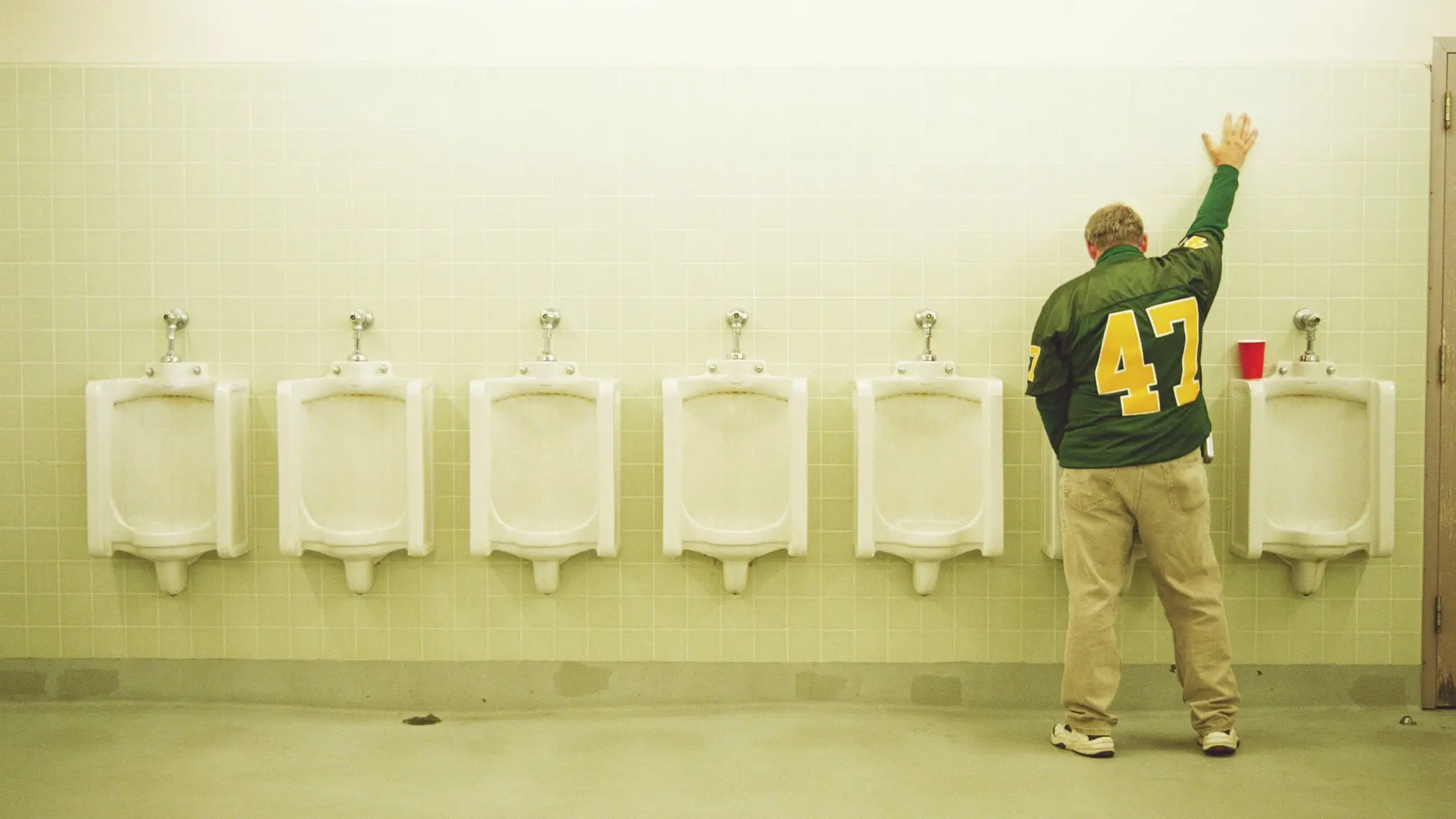
Doctor confirms whether 'breaking the seal' really makes a difference on a night out

Spurious urban legends and alcohol are common bedfellows. There’s no end of whisperings invading the public consciousness like we’re still on the playground telling other kids that our uncles work for Nintendo, from the hair of the dog to breaking the seal.
If you’re unfamiliar with the concept, it goes like this: once you for your first wee on a boozy night out, you’ve opened the floodgates.
As such, it’s recommended by the pub-going masses that you resist the urge to hit the urinals for as long as possible to preventing ‘breaking the seal’.
Advert
If you’ve ever been in a pub or club toilet after the sun’s gone down, you’ll know that minimising trips is generally advisable.
Now, you may have wondered if there’s any truth to the legend. You’ve likely noticed that you do, in fact, need regular wee breaks when you’re out on the lash, but is this because you’ve broken the seal or because you’re imbibing a lot of liquid?
Let’s not debunk the theory with basic logic just yet, though, because we’ve got an expert to consult on this very matter.
Dr Courtenay Moore is a urologist from the Glickman Urological and Kidney Institute at the Cleveland Clinic, and she explained the truth of the matter to NBC news.
“Last week we were at a dinner party and someone asked us this question,” she said, touching on the trials and tribulations of being a urologist at a dinner party.
“I looked it up,” she said, somewhat dampening the hopes that a certified urologist would be ready-armed with the truth. “There is no physiological basis.”
However: “There are theories as to why this happens.”
One is closely tied to the fact you’re drinking more liquid that will inevitably pass through your body before banging on the exit, and it’s the fact that alcohol is a diuretic.
In other words, alcohol actively triggers a water-dumping response in your body. It’s why you tend to get dehydrated after a couple of pints, and it’s got a big part to play in that vicious headache you get on the morning after.
With your body being tricked into dumping its water, not only are you filling your bladder with liquid from the booze but the effect is being compounded by your body parching itself.
“It can be shots, beer, volume isn’t necessary,” said James Zacny, a professor of anaesthesia and critical care.
“The key thing is that [alcohol] produces the increased need to urinate.
“Alcohol simply blocks the normal release of [anti-diuretic hormone - ADH] vasopressin…
“[Vasopressin] promotes re-absorption of water in the kidney to the rest of the body.
“If you have this blocked, the water goes into the body.”
So, not only does alcohol increase your urine production, but it also impedes your kidneys it their attempt to reabsorb recyclable fluids.
Dr Moore added: “[Alcohol] decreases your ADH and you are producing more fluid. So when you produce more fluid and you fill your bladder more, you suppress more ADH.”
If all that wasn’t enough to get you on your way to the WC, alcohol also irritates the bladder and makes you more inclined to wee when you’re not yet at capacity.
So, no, even if you hold the seal for as long as you can, you can’t stop yourself from needing regular wee-wees once you’re inebriated.
 Rachael Davis