Woman shares what happened to her body after trying 'fibremaxxing' trend for one week

A woman tried the viral ‘fibremaxxing’ trend and revealed what it did to her body.
It’s no secret about just how important fibre is for our diets. According to the NHS, most of us need to eat more fibre, which helps us to feel fuller for longer, aids digestion, and helps with constipation.
But that’s not the only reason why fibre is so important.
It has been linked to a lower risk of heart disease, stroke, type 2 diabetes and even bowel cancer, which might be why the government guidelines say our dietary fibre intake should increase to 30g a day, as part of a healthy balanced diet.
Advert
With most adults only eating an average of about 20g day, increasing our intake is important, but how easy is it?
Enter the ‘fibremaxxing’ trend, which did its rounds on social media during summer, seeing users aim to eat 50g per day. Not to be confused with 'looksmaxxing' where users try to enhance their appearance.
Apparently, it made people feel rejuvenated, have more energy, and less likely to snack.
For Renee Cherry, who wrote about her experience for Women’s Health, the change was startling.
According to her, ‘my body felt different in a way I didn't expect’ after just one week.
Cherry explained that she ‘noticed subtle improvements in the frequency and ease of my bowel movements’ and that she was ‘even passing smoother stools on occasion'.
She chose to do this trend, despite eating more than the recommended 25 grams a day, because she wanted to see how it could aid her digestion.
As it helps with regulating blood sugar, lowering bad cholesterol levels, and more, it seemed like an interesting experiment.
To reach her goal, she logged her food on her MyFitnessPal app and found she averages around 37 grams per day.
After talking to a dietitian, Natalie Rizzo, it was suggested that she eat up to 50 so she can get the benefits without getting any negative side effects, like bloating or diarrhoea, which can be caused by eating too much fibre.
Then, she got to work.
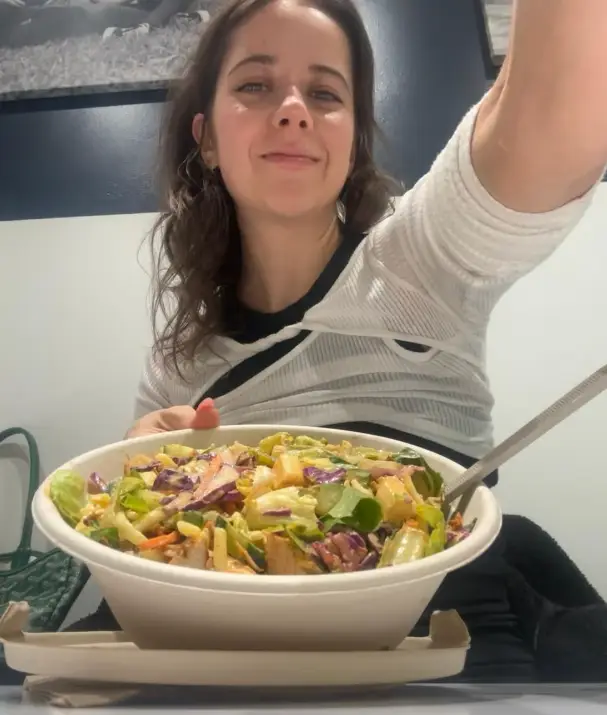
As ‘fibre works best when you’re drinking plenty of water to help keep digestion smooth’, per Rizzo, she stayed hydrated throughout and stuck to the same meals a day so she knew she was getting 51 grams of fibre total.
This included eating ‘chia seeds, salads, and beans’, and required a lot of meal planning.
So, what happened?
Along with the smoother bowel movements, Cherry also noticed ‘more obvious changes when it comes to fibre's satiety-boosting and blood sugar-regulating effects’, explaining that she enjoyed 'steady fullness and energy while getting extra fibre’ and didn’t feel hungry like she usually did.
Because of this, she said she’s going to keep incorporating more fibre into her diet, but maybe not as much as 50 grams as she said it required a lot of planning.
Here’s what she ate to make sure she was getting her 50 grams a day:
Breakfast: blueberry protein chia seed pudding topped with Greek yoghurt and granola (14.5 grams fibre)
Lunch: chickpea tuna salad (4 grams) over romaine (4.9 grams) with extra beans (12.4 grams)
Dinner: green salad with pistachios and edamame (6.2 grams), popcorn with olive oil (6.5 grams), and cottage cheese with peanut butter powder (2 grams).
Topics: Social Media, Health, Diet
 Britt Jones