
What paraxanthine actually is as Kim Kardashian unveils caffeine-free energy drink

Kim Kardashian has launched an energy drink which includes paraxanthine as a replacement for caffeine to avoid 'jittery energy'.
Is there anything Kim Kardashian doesn't do? Alongside reality TV, a beauty brand, fragrance range, skincare line, shape-wear and clothing line, alongside studying to become a lawyer, the Kardashian has since revealed she's helped create an energy drink.
Taking to social media, she explained she first began her 'relationship' with energy drink brand, Update, in 2023 and has been obsessed ever since - particularly drawn to the brand's emphasis on 'focused energy'.
"Everyone drinks coffee in the morning and I get up and drink my Update," she revealed. "[...] It's like a calm energy, not a jittery energy, and you can fall asleep on it."
Advert
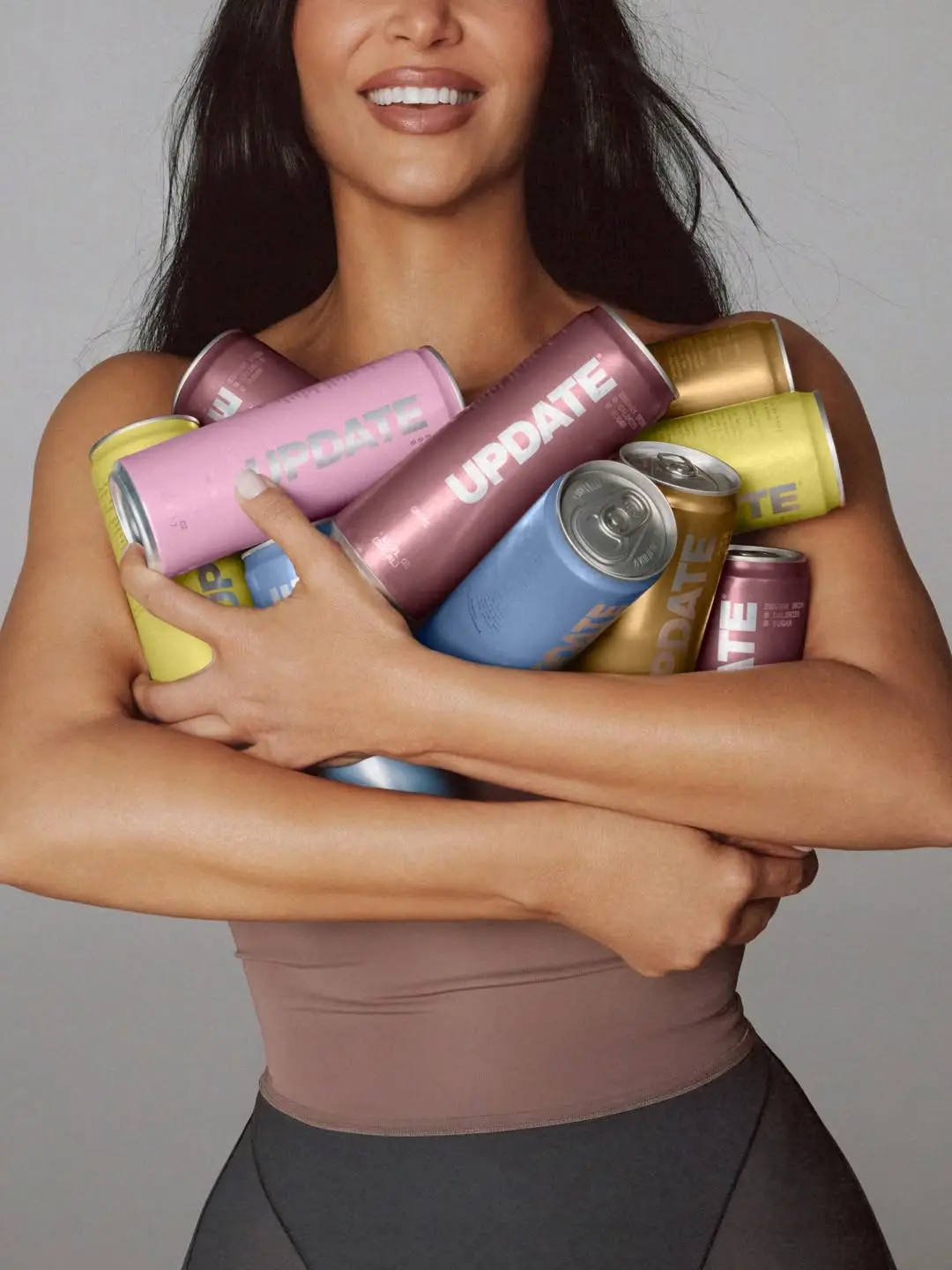
After reaching out to the brand giving 'unsolicited feedback,' Kardashian ended up being made a co-founder.
Kardashian explained her role in the brand acts as a 'commitment to the next generation of energy'. But what makes the drink different in how it delivers energy to those who consume it?
Well, instead of caffeine, the energy drink contains paraxanthine.
What is paraxanthine?
Paraxanthine is the 'predominant metabolite of caffeine in humans' - meaning its a compound the body naturally produces when it breaks down caffeine.
When caffeine is ingested, the liver converts it into mainly paraxanthine, but also theobromine and theophylline too.
Paraxanthine holds 'similar stimulant properties' to caffeine and appears to block tiredness receptors in a similar way to caffeine, but according to Update and Kim K, it doesn't cause the same 'jitters' and 'crash'.
Not much is known about the effects of paraxanthine, although a study was conducted in 2023 to try and find out more about any impact it may on humans' health.

A study's findings on paraxanthine
A report titled 'Paraxanthine safety and comparison to caffeine,' published in the National Library of Medicine looked into the safety of the compound being used in beverages compared to caffeine.
It reflected on caffeine's 'long history of safe use,' but noted it not being 'devoid of unwanted side effects at any serving level'.
When it comes to paraxanthine, the study revealed: "The few toxicity studies that are available for paraxanthine suggest that the molecule is relatively safe, although thorough characterization of its safety is required prior to widespread incorporation into foods/beverages."
The study went on to evaluate the toxicity of paraxanthine using rats.

It found there was 'no morality or treatment-related adverse effects' when rats received low, mid or high doses.
"However, mortality was reported in two animals in the high dose caffeine-treated animals," it added.
It resolved: "Therefore, the no observed adverse effect level (NOAEL) from the 90-day study was determined to be 150 mg/kg bw for caffeine and 185 mg/kg bw for paraxanthine for both male and female Sprague Dawley rats. These findings may suggest that paraxanthine could be a safer alternative to caffeine in humans."
Alongside paraxanthine, Update states its drinks contain supporting ingredients including alpha-gpc, l-theanine and vitamin b-12.
 Poppy Bilderbeck